TL;DR:
- Outdoor spaces in Malta significantly boost employee creativity and reduce stress.
- Proper design and management are essential to maximize outdoor areas’ benefits and usage.
- Integrating outdoor spaces into daily routines and policies enhances workplace well-being and performance.
Most office managers in Malta are leaving measurable performance gains on the table. Research shows that outdoor spaces boost creativity by up to 50% and reduce stress, yet the majority of commercial properties still treat outdoor areas as afterthoughts. Whether you manage a serviced office in Valletta or a traditional floor plate in St Julian’s, the business case for purposeful outdoor space is compelling. This guide covers the practical benefits, design essentials, and event strategies that allow Maltese office managers and business owners to turn terraces, gardens, and rooftops into genuine productivity assets.
Table of Contents
- Why outdoor office spaces matter
- Evidence-backed benefits for staff and culture
- Design essentials for Maltese offices
- Maximising usage: Events, meetings and daily routines
- What most office owners miss about outdoor spaces
- Find your next office with outdoor space
- Frequently asked questions
Key Takeaways
| Point | Details |
|---|---|
| Boosts creativity and retention | Outdoor spaces have been shown to increase creativity by up to 50 percent and can make staff stay longer. |
| Reduces stress and burnout | Regular access to nature or outdoors at work measurably lowers stress and fatigue, improving well-being. |
| Works in any office size | Even compact terraces or roof gardens can deliver large benefits when thoughtfully designed and used. |
| Requires smart planning | Overcoming weather and tech hurdles is key, but solutions exist for both Mediterranean and challenging climates. |
Why outdoor office spaces matter
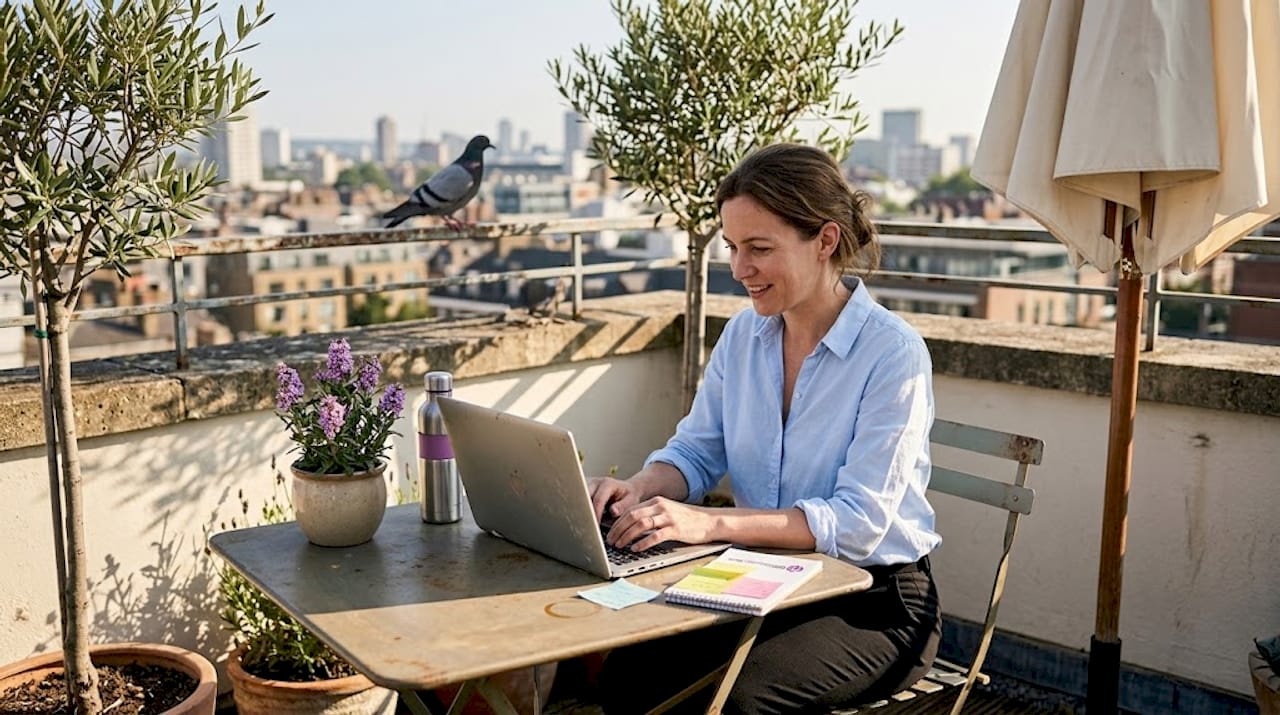
An outdoor office space is any designated area outside the main building envelope that employees can use for work, rest, or collaboration. This includes rooftop terraces, landscaped gardens, shaded courtyards, and balconies fitted with appropriate furniture and connectivity. These are not simply pleasant extras. When designed with intention, they become functional extensions of the workspace.
Malta’s Mediterranean climate makes this proposition especially attractive. With over 300 days of sunshine annually and mild winters, the island offers a longer usable outdoor season than almost any northern European market. Office managers here have a natural advantage that their counterparts in London or Amsterdam simply do not.
The core advantages of outdoor office space include:
- Creativity uplift: Outdoor spaces boost creativity by up to 50%, a figure that should register clearly with any business owner focused on innovation.
- Stress reduction: Regular access to natural light and greenery lowers cortisol levels, reducing the physiological markers of workplace stress.
- Job satisfaction and retention: Employees who have access to quality outdoor areas report higher satisfaction scores, which directly influences staff turnover rates.
- Talent attraction: In a competitive Maltese labour market, outdoor amenities signal a progressive workplace culture to prospective hires.
- Informal collaboration: Open-air settings lower social barriers, making it easier for teams to exchange ideas without the formality of a boardroom.
“Outdoor spaces are not a luxury feature. In markets like Malta, where climate is an asset, they are a practical tool for managing both performance and culture.”
Thoughtful strategic office space design treats the outdoor zone as a planned zone with defined purposes, not a residual area left over after the interior fit-out. Managers who approach it this way consistently report stronger adoption rates among staff.
Pro Tip: Before investing in furniture or shade structures, survey your team on how they would realistically use an outdoor space. Usage data gathered upfront prevents costly design decisions that go unused.
Evidence-backed benefits for staff and culture
The business case for outdoor office space is not anecdotal. A growing body of empirical research quantifies the gains across productivity, well-being, and cultural cohesion.
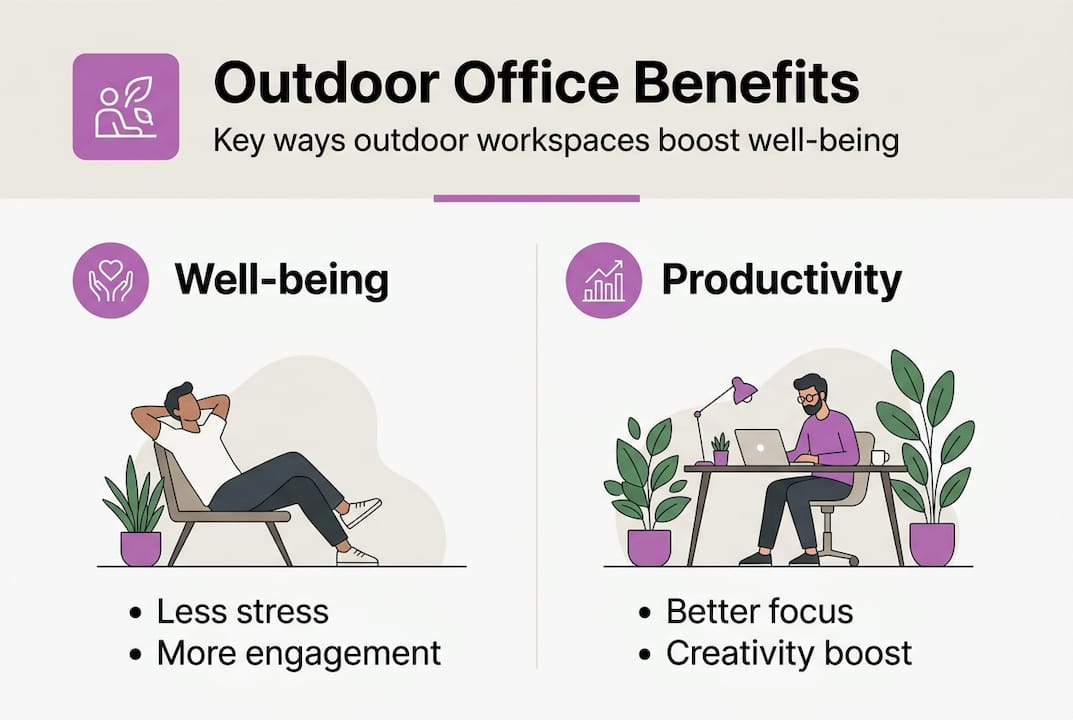
Nature exposure reduces burnout and increases work engagement, with studies confirming that even 10-minute outdoor breaks are effective at reducing fatigue and restoring productive focus. This is a low-cost, high-return intervention that any office manager can implement immediately.

The productivity and creativity data are equally strong. Empirical benchmarks show a 15 to 50% uplift in productivity and creativity, alongside measurable reductions in cortisol and self-reported stress. The return on investment materialises through lower sick-leave rates and improved retention.
| Benefit area | Reported uplift | Key mechanism |
|---|---|---|
| Creativity | Up to 50% | Nature stimuli, reduced cognitive load |
| Productivity | 15 to 50% | Fatigue recovery, improved focus |
| Stress reduction | Significant cortisol drop | Natural light, greenery exposure |
| Employee retention | Reduced turnover | Higher satisfaction scores |
| Sick leave | Fewer absences | Lower burnout, improved mood |
It is worth distinguishing between outdoor access and indoor biophilia (the practice of bringing plants and natural materials inside). Both have merit, but office plants science confirms that indoor greenery delivers a subset of the benefits that genuine outdoor exposure provides. Outdoor settings offer stronger sensory variety, including fresh air, natural soundscapes, and variable light, which produce a more complete restorative effect.
From a cultural standpoint, the benefits extend beyond the individual. Teams that share outdoor spaces tend to develop stronger interpersonal bonds. Informal conversations during outdoor breaks frequently generate the kind of cross-functional ideas that structured meetings rarely produce. For businesses focused on employer brand strategy, visible outdoor amenities also serve as a recruitment signal, communicating that the organisation invests in the full employee experience.
📊 Key statistic: A 10-minute outdoor break can measurably restore cognitive performance, making structured break policies one of the simplest evidence-based tools available to office managers.
Design essentials for Maltese offices
Knowing the benefits is one thing. Translating them into a functional outdoor workspace in Malta requires attention to several practical design factors that are specific to the island’s climate and building stock.
The core infrastructure requirements for any productive outdoor office area are:
- Reliable WiFi coverage: Outdoor connectivity is non-negotiable for work use. Weatherproof access points or mesh network extenders should be installed before any furniture is purchased.
- Power access: Outdoor sockets or USB charging points allow staff to use laptops and devices without returning indoors.
- Shade structures: Malta’s summer sun regularly exceeds 35°C. Pergolas, retractable awnings, or shade sails are essential for making outdoor areas usable between May and October.
- Weather-resistant furniture: Teak, powder-coated aluminium, or high-density polyethylene (HDPE) materials withstand UV exposure and occasional rain without deteriorating.
- Acoustic consideration: Low-profile screens or planted borders reduce ambient noise and create a sense of privacy for calls and focused work.
Challenges around digital dependency, weather, and legitimacy are real, but each has a practical solution. Weather-resistant technology, modular furniture pods, and structured shade address the most common barriers.
The following comparison table outlines what a well-equipped outdoor space delivers versus the limitations to manage:
| Feature | Benefit | Limitation to manage |
|---|---|---|
| Shade structure | Extends usability to summer months | Upfront installation cost |
| Outdoor WiFi | Enables full work functionality | Requires weatherproof hardware |
| Modular seating | Flexible for meetings and breaks | Needs secure storage in winter |
| Planted borders | Acoustic buffer, visual privacy | Ongoing maintenance required |
| Power points | Device charging, laptop use | Electrical compliance checks needed |
Integrating weather-resistant furniture, power, WiFi, and modular pods while designing for privacy and acoustics is the methodology recommended by workspace specialists. In Malta, this also means factoring in the Sirocco wind season, when dust and strong gusts can temporarily limit outdoor use.
For guidance on fitting out office interiors alongside outdoor zones, designing office spaces requires a holistic approach that considers both environments as connected. Locally, Malta office design trends show increasing demand for properties that already incorporate terraces or roof access, reflecting growing awareness of these benefits among tenants.
Pro Tip: If your current premises lack outdoor space entirely, consider corporate off-site events as a practical alternative. Hiring a sailing vessel through a local provider such as SailDrive Malta offers teams a structured outdoor experience that delivers many of the same well-being and team-building benefits, without requiring a property upgrade.
Maximising usage: Events, meetings and daily routines
Having the right outdoor infrastructure is only half the equation. The other half is building consistent habits and structured events that make the space a genuine part of how work gets done.
The most effective approach is to integrate outdoor use into the regular work rhythm rather than treating it as an occasional treat. Here is a practical sequence for doing that:
- Establish a daily break policy. Encourage teams to take at least one outdoor break per morning and afternoon session. Even 10-minute breaks measurably reduce fatigue and restore focus, so formalising this as a team norm rather than a personal choice increases uptake significantly.
- Schedule weekly outdoor stand-ups. Short team check-ins held outdoors tend to be faster and more energetic than indoor equivalents. Keep them to 15 minutes with a clear agenda.
- Host monthly creative sprints outside. Brainstorming sessions benefit from the cognitive loosening that outdoor environments provide. Set up a whiteboard or portable display and run ideation workshops in the open air.
- Use the space for onboarding and culture events. Welcoming new staff with an outdoor lunch or informal gathering sets a positive tone and communicates the company’s investment in the employee experience.
- Plan quarterly corporate events outdoors. Whether it is a team lunch, a wellness session, or a client reception, outdoor corporate events create memorable touchpoints that reinforce company culture.
“The offices that extract the most value from outdoor space are those that schedule its use deliberately, not those that simply make it available and hope staff will self-organise.”
Common obstacles include seasonal weather, noise from adjacent streets, and the perception among some employees that outdoor work is less professional. Each of these is manageable. Weather contingencies can be built into event planning. Acoustic screening addresses noise. And cultural normalisation, led visibly by management, resolves the legitimacy concern faster than any physical intervention.
For a broader view of best practices for office space usage, the principle that applies here is consistent: space that is actively programmed delivers a higher return than space that is passively provided.
What most office owners miss about outdoor spaces
Here is the uncomfortable reality. Many businesses add an outdoor area, furnish it adequately, and then watch it sit empty for most of the working week. The problem is rarely the space itself. It is the absence of organisational buy-in.
Outdoor spaces deliver measurable value only when leadership actively models their use, when usage is tracked, and when the space is connected to specific business goals, whether that is reducing sick leave, improving retention, or strengthening team cohesion. Cosmetic additions, a few chairs and a potted plant, rarely move the cultural or performance needle.
The businesses seeing the strongest returns treat outdoor space as a managed asset with policies, scheduled programming, and usage metrics. Some even link outdoor break adoption to broader well-being KPIs. This is not overcomplicated. It is the same logic that applies to any other workplace investment.
As shorter lease terms become more common in Malta, tenants have more flexibility to select properties that already offer outdoor amenities rather than retrofitting them. That shift makes the sourcing decision more important than the design decision for many businesses.
If your current space does not support outdoor use, the most direct path to the benefits described in this guide is to find one that does.
Find your next office with outdoor space
If this guide has prompted you to reassess your current premises, offices in Malta listed on OfficeSpace.Rent include properties with terraces, rooftop access, and adaptable outdoor areas across the island’s key commercial districts. The platform’s filtering tools allow you to narrow your search by location, size, and property type, making it straightforward to identify spaces that match your operational and well-being priorities. Use the desk-based office search to explore options suited to your team size and budget. Our local market specialists can also advise on which properties offer the best scope for outdoor development or already feature ready-to-use external areas.
Frequently asked questions
Does outdoor space really improve employee wellbeing?
Yes. Outdoor spaces reduce stress and boost creativity by up to 50%, with measurable improvements in job satisfaction and retention reported across multiple studies.
How much outdoor space does an office need to see benefits?
Size is less critical than access and design. Even brief outdoor breaks of 10 minutes are shown to reduce fatigue and restore productive focus, so even a modest terrace delivers genuine gains.
What challenges should we expect when integrating outdoor office space?
Weatherproofing, digital connectivity, and shade are the primary hurdles, but each has established solutions including weather-resistant hardware, modular furniture, and retractable awnings.
Are outdoor spaces suitable for meetings and events?
Yes. With adequate seating, shade, and acoustic screening, outdoor areas are well suited to informal meetings, brainstorming sessions, and corporate events. Modular pods and weather-resistant setups make this practical year-round in Malta’s climate.
Is an outdoor space a worthwhile investment for smaller businesses?
The evidence is clear. A 15 to 50% productivity uplift, combined with lower sick-leave rates and improved retention, delivers a positive return on investment even at modest scales.
Recommended
- Office Plants Science Backed Benefits –
- Tips on Designing Offices – Offices in Malta To Let & For Sale
- Strategic Office Space Design: Enhance Your Culture – Offices in Malta To Let & For Sale
- Best for Your Office Space: Key Considerations – Offices in Malta To Let & For Sale
- 7 inspirierende Designideen für Outdoor-Bereiche entdecken – AFUERA – outdoor steel design
- Understanding the role of ergonomics in injury prevention