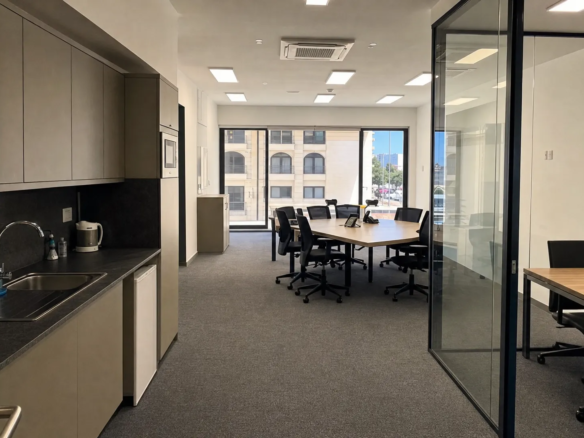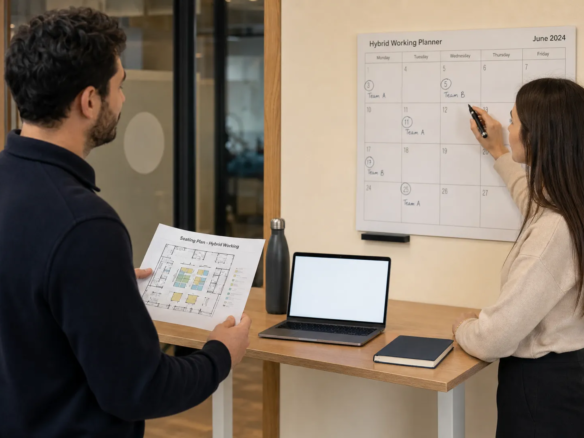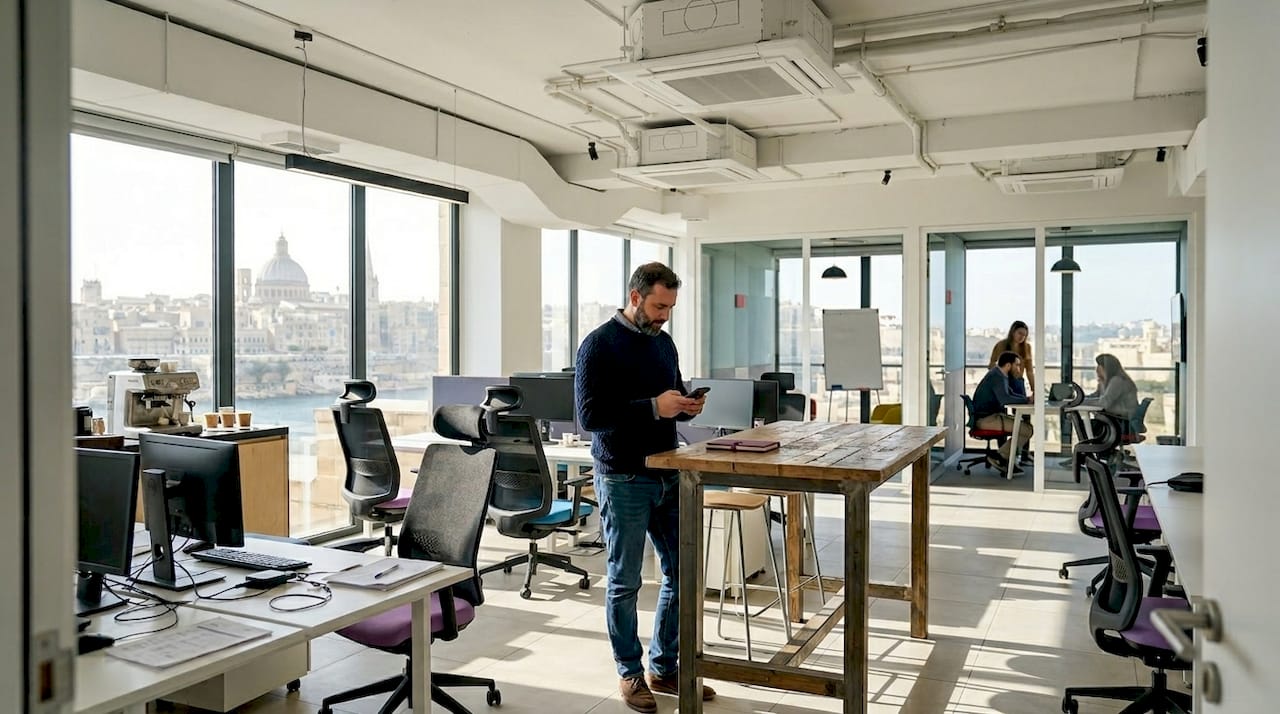
Balancing cost, legal compliance, and employee wellbeing is one of the most pressing challenges facing Maltese businesses today and affecting directly their ideas on office space planning. Office space is rarely cheap, and poor planning compounds the expense by reducing productivity and increasing staff turnover. The good news is that natural light alone boosts productivity by 15%, and that is just one of many evidence-based interventions available. This article outlines actionable, data-driven office space planning ideas tailored specifically for businesses operating in Malta, covering everything from layout models and zoning strategies to compliance requirements and futureproofing with smart technology.
Table of Contents
- Core criteria for effective office space planning in Malta
- Hybrid and activity-based working: The new standard
- Layout and zoning strategies: Balancing focus and collaboration
- Maximising features for comfort, wellness, and productivity
- Cost, compliance, and space efficiency: Malta considerations
- Futureproofing: Tech integration and ongoing improvement
- Transform your office with expert help in Malta
- Frequently asked questions
Key Takeawaysand Ideas on Office Space Planning
| Point | Details |
|---|---|
| Hybrid layouts save space | Hybrid and activity-based planning can reduce required space by up to 40 percent while supporting productivity. |
| Zoning boosts focus | Dividing your office into zones for focus and collaboration maximises both privacy and teamwork. |
| Wellness features matter | Natural light, acoustic controls, and ergonomic design can significantly upgrade comfort and performance. |
| Local compliance is key | In Malta, a Class 4A permit and adherence to local benchmarks are required for legal and efficient office use. |
| Tech keeps you future-ready | Smart sensors and regular feedback allow continual optimisation as your needs change. |
Core criteria & Ideas for effective office space planning in Malta
Every sound office plan begins with a clear framework. Before committing to a layout or signing a lease, Maltese businesses should evaluate their workspace against a structured set of criteria that accounts for both universal best practice and local requirements.
Here are the core criteria to address:
- Workspace assessment and goal setting — Audit your current headcount, growth projections, and working patterns before allocating any square footage.
- Legal and regulatory compliance — Malta requires a legal office permit for commercial spaces, specifically the Class 4A permit, which governs use, fit-out standards, and occupancy.
- Space allocation and benchmarking — Use office size benchmarks to validate whether your planned allocation per person is realistic and cost-efficient.
- Employee needs — Ergonomics, acoustic control, and access to natural light are not optional extras; they directly affect retention and output.
- Technology and futureproofing — Plan for cabling, occupancy sensors, and booking systems from the outset rather than retrofitting later.
- Malta-specific factors — Local rents, compact floor plates, and permit timelines all influence what is feasible within a given budget.
A comprehensive planning framework typically recommends starting with a utilisation study before any redesign. This prevents over-provisioning, which is a common and costly mistake in smaller markets like Malta.
Key insight: Office planning in Malta requires close attention to Class 4A permits and prioritises ergonomic, open designs with effective noise control to meet both regulatory and employee wellbeing standards.
Hybrid and activity-based working: The new standard
With the planning criteria established, the next question is which office model best serves Malta businesses in 2026. The evidence points clearly towards hybrid and activity-based working (ABW) as the leading approach.
Traditional, assigned-desk offices allocate space on a one-to-one basis regardless of actual attendance. Open-plan offices attempted to solve this by removing walls, but introduced significant noise and distraction problems. Hybrid and activity-based models take a more precise approach by matching space to tasks rather than to individuals.
| Model | Space usage | Cost efficiency | Employee outcomes |
|---|---|---|---|
| Traditional assigned desks | High (1:1 ratio) | Low | Moderate |
| Open-plan | Moderate | Moderate | Often poor (noise, distraction) |
| Hybrid / activity-based | Low to moderate | High | Strong when well-implemented |
Hybrid and activity-based layouts reduce required space by 20 to 40% while maintaining productivity and avoiding the well-documented pitfalls of open-plan environments. For Malta businesses paying premium rents in areas such as Sliema or St Julian’s, that reduction translates directly into significant monthly savings.
Key benefits for Malta businesses include:
- Reduced floor plate requirements, lowering rent and service charge exposure
- Flexible desk ratios (typically 0.6 to 0.8 desks per person) aligned to actual attendance patterns
- Dedicated zones for focused work, collaboration, and informal meetings
- Improved employee satisfaction through greater autonomy over where and how work is done
- Scalability, making it easier to accommodate team growth without relocating
Explore the activity-based layout guide for detailed configuration options, or review flexible office solutions suited to Malta’s diverse commercial districts.
Pro Tip: Before committing to a full activity-based rollout, pilot two or three distinct zones with a small team for four to six weeks. Gather structured feedback on noise levels, desk availability, and collaboration quality before scaling the model across your entire floor plate.
Layout and zoning strategies: Balancing focus and collaboration
Hybrid models only deliver their full benefit when the physical layout is designed with intentional zoning. Without clear zones, hybrid offices can replicate the same noise and distraction problems as open-plan environments.
Effective zoning divides the office into distinct areas based on work mode:
- Focus zones — Quiet, low-distraction areas with individual workstations or booths for deep work.
- Collaboration hubs — Open or semi-open areas with writable surfaces, flexible seating, and easy access to screens.
- Meeting rooms — Enclosed spaces sized for two to eight people, equipped for video conferencing.
- Informal breakout areas — Lounge-style spaces for brief conversations, informal catch-ups, or short breaks.
- Support spaces — Storage, printing, and utility areas positioned to minimise foot traffic through focus zones.
The table below provides recommended space allocations as a planning reference:
| Space type | Recommended allocation |
|---|---|
| Individual workstation | 8 to 10 sq mt per person |
| Meeting room (4 to 6 people) | 15 to 25 sq mt |
| Collaboration hub | 2 to 5 sq mt per regular user |
| Circulation and common areas | 30 to 40% of net usable area |
Review detailed zoning options to see how these allocations apply to typical Maltese office floor plates. For meeting room specifications, modern meeting room requirements provide a useful technical reference.
Important: Open-plan offices reduce face-to-face interaction by approximately 70% and are consistently linked to lower productivity. Enclosed and zoned strategies are strongly advised for businesses prioritising output and staff wellbeing.
Maximising features for comfort, wellness, and productivity
Once your zones are defined, the quality of the physical environment within those zones determines whether your planning investment pays off. Several features and ideas create the best office space planning and have strong evidence behind them.
High-impact features to prioritise:
- 🌞 Natural light — Productivity increases by 15% with adequate natural light exposure. Position workstations perpendicular to windows to reduce glare while maximising daylight.
- 🔇 Acoustic treatment — Acoustic panels, ceiling baffles, and soft furnishings are essential in hybrid offices where noise from calls and collaboration can disrupt focus zones.
- 🪑 Ergonomic furniture — Height-adjustable desks and supportive seating reduce musculoskeletal complaints and improve sustained concentration.
- 📱 Smart booking technology — Desk and room booking systems prevent bottlenecks and give management real-time visibility of space utilisation.
- 🌬️ Air quality monitoring — CO2 sensors and adequate ventilation are particularly relevant in Malta’s warmer months, when sealed, air-conditioned offices can see air quality decline.
For practical guidance on implementing these features within Malta’s typically compact office spaces, the optimal office upgrades resource covers fit-out considerations in detail. Additional wellness design tips provide a broader framework for integrating comfort into your layout.
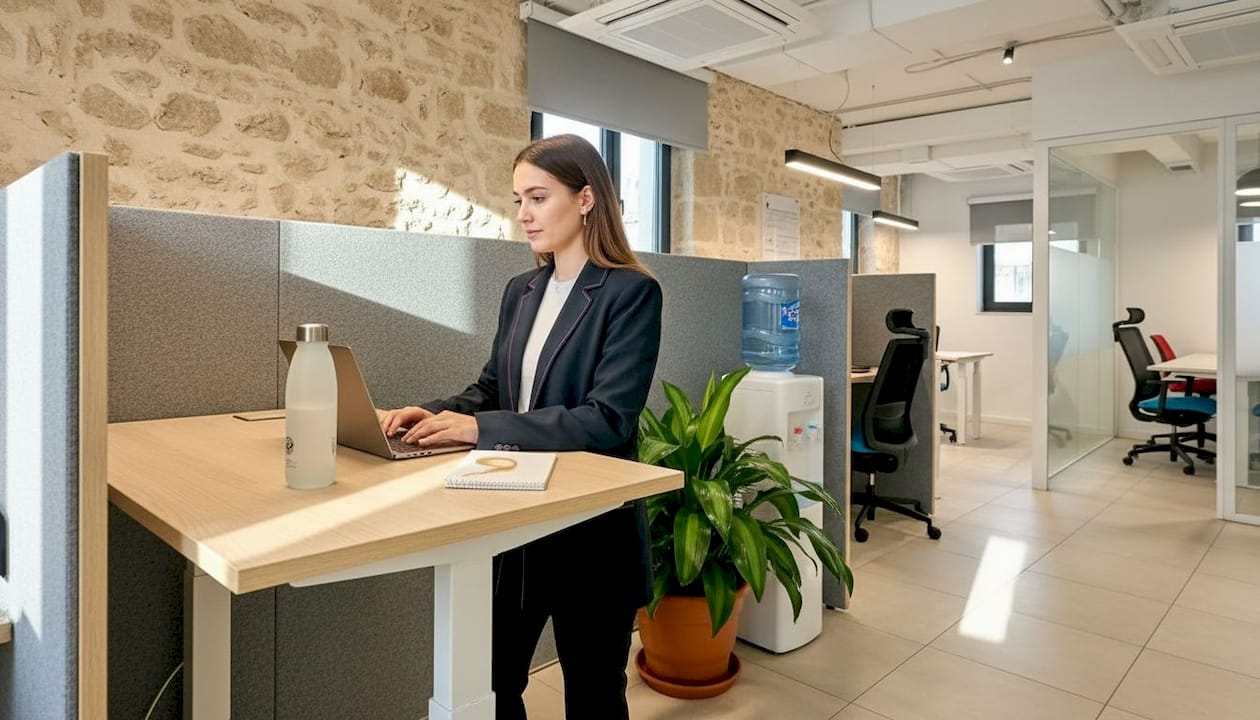
Pro Tip: In Malta’s older commercial buildings, installing moveable acoustic partitions is often more cost-effective than structural alterations. They provide zoning flexibility and can be reconfigured as your team’s needs change, without requiring new permits.
Cost, compliance, and space efficiency: Malta considerations
Effective office planning is not only about design. The financial and regulatory dimensions are equally important, particularly in a market as specific as Malta’s.
Key cost benchmarks:
- Malta office rents average EUR 120 to 450 per sqm per year, with significant variation between Valletta, Sliema, and secondary locations.
- Hybrid models can reduce your required floor area by up to 30%, directly cutting your monthly rent liability.
- Fit-out costs, service charges, and ongoing facilities management should all be factored into your total occupancy cost.
Budgeting considerations for Malta businesses:
- Rent — Review 2026 market pricing trends to benchmark your target location against current market rates.
- Fit-out — Partition systems, acoustic treatment, and smart tech represent the largest upfront costs but deliver measurable returns.
- Ongoing management — Cleaning, utilities, and maintenance costs vary significantly between serviced and traditional leased offices.
- Compliance — Factor in the cost and timeline for obtaining a Class 4A permit before committing to a fit-out programme.
For a structured approach to assessing rental costs in Malta, use the detailed cost breakdown available on OfficeSpace.Rent. Local planning advice from industry commentators also highlights the importance of engaging with permit requirements early in the process.
Futureproofing: Tech integration and ongoing improvement
Even the best-designed office will become inefficient if it is not actively managed and updated. Futureproofing requires both the right technology and a structured review process.
Smart technology tools to implement:
- Occupancy sensors — Real-time data on which zones and desks are in use, enabling evidence-based decisions about space allocation.
- Desk and room booking platforms — Prevent underutilisation and overcrowding simultaneously, while generating utilisation reports.
- Environmental monitoring — Track temperature, humidity, and CO2 to maintain optimal working conditions year-round.
Data-driven tools such as sensors prevent overprovisioning by identifying real workspace utilisation patterns, which is particularly valuable as hybrid attendance fluctuates across the week.
Beyond technology, build a regular review cycle into your office management process:
- Survey staff quarterly on comfort, noise levels, and zone availability.
- Review occupancy data monthly to identify underused areas.
- Adjust zone boundaries or desk ratios in response to team growth or changes in working patterns.
- Revisit your space utilisation metrics annually against current workspace tech solutions to ensure your setup remains competitive.
This iterative approach ensures your office continues to deliver value as your business evolves, without requiring costly full-scale redesigns every few years.
Transform your office with expert help in Malta
Implementing these strategies is straightforward in principle, but the practical details of Malta’s commercial property market add complexity. Permit requirements, lease structures, and the availability of suitable floor plates all require local knowledge to navigate efficiently. Working with experienced local agents reduces the risk of costly missteps and accelerates the process from planning to occupation.
OfficeSpace.Rent provides access to Malta’s most extensive database of commercial office listings, from compact serviced offices to premium office options in prime locations. Whether you are planning a first office, relocating, or reconfiguring an existing space, the platform connects you with properties and agents who understand the local market. Browse Malta office listings to find spaces that match your size, budget, and zoning requirements, and take the first step towards a more efficient, productive workplace.
Frequently asked questions
How much space should each employee have in a Malta office?
Standard allocations are 8 to 10 sq mt per workstation, with hybrid offices typically operating at 0.6 to 0.8 desks per person to reflect actual attendance patterns rather than total headcount.
What permit is required for an office in Malta?
A Class 4A permit is required for all commercial office spaces in Malta, covering use classification, fit-out standards, and occupancy conditions.
Do open-plan offices really reduce productivity?
Yes. Open-plan offices reduce face-to-face interaction by approximately 70% and are consistently associated with lower focus, higher distraction, and reduced overall output compared to zoned or enclosed layouts.
What is the average cost per square metre for office space in Malta?
Malta office rents range from EUR 120 to 450 per sqm per year, with the higher end reflecting prime locations in Sliema, St Julian’s, and Valletta.
How can I keep my Malta office layout efficient as my team changes?
Review occupancy data and staff feedback regularly, then adjust zone boundaries and desk ratios accordingly. Data-driven tools help measure real utilisation and ensure your workspace plan remains aligned with how your team actually works.
Recommended
- Office Space in Malta: Your Guide to Renting
- Strategic Office Space Design: Enhance Your Culture – Offices in Malta To Let & For Sale
- Guide to Office Size and Layouts: Finding Your Space – Offices in Malta To Let & For Sale
- Office Space Design Malta – Offices in Malta To Let & For Sale
- 10 Creative Spaces for Unique Meetings | Jigsaw Conferences