Remote work can be efficient, flexible and cost-friendly, but it is not always the best long-term operating model. At some point, growing teams ask whether it is time to rent office space for business use, especially when collaboration slows, hiring becomes harder or clients expect a more established physical presence.
For Malta-based companies, the decision is rarely just about desks. It is about credibility, talent, compliance, client meetings, management rhythm and the ability to scale without creating avoidable overhead. A fully remote setup may work brilliantly for a small software team, but the same setup can become restrictive for an iGaming operator, financial services firm, insurance company, legal practice or architecture studio that needs private discussions, secure document handling or client-facing space.
This guide helps you recognise the practical signs that remote work is no longer enough and decide whether an office is the right next step.
Why remote work works well, until it does not
Remote work is strongest when work is individual, outcomes are easy to measure and the team already has mature processes. It can reduce commuting time, widen the hiring pool and help businesses avoid fixed property commitments during uncertain periods.
The pressure appears when remote work becomes a workaround rather than a strategy. If decisions take longer, onboarding depends on endless video calls or managers spend too much time checking alignment, the savings from avoiding rent may be partly offset by lost momentum.
You do not need to rent office space for business reasons simply because competitors have offices. The better question is whether a physical workspace would solve specific operational problems that remote work is now creating.
The hidden costs of staying remote too long
The cost of remote work is not always visible in a spreadsheet. A business can save on rent but lose time through slower approvals, duplicated work, weaker junior staff development or poor handovers between departments.
Remote setups can also make culture feel fragile. Teams may still be productive, but if employees feel disconnected from the company, managers often need more meetings, more documentation and more deliberate communication just to maintain the same level of coordination.
For companies dealing with sensitive information, the risks can be more concrete. Private calls, client documents, regulated discussions and confidential commercial decisions are often harder to manage when everyone is working from different home environments.
When to rent office space for business
The right time is usually when an office supports revenue, risk management or team performance better than a purely remote setup. It does not need to mean a large headquarters or a long lease. In many cases, the first step is a small private office, serviced workspace or flexible arrangement that gives the company structure without locking it into more space than it needs.
You are hiring and onboarding more often
A remote-first model can work for experienced staff who already understand the company. It becomes harder when you are hiring frequently, especially for junior roles, client-facing teams or operational positions that depend on informal learning.
If new employees take longer to become productive because they cannot sit near the right people, observe workflows or ask quick questions, an office may pay for itself through faster onboarding. This is especially relevant for SMEs in Malta that are building teams across sales, compliance, finance, customer support or account management.
The strongest reason to rent office space for business growth is when the office shortens the time between hiring someone and seeing them contribute confidently.
Clients, investors or partners expect a professional setting
Not every business needs a formal meeting room. But some sectors still benefit from one, particularly where trust, discretion and professionalism matter.
Law firms, architects, insurance brokers, consultants, financial services companies and B2B firms often need somewhere suitable for in-person meetings. A well-located office can reassure clients that the business is established and accessible. It can also give senior staff a private setting for sensitive conversations that should not take place in a café or over an unstable video call.
For companies entering Malta, a physical address and meeting base can also make local relationship-building easier. It gives your business a visible point of contact and helps overseas leadership teams create a stronger presence on the island.
Collaboration has become too scheduled
Remote collaboration often starts to fail quietly. There may be no single crisis. Instead, every small discussion becomes a calendar invite, every decision waits for the next call and every cross-team issue requires written context before anyone can act.
An office can reduce that friction. Product, compliance, finance, operations and leadership teams can resolve certain issues faster when they share space for part of the week. This does not mean everyone must attend daily. A hybrid model with purposeful office days can often deliver the benefits of presence while keeping flexibility.
Malta-specific factors that change the decision
In Malta, the decision to rent office space for business use is shaped by a compact geography, varied commuting patterns and a business community where location still affects perception. An office in Sliema, St Julian’s, Gżira, Valletta, Mrieħel or Birkirkara can mean different things for staff access, client convenience and brand positioning.
For iGaming, fintech, crypto, insurance and professional services firms, location is not only about convenience. It can influence hiring, networking, supplier access and client confidence. A team based near similar companies may find it easier to attract candidates who already work in that business district.
Remote work may not suit regulated or sensitive operations
Businesses in regulated or high-trust sectors often need better control over where work happens. Confidential client files, internal financial information, HR matters and compliance discussions are not always suited to home offices or public coworking areas.
This does not mean every regulated company needs a large private floor. A lockable private office or serviced office with meeting rooms may be enough at the early stage. The key is matching the workspace to the level of privacy and professionalism the business actually requires.
Supply and timing matter in a small market
Malta’s office market is limited compared with larger European cities. The best-fit spaces, particularly well-located offices of the right size, are not always available exactly when a company decides it needs them.
That makes timing important. If you expect headcount to increase, client meetings to intensify or remote work problems to grow, it can be better to review the market before the need becomes urgent. You do not need to sign immediately, but knowing what is available gives leadership a more realistic view of cost, location and lease flexibility.
| Situation | Staying remote may work if | Renting space may be better if |
|---|---|---|
| Hiring | Roles are senior and independent | New staff need coaching and close collaboration |
| Client meetings | Most clients accept video calls | Trust, privacy or presentation affects sales |
| Compliance | Work is low-risk and easy to document | Sensitive information needs controlled settings |
| Culture | The team is stable and aligned | People feel disconnected or decisions are slower |
| Growth | Headcount is flat | More staff, departments or leadership hires are planned |

Office types to consider before committing
Once you decide to rent office space for business operations, the next step is choosing the format. The right answer depends on headcount, budget, privacy needs and how certain you are about growth over the next 12 to 24 months.
A serviced office can be useful when speed and flexibility matter. It may suit companies entering Malta, project teams, small regulated firms or leadership teams that need a professional base without managing fit-out and day-to-day office setup.
A private office can suit businesses that need confidentiality, their own door and more control over the working environment. If that is the route you are considering, this guide on private office rental in Malta explains when the extra privacy and control can justify the cost.
A traditional lease may be better for companies with clearer long-term headcount plans, more specific layout needs or a desire to create a branded workplace. The trade-off is usually a larger commitment, more setup responsibility and less flexibility if the business changes direction.
| Office option | Best suited to | Main advantage | Watch out for |
|---|---|---|---|
| Serviced office | Small teams, new market entrants, fast moves | Speed and lower setup burden | Less control over layout and branding |
| Private office | Client-facing or confidential teams | Privacy and professional presence | Higher cost than fully remote work |
| Traditional lease | Established teams with clearer forecasts | Control and long-term workspace planning | Longer commitment and fit-out responsibility |
| Hybrid workspace | Teams that need some shared days | Balance between flexibility and collaboration | Needs clear attendance rules |
How to decide without overcommitting
Before signing anything, define the business problem the office must solve. If the problem is client confidence, prioritise location, meeting rooms and presentation. If the problem is onboarding, focus on desk layout, team proximity and transport links. If the problem is confidentiality, prioritise private rooms and secure access.
Before you rent office space for business use, model the total cost rather than only the headline rent. Include service charges, utilities, internet, fit-out, furniture, deposits, parking, insurance, cleaning, maintenance and the internal time needed to manage the move.
For a deeper breakdown of lease steps, documents and negotiation points, the 2026 guide to renting office space in Malta is a useful next read.
Start with attendance, not desk count
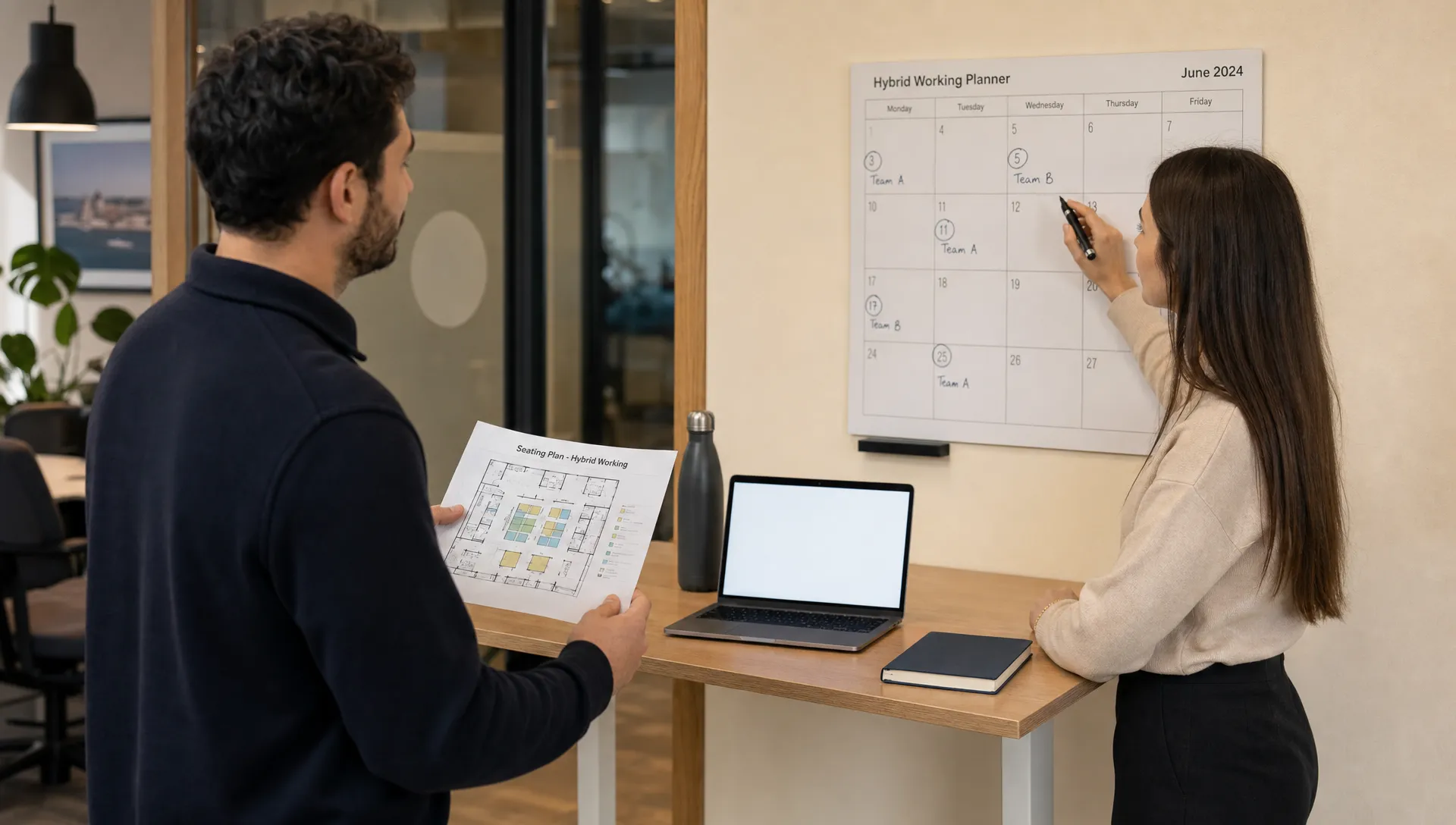
A common mistake is to calculate space based only on total headcount. In a hybrid company, daily attendance matters more. If 30 employees come in on different days, the business may not need 30 permanent desks. It may need fewer workstations, better meeting rooms and a booking policy that avoids overcrowding.
Set a realistic attendance model before comparing listings. Decide which teams need to be in on the same days, how often leadership will use the office and whether client meetings will happen weekly or occasionally.
Test flexibility before choosing a long lease
If you are unsure how your team will use the office, consider a shorter or more flexible arrangement first. Many businesses are now avoiding unnecessary long commitments while they test hybrid patterns, headcount growth and market conditions.
That trend is covered in more detail in this article on why businesses are choosing shorter office leases, which is especially relevant for companies balancing growth with caution.
Signs you should stay remote for now
Renting office space is not automatically the mature choice. Remote work may still be right if your business is small, stable and productive without frequent in-person interaction.
You may be better off staying remote if revenue is unpredictable, hiring plans are unclear or your team is spread across countries with no obvious hub in Malta. A remote setup can also remain effective when employees are senior, processes are documented and client work does not require in-person meetings.
The decision to rent office space for business needs should come from evidence, not pressure. If the office would mostly sit empty, or if nobody can explain which operational problem it solves, waiting is often the more disciplined choice.
A useful middle ground is to use meeting rooms or coworking space occasionally while monitoring whether demand grows. If the team repeatedly needs the same location, more privacy or a regular base, the case for renting becomes stronger.
A practical 90-day transition plan
Moving from remote to office-based or hybrid work is easier when it is treated as an operating change, not just a property search. Start by interviewing team leads about friction points, client needs and expected attendance. Then turn those findings into a short space brief.
A phased plan lets you rent office space for business needs without taking on avoidable risk. In the first 30 days, define your requirements and budget. In the next 30 days, compare suitable locations, office types and lease options. In the final 30 days, arrange viewings, review terms and plan the internal rollout.
Keep employees involved early. If the office is intended to improve collaboration, people need to understand when they are expected to attend and why. Clear office days, meeting norms and booking processes prevent the common hybrid problem where people commute in only to spend the day on video calls.
Frequently Asked Questions
How do I know if my company is ready to move from remote to an office? Look for repeated signs such as slower decisions, difficult onboarding, weaker team connection, more client meetings or privacy concerns. One issue may not justify an office, but several together often do.
Is a serviced office a good first step after remote work? Yes, it can be a practical first step if you need speed, flexibility and a professional setup without managing a full fit-out. It is often useful for small teams, overseas companies entering Malta and businesses testing hybrid work.
Should every employee have a permanent desk? Not necessarily. If your team follows a hybrid schedule, plan around expected daily attendance rather than total headcount. Meeting rooms, quiet areas and collaboration space may matter more than one desk per person.
Can renting an office help with recruitment in Malta? It can, especially if the location is convenient and the workspace supports the way your team actually works. Some candidates value flexibility, but many also want access to colleagues, training and a professional environment.
What should I compare before choosing an office? Compare location, total occupancy cost, lease length, privacy, meeting room access, internet, parking, public transport, scalability and the level of support available during viewings and negotiations.
Make the office decision with better market visibility
Remote work can remain the right model for many teams. But when it starts limiting growth, trust, collaboration or operational control, an office can become a business tool rather than just a cost.
OfficeSpace.Rent helps companies compare office listings across Malta, including serviced offices, private offices and larger commercial properties. You can use location, price and size filters, review options for rent or sale and get support with viewings, negotiations, legal points and VAT guidance.
If your team is weighing whether to stay remote or establish a Malta office, start by browsing current office space for rent in Malta and build a shortlist around the problems your workspace needs to solve.