A private office in Malta can feel like the natural next step when your company has outgrown coworking desks, wants more control over its environment, or needs a more credible base for clients and regulators. Looking into private office space rental is a popular option for businesses ready to establish themselves further. But it is not automatically the best move for every business.
For some teams, private office space rental creates focus, privacy and a stronger employer brand. For others, it adds commitments, fit-out costs and operational responsibilities that a serviced office could avoid. The real question is not whether a private office is good or bad. It is whether the value you gain is higher than the flexibility you give up.
In 2026, that decision is especially important in Malta. Demand from iGaming, financial services, legal, insurance, tech and international businesses keeps prime office locations competitive. At the same time, companies are watching costs more carefully and want leases that match their real headcount, not their most optimistic forecast.
What counts as a private office rental in Malta?
A private office is a workspace used exclusively by one business. In Malta, that can mean several different things.
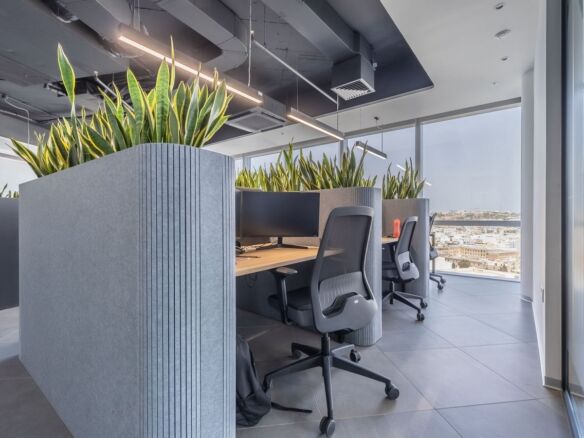
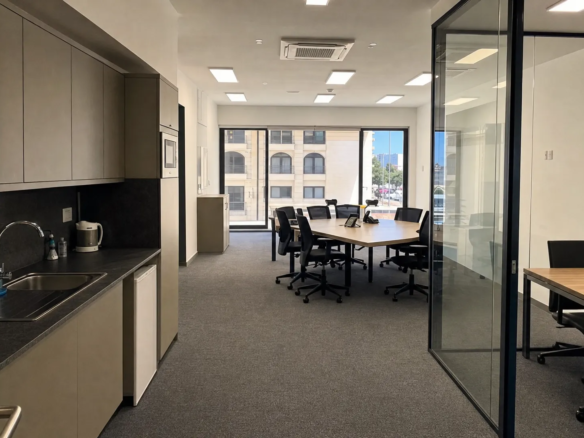
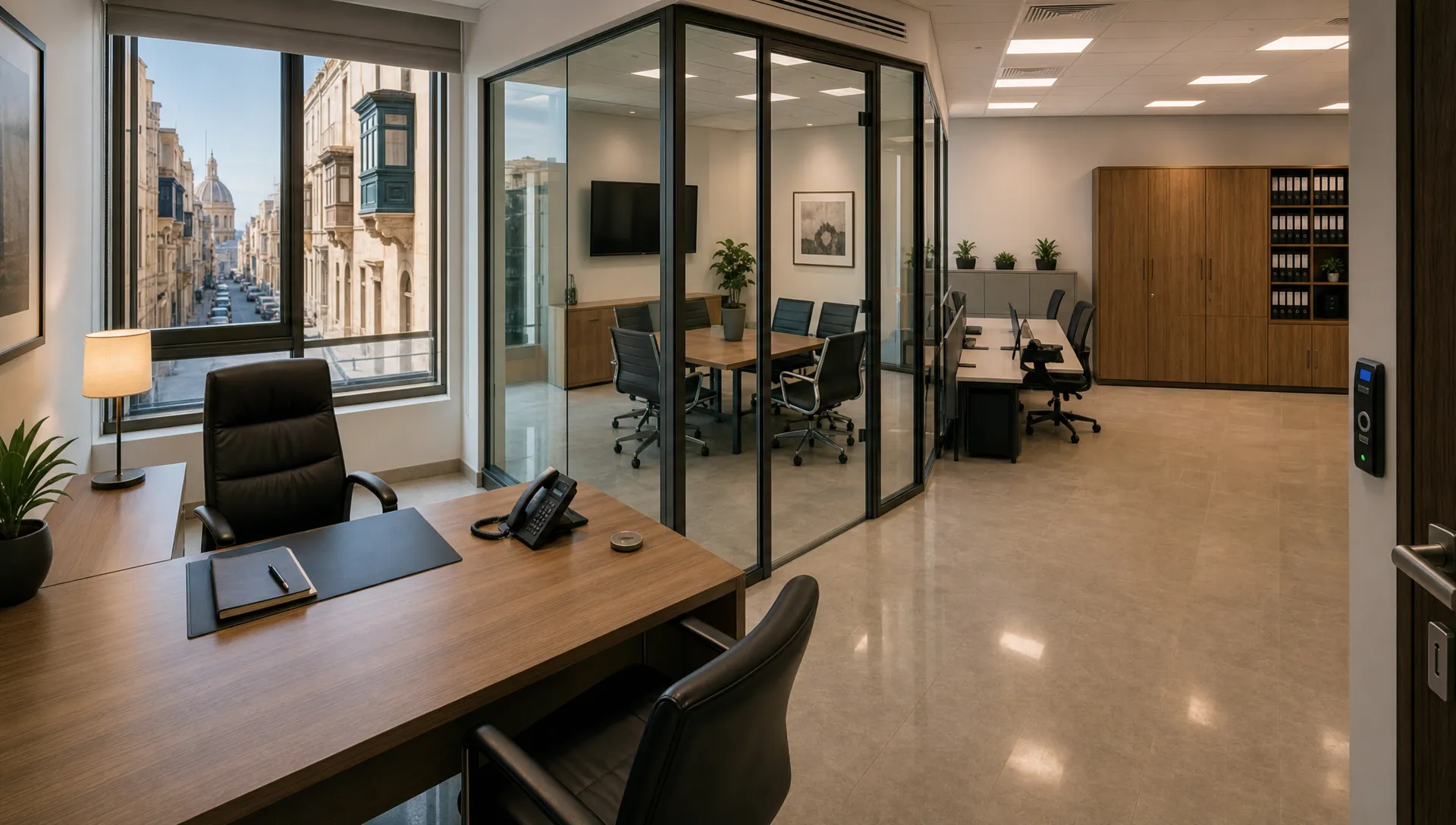
It may be a traditional leased office where you rent a self-contained unit, manage furniture and utilities, and take responsibility for the day-to-day setup. It may also be a private suite within a serviced office, where you get lockable space for your team while shared facilities, reception, internet and meeting rooms are bundled into the offer. Larger companies may take an entire floor or headquarters-style office with their own reception, meeting rooms, server area and branding.
What matters is exclusivity. Your team controls who enters the space, how it is laid out, how meetings are handled and how much of your company culture is visible in the workplace. That is the core value of private office space rental.
The trade-off is that exclusivity usually comes with more commitment. You may need a longer lease, deposits, fit-out decisions, maintenance responsibilities, furniture planning and more negotiation than you would with a simple coworking membership.
Why businesses in Malta choose private offices
Malta has a compact but highly specialised business market. A ten-minute difference in location can affect commuting, parking, client access and staff satisfaction. For firms in regulated or client-facing sectors, the office is not just a place to work. It is part of the company’s operational credibility.
A private office can be worth it when confidentiality is part of your daily work. Law firms, fiduciary companies, financial services providers, insurers, architecture practices, recruitment agencies, gaming operators and blockchain-related businesses often need quiet meeting rooms, secure document handling and private calls. Open coworking environments can be useful, but they are not always suitable for sensitive discussions.
It can also help with client perception. A well-located, professional office in Sliema, St Julian’s, Valletta, Gżira, Mrieħel or another strategic area can support trust during investor meetings, audits, interviews and client visits. The effect is hard to measure, but many business owners know when their current workspace is no longer reflecting the level they want to project.
Private space also improves control. You can design the layout around your workflow, create dedicated meeting rooms, separate quiet zones from collaborative areas, strengthen IT and access control, and make the environment feel like your company rather than a shared facility.
The costs that decide whether it is worth it
The biggest mistake when evaluating a private office is comparing only the headline rent. A private office can look affordable at first, then become expensive once service charges, utilities, furniture, maintenance, parking and fit-out are included.
Before signing, build an all-in monthly figure. If you want a deeper breakdown of what affects the final price, the guide to office rental pricing factors in Malta is a useful next step.
| Cost factor | What to check | Why it matters |
|---|---|---|
| Base rent | Monthly rent, rent reviews and indexation | This is only the starting point, not the total cost |
| Service charges | Common area maintenance, lifts, reception areas and building costs | These can change the effective cost per square metre |
| VAT treatment | Whether VAT applies and whether your business can recover it | Non-recoverable VAT affects the real cost materially |
| Fit-out | Partitions, flooring, lighting, cabling, furniture and meeting rooms | Traditional offices often need upfront investment |
| Utilities and internet | Electricity, water, high-speed connectivity and backup options | Critical for gaming, finance, tech and support teams |
| Deposits and guarantees | Security deposit, bank guarantee or parent company guarantee | Impacts cash flow at the start of the lease |
| Parking | Included spaces, paid parking nearby and staff access | Parking can influence recruitment and retention |
| Lease flexibility | Break clauses, renewal options and assignment rights | Protects you if headcount or strategy changes |
The most practical metric is cost per productive seat. This is not just rent divided by desks. It should include shared areas, meeting rooms, utilities, furniture amortisation, cleaning, internet, service charges and any non-recoverable VAT. A private office becomes more attractive when that total cost is justified by better productivity, lower churn, improved client experience or operational control.
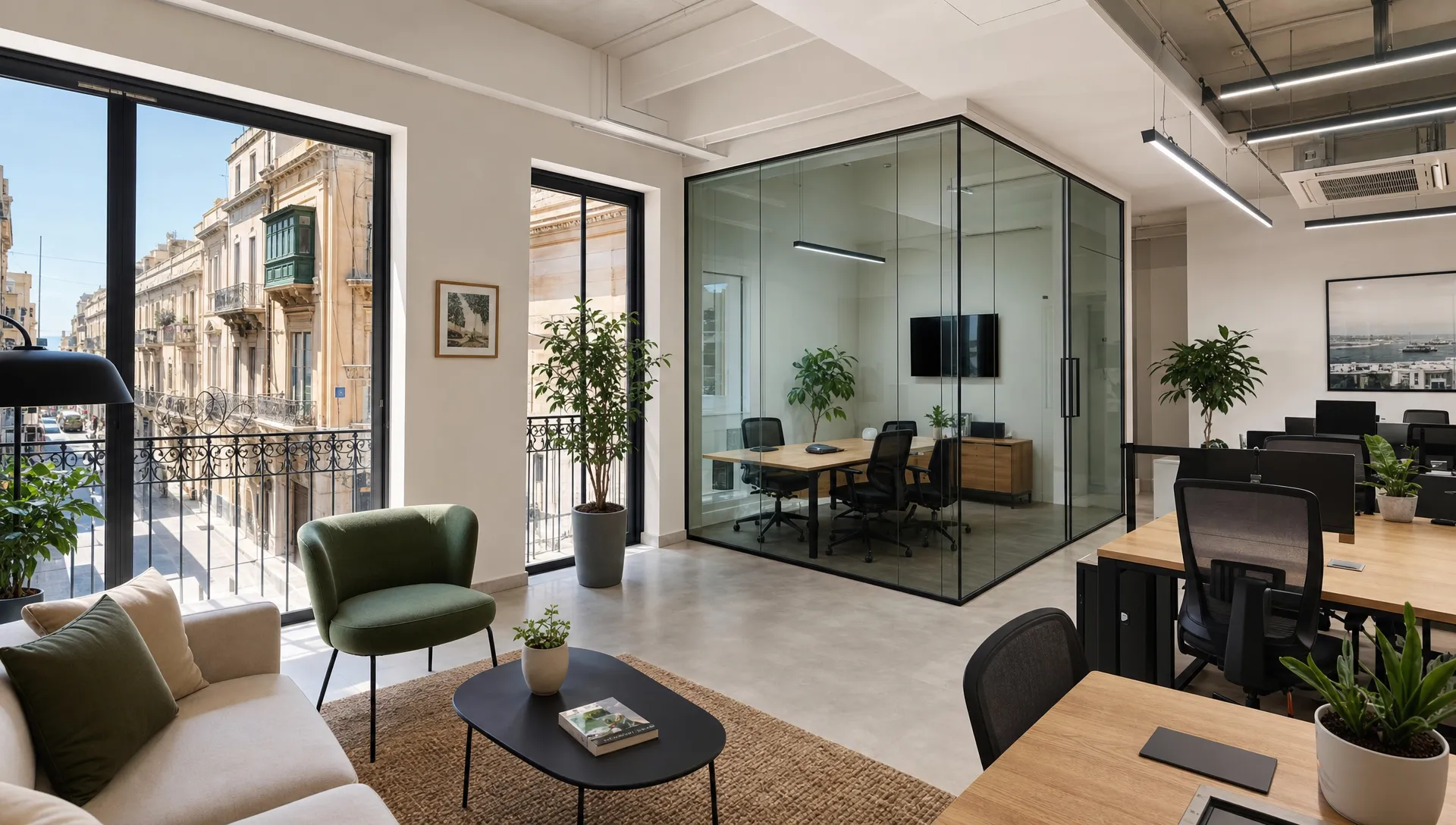
When private office rental is worth it
Private office rental tends to make the most sense when your business has stable needs and clear reasons for wanting control. If your company is still testing the Malta market, a serviced office or smaller flexible setup may be safer. If you already know your team size, client requirements and preferred location, a private office can become a strategic asset.
| Business situation | Why a private office may be worth it |
|---|---|
| Your headcount is stable for the next 12 to 36 months | You can plan space without paying for too much unused capacity |
| You handle confidential client or employee information | Private rooms and controlled access reduce exposure |
| You receive clients, regulators, investors or partners | A dedicated office supports credibility and professionalism |
| Your team needs quiet focus | You can design zones around concentration and collaboration |
| You need specialist IT, security or meeting room setups | A private office gives more control than shared space |
| Your brand and culture matter for recruitment | A dedicated environment can improve the employee experience |
For an established iGaming operator, finance company or professional services firm, the office can be part of the infrastructure that supports growth. It gives the team a stable base, helps managers build routines and can reduce the friction of constantly booking rooms or managing noise in shared environments.
It can also be worth it for SMEs that want predictability. Once the office is set up, the company is not dependent on the availability of shared rooms, changing desk policies or other tenants’ behaviour. That predictability can be valuable, especially for teams with daily client calls or internal meetings.
When it may not be worth it
A private office is less attractive when the business needs maximum flexibility. If you are hiring quickly but do not know whether the team will be 6 or 25 people in a year, taking a fixed space can create pressure. Too small, and you will outgrow it quickly. Too large, and you pay for empty desks.
It may also be unnecessary if most of your team works remotely and only needs occasional meeting space. In that case, a serviced office, coworking plan or hybrid arrangement could give you the presence you need without the same obligations.
Very early-stage companies should be careful with upfront costs. Deposits, furniture, cabling and fit-out can tie up cash that might be better used for hiring, marketing or product development. This does not mean a private office is wrong, but it should be assessed against cash flow and runway, not just comfort.
Private office vs serviced office vs coworking
The best option depends on what you are solving for. If the priority is speed and low setup work, serviced offices are often attractive. If the priority is control and identity, a traditional private office may win. If the priority is low commitment, coworking may be enough.
| Workspace option | Best for | Main trade-off |
|---|---|---|
| Coworking desks | Freelancers, founders, remote-first teams and market testing | Less privacy and limited brand presence |
| Serviced private office | Small to mid-sized teams that want privacy with bundled services | Higher all-in cost per desk in some cases, less long-term control |
| Traditional private office | Established teams needing control, branding and dedicated facilities | More setup work, longer commitments and operational responsibility |
| Larger HQ-style office | Scaling companies, regulated businesses and client-facing teams | Requires careful planning, fit-out and negotiation |
If you are comparing the two most common choices, a private leased office and a serviced private office, review the serviced office versus private office cost breakdown before deciding. The right answer often changes once you compare total cost, lease length, included services and flexibility.
Location can change the answer
In Malta, whether a private office is worth it depends heavily on location. Sliema and St Julian’s are often attractive for client visibility, hospitality access and proximity to business clusters, but premium areas can come with higher rents, traffic and parking challenges.
Valletta can suit legal, advisory, cultural, public-sector-facing and professional services businesses that value prestige and proximity to institutions. Gżira, Msida and Pietà may appeal to teams looking for central access and connectivity. Mrieħel and other central business areas can work well for larger floorplates, operational teams and companies that prioritise access by car. Other locations may offer better value if your clients and staff do not need to be in the highest-profile districts every day.
There is no single best area. A location is worth paying for when it improves recruitment, client access, management efficiency or brand position. If it only looks impressive on paper, the premium may not be justified.
For a broader view of the office market, locations and rental process, see this guide to office space in Malta.
A practical decision framework
Before committing to a private office rental, ask four questions.
First, how often do you truly need privacy? If your team has confidential calls every day, privacy is a core requirement. If you only need a private meeting room once a month, paying for exclusive space may be excessive.
Second, how confident are you in your headcount? The more stable your team size, the easier it is to choose the right office. If your hiring plan is uncertain, prioritise break clauses, expansion options or serviced alternatives.
Third, what is the all-in cost per seat? Include everything: rent, service charges, utilities, furniture, internet, cleaning, parking, fit-out and tax impact. Then compare that number with the business value created by productivity, client trust and staff retention.
Fourth, does the office support your next stage of growth? A private office should not only solve today’s discomfort. It should help the company operate better over the next phase.
If the answer to those questions is clear, private office rental is easier to justify. If every answer is uncertain, flexibility may be more valuable than control.
What to negotiate before signing
Negotiation is not only about rent. In many cases, the terms around flexibility, fit-out, deposits and reinstatement are just as important.
Key points to review include lease length, break options, rent review mechanism, service charge structure, responsibility for repairs, furniture inclusion, internet readiness, permitted use, signage, parking allocation and handover condition. If the office needs work, ask who pays for it and whether any rent-free period or contribution is available.
Also clarify what happens at the end of the lease. Some agreements require the tenant to reinstate the office to its original condition. That can create a cost later, even if the fit-out felt affordable at the start.
Because commercial leases, VAT and operational obligations can vary, it is sensible to involve legal and tax advisers before committing. For regulated sectors, the workspace should also align with licensing, governance and data handling expectations.
So, is private office rental in Malta worth it?
Yes, if your business needs privacy, stability, control and a professional base that supports clients, staff and operations. A private office can be a strong investment for established SMEs, iGaming companies, financial services firms, legal practices, insurers, architects, consultancies and international businesses building a serious presence in Malta.
No, if your headcount is uncertain, cash flow is tight, your team is mostly remote, or you only need occasional meeting space. In those cases, serviced offices and flexible arrangements may deliver better value.
The best decision is rarely based on rent alone. It comes from comparing the all-in cost with the business value of control, privacy, credibility and convenience.
Frequently Asked Questions
Is private office space rental in Malta suitable for small teams? Yes, but it depends on stability. A small team with regular client meetings or confidential work may benefit from a private office. A team that is still changing size quickly may prefer a serviced private office or flexible workspace first.
Is a serviced private office the same as a traditional private office? Not exactly. A serviced private office gives your team exclusive space inside a managed office environment, often with bundled services. A traditional private office usually gives more control but may require more setup, administration and lease commitment.
What hidden costs should I check before renting a private office? Check service charges, utilities, internet, cleaning, furniture, fit-out, deposits, guarantees, parking, repairs, insurance, reinstatement obligations and VAT treatment. These can change the real monthly cost significantly.
Which Malta location is best for a private office? It depends on your sector, staff commute, client base and budget. Sliema, St Julian’s and Valletta can suit client-facing companies, while central business areas may offer practical advantages for larger teams and parking.
Can I negotiate a private office lease in Malta? Often, yes. Rent, rent-free periods, fit-out contributions, break clauses, deposits and handover terms may be negotiable depending on the property, landlord and market conditions.
Find the right private office in Malta
If you are weighing up private office rental, start by comparing real options side by side. OfficeSpace.Rent helps businesses search office listings across Malta, compare serviced and traditional office options, filter by size and price, and get support with viewings, negotiation, legal questions and VAT considerations.
Whether you are relocating, expanding or upgrading from a shared workspace, the right private office should fit your team, your budget and your next stage of growth.