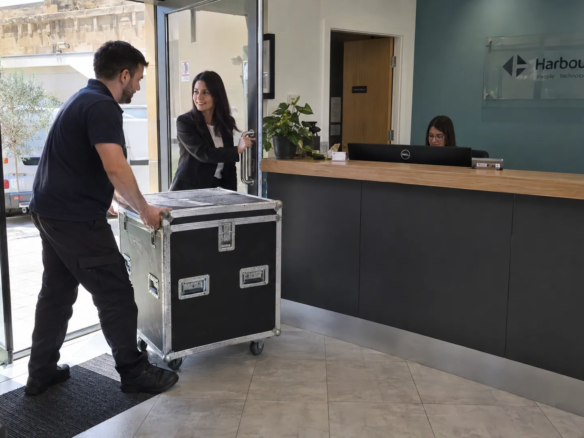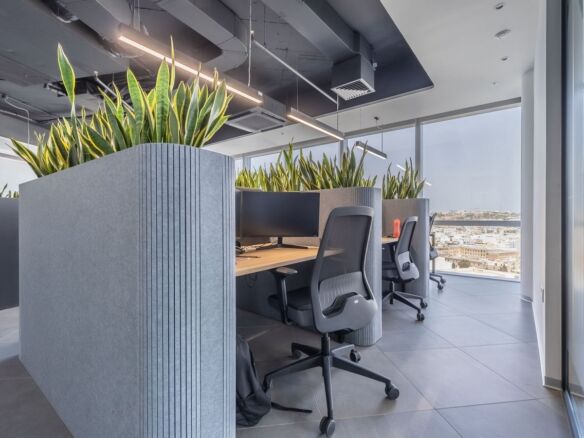
For a regulated firm, an office is more than a place to seat staff. It is part of the control environment that clients, auditors, banks and regulators may look at when assessing how seriously the business is run.
That is why the usual search for private office suites for rent near me needs a more disciplined filter. A good suite for a software company may not be right for an investment firm, insurance intermediary, law practice, iGaming operator or crypto business. Regulated firms need privacy, reliable access, secure records, professional meeting space and lease terms that do not create avoidable operational risk.
In Malta, this matters even more because many companies are either locally licensed, relocating key functions or trying to demonstrate genuine presence. The office cannot create regulatory substance on its own, but the wrong space can make it harder to evidence good governance, confidentiality and day-to-day control.
What makes an office suite suitable for a regulated firm?
A private office suite is a self-contained workspace reserved for one business. It can sit inside a serviced office centre, a business centre or a larger commercial building, or it can be a traditional leased unit with its own entrance and facilities.
For regulated firms, the key point is not whether the suite looks premium. The question is whether it supports how the firm must operate. A suitable suite should help you separate confidential work from public areas, host sensitive meetings without interruption and control who has access to files, devices and staff.
Firms supervised by bodies such as the Malta Financial Services Authority or the Malta Gaming Authority will also care about how the workplace reflects their operating model. That includes where senior management sits, where compliance work is handled, how client data is protected and whether the business has enough room to function properly.
A serious search for private office suites for rent near me should therefore begin with business requirements, not photos. Desk count is only one part of the brief. Compliance, data protection, client perception and future growth all sit beside it.
Private suite, serviced office or traditional lease?
Private suites come in different forms. The right format depends on your licence status, headcount, budget, timing and the level of control you need over the premises.
| Office setup | Best fit | Compliance points to verify |
|---|---|---|
| Private suite in a serviced office | Market entry teams, small regulated firms, representative offices and firms waiting for licence approval | Exclusive use, lockable access, visitor procedures, meeting room privacy and clarity on what is shared |
| Traditional private office lease | Established firms, larger teams, firms with strict internal policies or high client traffic | Fit-out control, security systems, archive space, signage, lease length and maintenance obligations |
| Managed office | Growing firms that want a tailored office without running every operational detail | Service scope, data handling, access rights, contract flexibility and responsibility for repairs |
| Single private office | Solo professionals, small compliance teams or first local presence projects | Registered address use, ability to meet clients privately, postal handling and room to expand |
A serviced setup can be sensible for regulated firms when speed, flexibility and lower upfront cost matter. The trade-off is that more of the building is shared, so the contract and operating procedures deserve close attention. If you are weighing this route, this guide to who should choose a serviced office in Malta is a useful companion.
A traditional lease gives more control but usually involves more commitment. Fit-out, furniture, utilities, internet, insurance, repairs and exit terms can all add complexity. For regulated firms, that extra control may be worth it if the office will host senior leadership, regulated activities, client meetings or sensitive operational work.
Compliance features to assess before you book viewings
Before viewing spaces, agree a basic compliance checklist with management, operations, legal and IT. This avoids choosing a suite because it feels convenient, then discovering that it fails practical tests.
| Requirement | What to ask during the search | Why it matters |
|---|---|---|
| Exclusive occupation | Is the suite lockable and used only by your company? | Helps separate confidential work from shared environments |
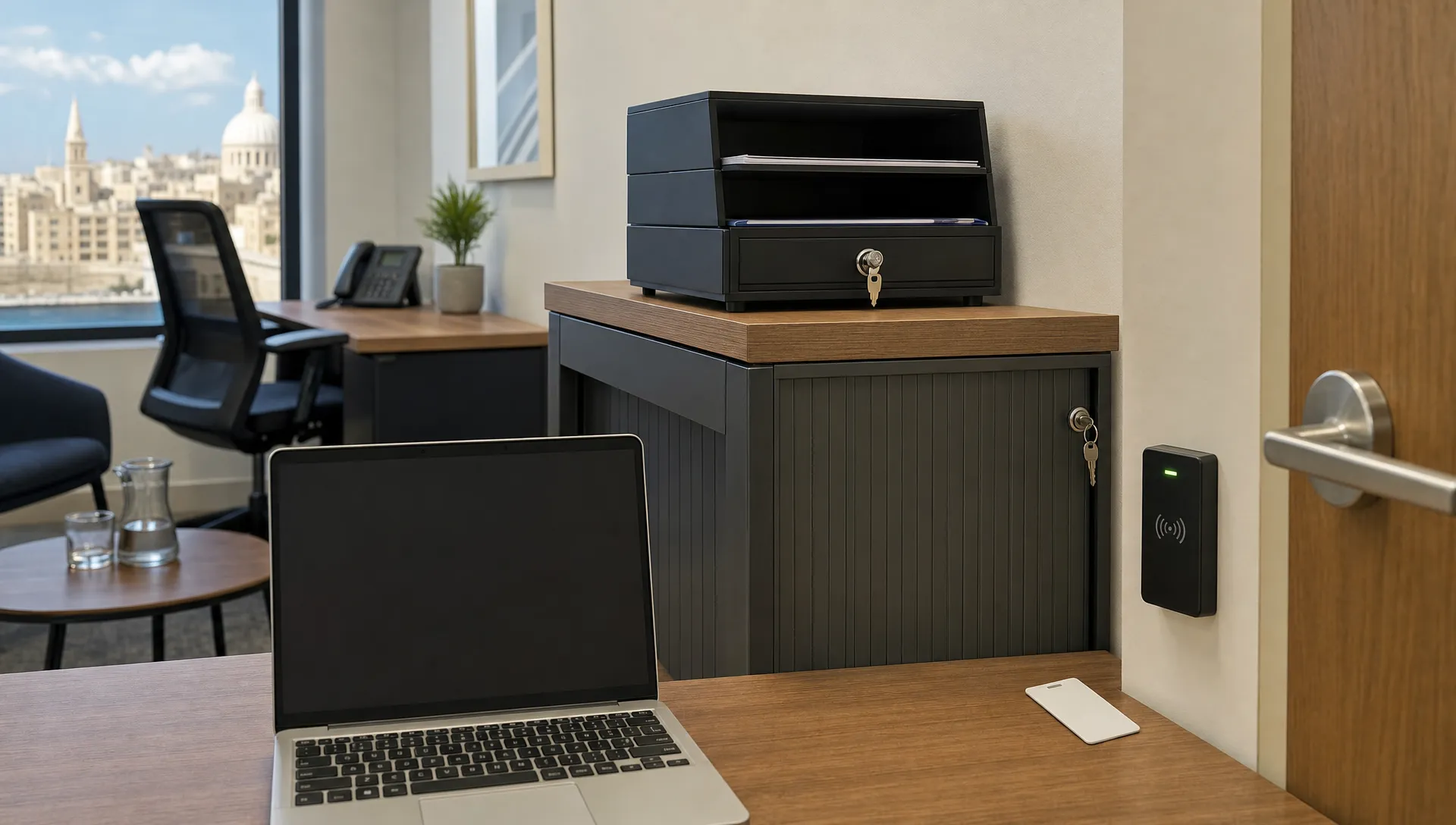
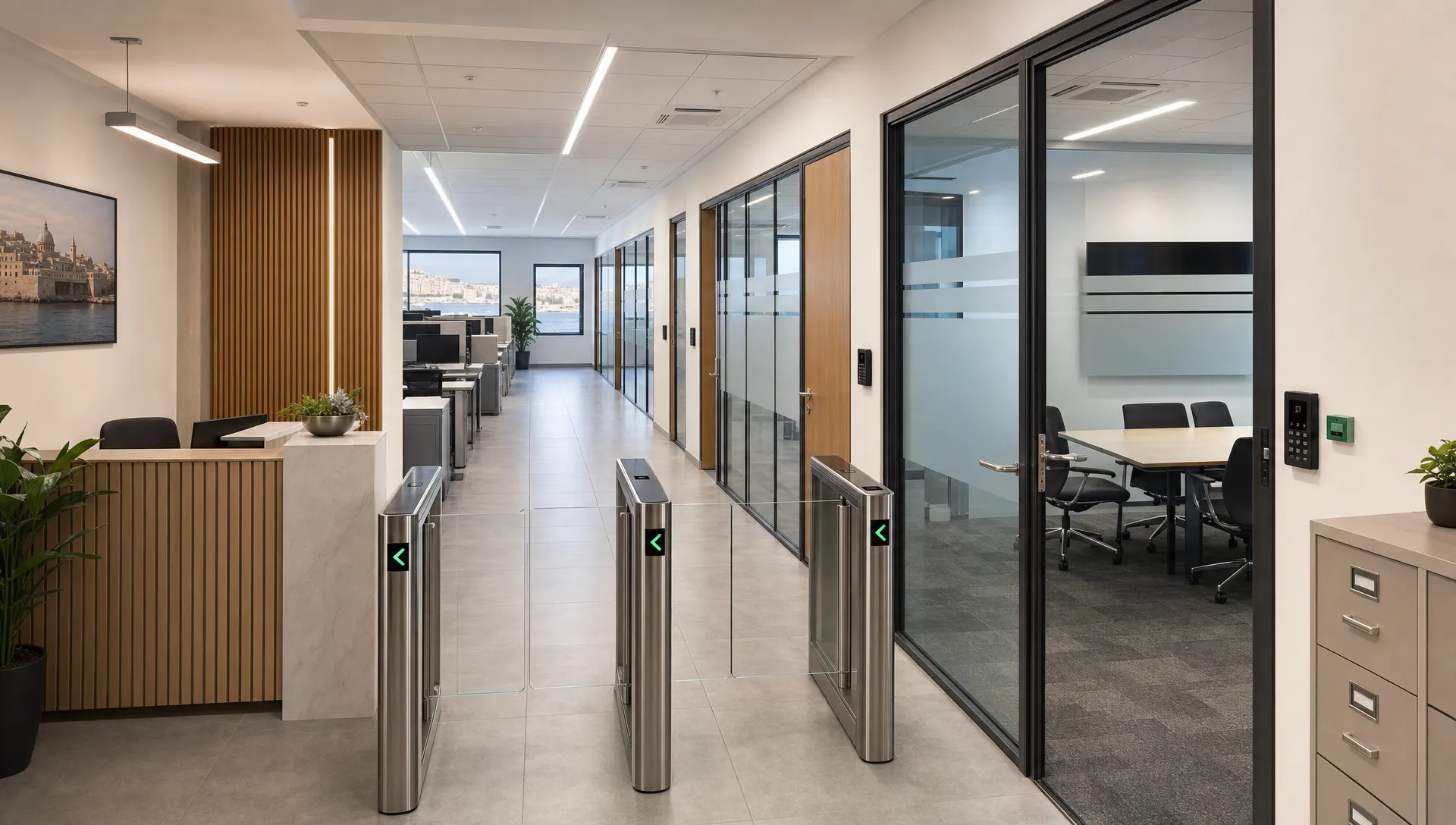
| Access control | Who can enter the floor, suite, meeting rooms and storage areas? | Reduces uncontrolled visitor and contractor access |
| Meeting privacy | Are meeting rooms acoustically private and bookable when needed? | Protects client conversations, board discussions and due diligence meetings |
| Secure storage | Is there space for locked cabinets, servers or confidential archives if required? | Supports document control and internal policies |
| Network reliability | What internet options, redundancy and provider choices are available? | Reduces operational disruption for regulated functions |
| Address and reception | Can the address, signage and mail handling support your business use? | Helps create a credible client and regulator-facing presence |
Data protection should also be part of the property discussion. Under Article 32 of the GDPR, organisations must use appropriate technical and organisational measures to secure personal data. Office design will not satisfy that obligation by itself, but weak access control, visible screens in public areas, shared storage or poor meeting privacy can undermine it.
Location still matters, but not in the usual way
The closest suite is not always the best one. For a regulated firm, location affects staff recruitment, regulator access, banking relationships, client confidence, transport, parking and the quality of nearby services.
Sliema and St Julian’s can suit iGaming, fintech, fund services, professional services and firms that want a recognisable commercial address close to hotels, restaurants and talent. Gzira and Msida often appeal to businesses seeking central access with more practical pricing. Valletta and Floriana can work well for legal, corporate services, public sector-facing firms and board-level meetings. Mriehel, Birkirkara and other central business districts may suit larger teams that need floorplates, parking and stronger commuting options.
When someone in your team types private office suites for rent near me, the search results may prioritise proximity to that person. A better approach is to map the location against your operating reality. Where do directors need to be? Where do staff commute from? How often will clients visit? Will regulators, auditors or external counsel need easy access? Are there banks, notaries, accountants or recruitment partners nearby?
Think in total occupancy cost, not headline rent
Regulated firms should avoid comparing suites only by monthly rent per square metre. A lower rent can become expensive if the space needs extensive fit-out, lacks meeting rooms or forces your team into inefficient processes.
Your internal comparison should include rent, service charges, utilities, internet, furniture, cleaning, maintenance, meeting room use, parking, deposits, legal fees and VAT treatment. If the space is serviced, ask what is genuinely included and what is charged separately. If it is a traditional lease, ask who pays for repairs, air conditioning maintenance, common area charges and reinstatement at exit.
This is especially relevant for firms with approval timelines. A company applying for authorisation, opening a Malta branch or expanding after licence approval may need to commit to premises before revenue from the new setup is fully predictable. Flexibility has value, but only when the terms are clear.
A finance firm with three senior employees and regular board meetings may prefer a serviced private suite with strong reception and meeting facilities. A licensed operator with 30 staff, shift patterns and internal IT requirements may need a dedicated leased floor. Both are valid choices, but they solve different risks.
Questions to ask before signing heads of terms
The viewing stage is where many weaknesses become visible. Walk through the space as if you were already operating from it, not as if you were only inspecting finishes.
- Can confidential calls be heard from corridors or neighbouring offices?
- Are visitors escorted, logged or able to move through shared areas freely?
- Is there enough room for compliance, finance, management and operational teams to work without constant overlap?
- Can the suite support secure cabinets, restricted areas or internal meeting rooms?
- What happens if your team grows by 20 percent in the first year?
- Are the lease terms aligned with licensing, relocation or authorisation timelines?
- Is after-hours access available if your business operates across time zones?
- Who is responsible for internet outages, maintenance issues and building access problems?
When reviewing private office suites for rent near me, ask these questions early. If a landlord or operator cannot answer them clearly, that is useful information in itself.
Red flags regulated firms should not ignore
Some offices look attractive during a short viewing but create problems later. The most obvious warning sign is a workspace that offers an address but no real operational control. A mailing address, shared desk or occasional room may be useful for some light-touch commercial needs, but it is rarely enough for a firm that must evidence actual operations, governance and client confidentiality.
Poor acoustics are another common problem. If conversations carry between rooms, the suite may not be suitable for client onboarding, legal advice, board meetings, complaints handling or AML discussions. This is not just a comfort issue. It affects trust and, in some cases, the way staff behave because they avoid necessary conversations in the office.
Unclear contracts also deserve caution. Watch for vague descriptions of what is included, broad rights for the provider to move your team, uncertain access rights, weak repair obligations or short notice periods that do not match your regulatory and operational commitments.
A final red flag is lack of scalability. Regulated firms often grow unevenly. A licence approval, new fund launch, gaming market expansion or major client mandate can change headcount quickly. If your office cannot absorb that growth, you may face another disruptive move just when management should be focused on execution.
Sector-specific priorities in Malta
Financial services firms normally need a space that supports governance meetings, client due diligence, secure document handling and a professional reception experience. If your firm is dealing with authorisation or supervision, the office should match the substance of your business plan. The office rental process for financial firms in Malta is worth reviewing before you start negotiations.
iGaming and gambling companies often place more weight on uptime, access hours, team collaboration, staff amenities and a location that helps recruitment. They may also need rooms for management, compliance, payments, customer operations and technology teams, even if some functions are hybrid.
Insurance companies, brokers and intermediaries should prioritise client confidentiality, claims-related data privacy, meeting space and dependable storage. A professional reception area can also matter because clients may visit during stressful moments, so the environment should feel orderly and trustworthy.
Law firms, architects and other professional practices may need fewer desks than larger operators, but they usually need stronger acoustic privacy, file storage and a client-facing address. A compact suite in the right building can be more valuable than a larger space that feels informal or difficult to access.
Blockchain and crypto firms should treat the office as part of their credibility stack. Banks, advisors, investors and counterparties may look more closely at governance, local decision-making and operational controls. A private suite cannot solve all of those questions, but it can either support the story or weaken it.
A practical search process
Start by writing a one-page office brief. Include team size today, expected headcount in 12 to 24 months, preferred locations, budget range, meeting room needs, privacy requirements, IT requirements, parking expectations and target move-in date. Add any regulatory, licensing or board approval constraints.
Then separate must-haves from preferences. A sea view may help staff morale, but lockable occupation, reliable access and private meeting space are more important for most regulated firms. Once the brief is clear, compare serviced suites, private leased offices and managed solutions against the same criteria.
Shortlist only spaces that pass the operational test. On viewings, bring someone who understands day-to-day workflows, not only the person responsible for cost. Office managers, compliance officers, operations leads and IT contacts will spot issues that a rent comparison misses.
If your search for private office suites for rent near me is really a search for a compliant Malta base, use the phrase as a starting point rather than the full strategy. The better question is whether the suite gives your firm enough privacy, control, flexibility and credibility to operate properly.
Frequently Asked Questions
Are private office suites better than coworking for regulated firms? Usually, yes, if the firm handles confidential client data, regulated activity, compliance work or board discussions. Coworking can suit early market research or occasional work, but a private suite gives more control over access, privacy and client perception.
Can a serviced office work for an MFSA or MGA-related business? It can, depending on the firm, activity and terms of use. The key is whether the suite provides exclusive occupation, credible business presence, proper meeting facilities and operating controls that match the firm’s obligations. Legal or regulatory advice should be taken where authorisation depends on premises.
How much space should a regulated firm allow per person? Desk count is only the starting point. You also need to allow for meeting rooms, private calls, compliance work, secure storage, reception needs and growth. A dense layout may look efficient on paper but fail in daily regulated operations.
What should be checked in the lease before signing? Check permitted use, access hours, signage, service charges, VAT, maintenance responsibilities, termination rights, renewal options, data and security provisions, parking and whether the landlord can relocate you within the building.
Should firms choose Sliema, Gzira, Valletta or a central business district? It depends on clients, staff, budget and operating model. Sliema and St Julian’s are popular for internationally focused firms, Gzira can offer central value, Valletta suits legal and institutional work, and central business districts can work well for larger teams needing parking and floor space.
Find a suite that fits the way your firm is regulated
The right private suite should make your firm easier to run, easier to supervise and easier to trust. It should give staff the privacy to do sensitive work, management the space to govern properly and clients the confidence that they are dealing with a serious Malta-based business.
If you are comparing private office suites for rent near me, OfficeSpace.Rent can help you review Malta office listings by location, size, budget and office type. You can compare serviced offices and traditional leases, create a shortlist, arrange viewings and get support with negotiations, legal points and VAT guidance before you commit.