Choosing between offices for rent in Malta is not only a property search. It is an operational decision that affects hiring, client meetings, licensing comfort, cash flow and how quickly your company can adapt over the next 12 to 36 months.
A three person consultancy does not need the same setup as an iGaming operator onboarding 60 staff. A law firm with client-facing meeting rooms has different priorities from a crypto startup testing the Malta market. Even two companies with the same headcount may need different office models because one needs privacy, another needs flexibility and a third needs a visible headquarters.
The practical question is not simply which office is best. It is which setup suits your stage, budget and risk profile.
The main office setups available in Malta
Most offices for rent in Malta fall into a few clear categories. The names used in listings can vary, so it helps to understand what each setup usually means before you compare price per square metre.
| Office setup | Best suited to | Main advantage | Main tradeoff |
|---|---|---|---|
| Serviced office | Market entry teams, small firms, project teams and fast movers | Speed, flexibility and included facilities | Less control over layout, branding and long-term cost |
| Traditional private office | Established SMEs, professional firms and regulated businesses | Control, privacy and brand presence | Longer commitment, fit-out and management responsibilities |
| Managed office | Scaling teams that want a private space without running every facility detail | Balance of privacy and operational support | Contract terms vary, so inclusions must be checked carefully |
| HQ office or full floor | Larger companies, iGaming firms, finance teams and regional headquarters | Strong identity, capacity and client confidence | Higher rent exposure and more planning before move-in |
| Coworking or flexible desks | Freelancers, founders, remote teams and short assignments | Low commitment and access to shared facilities | Limited privacy and weaker company identity |
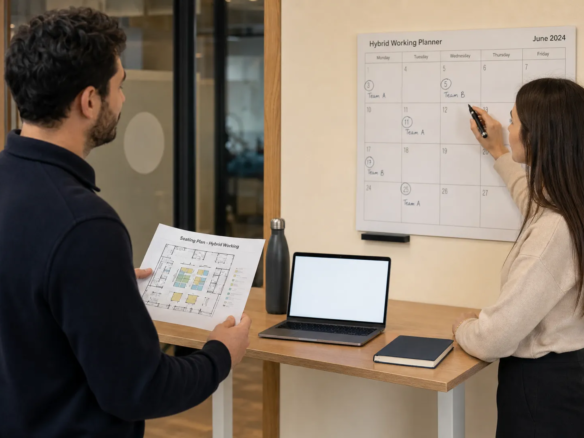
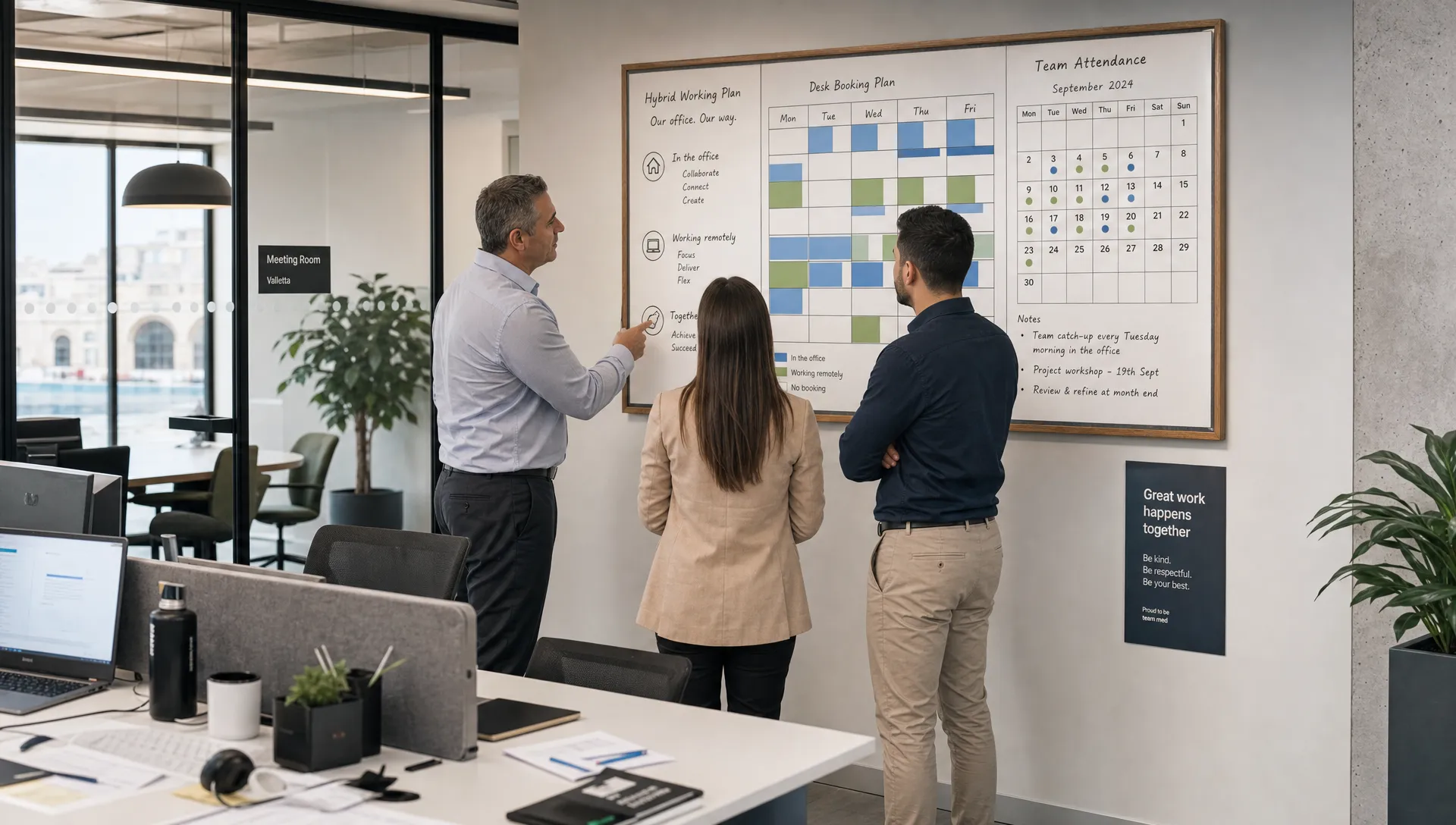
| Hybrid office model | Companies with mixed remote and in-office working | Better space efficiency and flexibility | Needs clear booking, meeting and occupancy planning |
This table gives a starting point, but the right answer depends on how your business actually works day to day.
Start with how your team uses the office
Before comparing locations, define the role your office plays. Many companies overspend because they rent for peak headcount, then use only part of the space on most days. Others take a space that looks efficient on paper but fails because it lacks meeting rooms, private call areas or room for future hiring.
Ask how many people must be in the office at the same time, not only how many people are on the payroll. For a hybrid company, 25 employees may only need 14 to 18 desks if attendance is staggered. For a law firm, architectural practice or insurance company, the same headcount may require more rooms because staff need confidential calls, document storage or client meeting areas.
Also consider whether the office is a recruitment asset. In Malta sectors such as gaming, fintech, financial services and professional services, location and workplace quality can influence how easily you attract staff. A cheaper office far from transport links may cost less each month but create friction for hiring and retention.
Serviced offices: best for speed and flexibility
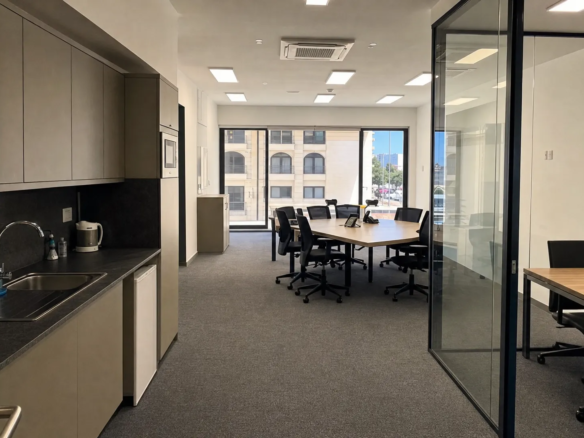
A serviced office is often the simplest choice when timing matters. These spaces typically offer furnished private offices with shared facilities, meeting rooms and operational support. They are popular with companies entering Malta, project teams, small professional firms and businesses that do not want to manage fit-out, internet setup or office administration from day one.
The biggest benefit is speed. Instead of spending weeks or months designing and furnishing a space, you can often start operating much sooner. This is useful if you are relocating staff, waiting for a larger lease to become available or testing Malta before committing to a long-term office.
Serviced offices also help when headcount is uncertain. If your team may grow from 4 to 10 people within a year, flexible terms can reduce the risk of being locked into the wrong footprint. For more detail on this model, see our guide to choosing a serviced office for rent in Malta.
The tradeoff is control. You may have less freedom to change layout, signage, access rules or meeting room availability. Over a longer period, the convenience premium can also become more expensive than leasing your own space. A serviced office suits you best when flexibility is worth more than full control.
Traditional private offices: best for control and stability
A traditional office lease gives your business a dedicated private premises, usually with more control over layout, branding, access and internal policies. For established SMEs, lawyers, architects, accountants, insurance companies and financial services firms, this setup often provides the professional presence and confidentiality needed for client work.
This model works well when your headcount is predictable and you expect to stay in the same area for several years. It gives you more freedom to design workstations, boardrooms, reception areas, storage, IT infrastructure and compliance processes around your business.
The cost picture is different from a serviced office. The headline rent is only one part of the commitment. You may also need to budget for furniture, utilities, maintenance, internet, insurance, fit-out, deposits, common area charges, cleaning and possible reinstatement at the end of the lease. These costs are manageable when planned properly, but they can surprise companies that compare only monthly rent.
Traditional offices suit companies that value control, brand presence and privacy more than short-term flexibility. They are less suitable if your team size is unclear, your Malta plans are still being tested or you need to move in immediately with minimal setup.
Managed offices: the middle ground
Managed offices sit between serviced offices and traditional leases. In this setup, you still get a private office for your team, but more services may be handled by the provider or landlord. This can include furniture, maintenance, reception support or utilities depending on the agreement.
For scaling companies, a managed office can be a sensible compromise. You avoid some of the operational burden of a traditional lease while still giving staff and clients a dedicated company environment. This is especially attractive for teams that have outgrown coworking but are not ready to manage a full headquarters.
The key is to check the contract carefully. Managed office is not a single legal category, so inclusions differ from one property to another. One listing may include furniture and utilities, while another may only offer a fitted space with separate running costs. Always ask what is included, what is optional and what happens if your team grows before the contract ends.
HQ offices: best for larger teams and brand presence
A headquarters style office, full floor or larger commercial property is suited to companies that need scale, visibility and a stronger internal identity. This is common among iGaming companies, casino and gambling operators, financial services firms, insurance groups, larger SMEs and regional management teams.
The benefits are clear. A larger office can support departmental zones, boardrooms, training areas, breakout space, compliance storage, dedicated IT rooms and client reception areas. It also signals permanence, which can matter when dealing with partners, regulators, investors or senior hires.
HQ offices require more planning than smaller rentals. You need to think about parking, lift access, staff commuting, business continuity, power and connectivity, security, meeting room ratios and the future shape of the team. If you are taking a larger space, you should also model your total occupancy cost over the lease term rather than focusing on the first year.
For companies comparing areas, our guide to office locations across Malta gives a useful overview of how different business districts serve different company types.
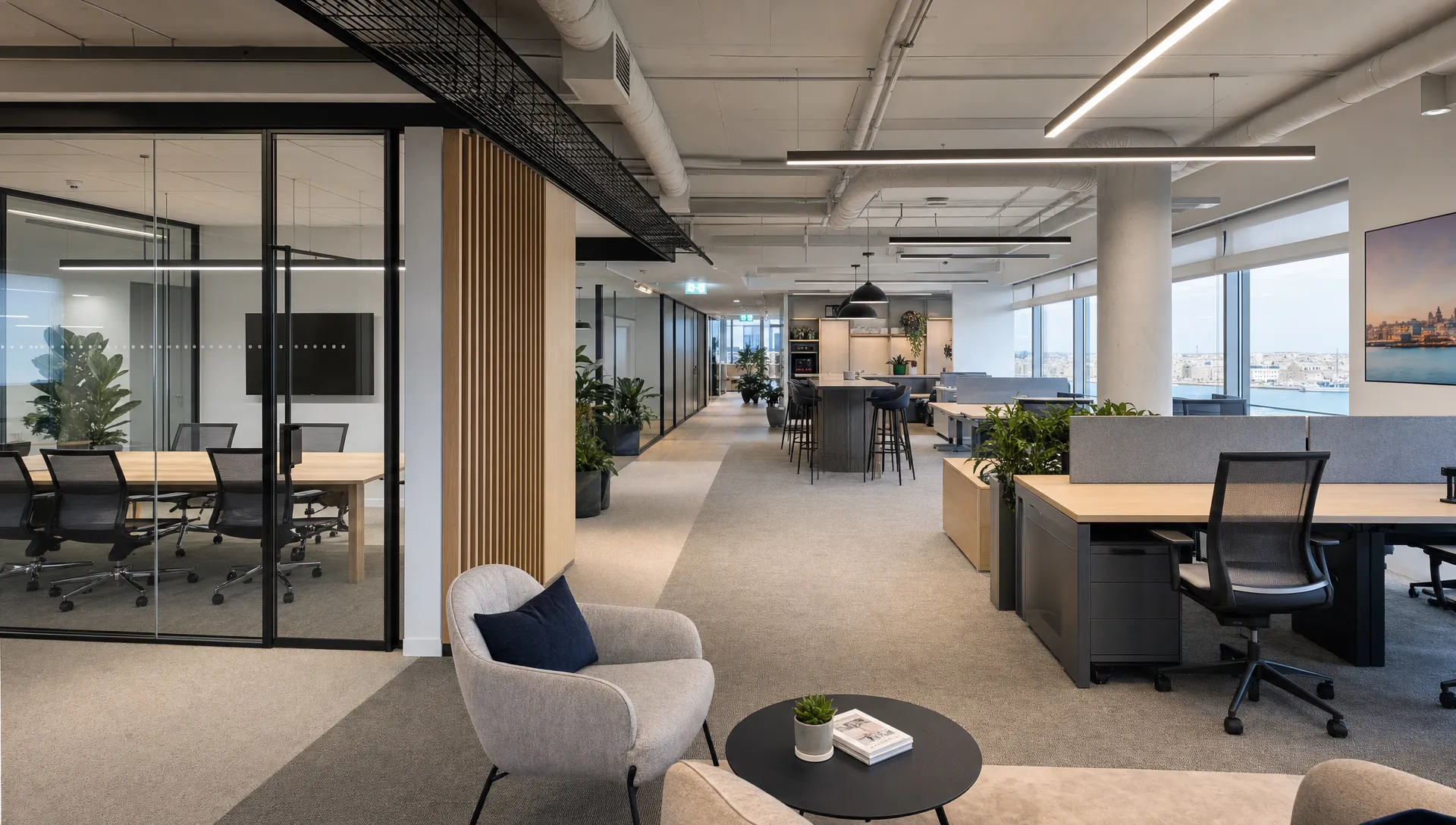
Hybrid offices suit companies that know how their teams collaborate. They are less effective when attendance patterns are unclear or when the office must support frequent confidential client meetings.
Match the setup to your sector
Different industries tend to prioritise different features. This does not mean every company in a sector needs the same office, but it gives a useful starting point for shortlisting.
| Business type | Usually needs | Best-fitting setups |
|---|---|---|
| iGaming, casino and gambling | Scale, staff amenities, meeting rooms, strong connectivity and a recognisable location | HQ office, managed office or larger private office |
| Financial services and insurance | Privacy, client meeting rooms, secure document handling and professional surroundings | Traditional private office, managed office or HQ office |
| Blockchain and crypto companies | Flexibility, strong connectivity, meeting areas and room for fast headcount change | Serviced office, managed office |
| Law firms and architects | Client-facing rooms, confidentiality, storage and a credible address | Traditional private office or high-quality serviced office |
| SMEs and growing companies | Cost control, growth capacity and practical access for staff | Private office |
| Overseas companies entering Malta | Fast setup, low initial risk and support during market entry | Serviced office |
Regulated businesses should also consider how the office supports governance, record keeping, data protection, client confidentiality and continuity of operations. Property choice does not replace legal or regulatory advice, but it can make compliance easier or harder in practice.
Compare the full cost, not just the monthly rent
Two offices with the same rent can have very different total costs. A fitted office with furniture, air conditioning and reliable connectivity may be better value than a cheaper shell that needs major setup work. A serviced office may look expensive per desk but still save money if it avoids fit-out, furniture and facilities management during a short stay.
When comparing offices, build a like-for-like cost view. Include both one-off and recurring costs, then divide by realistic occupancy rather than maximum capacity.
| Cost factor | Why it matters | Questions to ask |
|---|---|---|
| Rent | Main recurring cost | Is it quoted monthly, annually or per square metre? |
| Service charges | Can materially affect total occupancy cost | What common area or maintenance charges apply? |
| Fit-out and furniture | Can change the real first-year cost | Is the office fitted, partly fitted or unfurnished? |
| Internet and utilities | Critical for most Malta businesses | Are these included or contracted separately? |
| Parking | Important for senior staff, clients and some locations | How many spaces are included and at what cost? |
| Deposit and guarantees | Affects cash flow at move-in | What deposit, guarantee or advance payment is required? |
| Lease flexibility | Determines risk if plans change | Can you expand, sublet or exit early? |
| VAT and legal treatment | Can affect budgeting and recoverability | What should your accountant or lawyer review before signing? |
This is where a structured search saves time. On OfficeSpace.Rent, businesses can compare listings by location, size and price, then use support around viewings, negotiation, legal points and VAT questions before making a commitment.
Choose location after you choose the operating model
Many office searches start with a location preference, but setup should come first. A company that needs a flexible serviced office may find suitable options in a different set of areas from a company looking for a 500 square metre headquarters. If you lock into one area too early, you may miss better-fit properties elsewhere.
That said, location still matters. Sliema and St Julian’s may suit companies that prioritise visibility, lifestyle and access to a broad talent pool. Valletta and Floriana can be attractive for professional services, government proximity and a formal business presence. Mriehel, Birkirkara, Pieta, Msida and surrounding central areas can offer practical access for teams moving around the island, depending on the exact property and commute pattern.
The right location should match your staff, clients and operational rhythm. If most employees commute by car, parking and road access may matter more than a prestigious address. If clients visit daily, building quality, reception and nearby amenities become more important. If you hire internationally, proximity to popular residential areas and transport links may carry more weight.
Viewing checklist: what to confirm before you commit
A good viewing should test whether the office works in real life. Photos and floor plans are useful, but they cannot show noise, natural light, mobile signal, entrance quality or how the building feels at peak hours.
Use each viewing to confirm the following:
- Actual usable space, not only advertised floor area
- Desk capacity at a comfortable density
- Number and quality of meeting rooms or call rooms
- Air conditioning, ventilation and natural light
- Internet availability and backup options
- Access rules, lift capacity and after-hours entry
- Parking, loading and visitor access
- Nearby food, transport and staff amenities
- Condition of bathrooms, kitchenette and shared areas
- Lease terms, deposits, service charges and handover condition
Bring the person who will run the office day to day, not only the final decision maker. An office manager may spot issues with storage, cleaning, deliveries or access that a CEO focused on rent and location could miss.
A simple way to decide
If you need to move quickly, have uncertain headcount or want minimal setup, start with a serviced office. If you need privacy, brand control and a stable base, shortlist traditional private offices. If you want privacy without taking on every facility detail, consider managed offices. If you are building a larger Malta operation, focus on HQ-style spaces and model your total cost over several years.
For many companies, the best path is staged. Start flexible, learn your hiring pace and staff routines, then move into a longer-term office when the business case is clearer. This reduces the risk of renting too much space too soon or choosing a location that does not fit your team.
Frequently Asked Questions
What is the best type of office for a company entering Malta? A serviced office setup is usually the lowest-friction starting point because it allows faster move-in and less upfront commitment. Once the Malta team is stable, the company can compare private offices.
Are serviced offices more expensive than traditional offices in Malta? They can cost more per desk, but the comparison depends on what is included. Serviced offices may include furniture, utilities, reception support and shared facilities, while a traditional lease may require separate spending on fit-out, furniture, internet and maintenance.
How much office space should I rent per employee? There is no single rule because it depends on layout, meeting room needs and hybrid working patterns. A dense sales team may need less space per person than a law firm, architecture studio or financial services office with private rooms and client areas.
Which Malta locations are best for office rentals? The best location depends on staff commutes, client access, parking, budget and the type of office you need. Sliema, St Julian’s, Valletta, Floriana, Mriehel, Birkirkara, Pieta and Msida all serve different business needs.
Find the Malta office setup that fits your business
The right office should support how your company works today and where it is likely to be in the next few years.
If you are comparing offices for rent in Malta, OfficeSpace.Rent helps you shortlist verified options by location, size, price and setup. You can compare serviced offices, private offices and larger commercial properties, then get support with viewings, negotiations and key lease considerations before you decide.