Choosing a central serviced office in Malta is not only a property decision. For CEOs, founders, office managers, legal practices, iGaming operators, financial services firms and overseas companies setting up locally, the office affects recruitment, client access, compliance routines and monthly cash flow. The right serviced setup can reduce setup time while giving your team a professional base in the middle of Malta’s business network.
Malta’s office market is compact, but “central” can mean different things depending on how your company works. For one business, it means proximity to Sliema and St Julian’s. For another, it means easier access to Mriehel, Birkirkara, St Venera or Valletta. Use the process below to shortlist options with fewer surprises and better internal buy-in.
What a central serviced office in Malta should mean in practice
Central should not be judged by a pin on a map alone. In Malta, short distances can still mean very different commute times, parking conditions, taxi availability and client convenience. A good location is the one that supports your daily operations, not simply the one that appears closest to the island’s midpoint.
For client-facing firms, centrality may mean being near Sliema, Gzira, Ta’ Xbiex, St Julian’s or Valletta. For companies that value road access and business-park convenience, Mriehel, Birkirkara and St Venera may be more practical. If you are comparing several districts, the 2026 guide to serviced offices in Malta by location is a useful companion to this decision process.
Identify your real centre of gravity
A central serviced office should reduce friction for the people who use it most. Start by mapping your regular journeys: staff commutes, client meetings, supplier visits, airport transfers and trips to banks, advisors or authorities. Then separate “nice to have” prestige from operational need.
This matters because a premium address may not be the best operational base if your team struggles to park, your clients face traffic delays or your managers spend too much time moving between meetings. The best central choice balances visibility, access and working comfort.
Decide whether serviced space fits your business stage
Serviced offices are designed to remove much of the setup burden from office rental. Furniture, shared facilities, reception areas, internet provision and meeting rooms are often included or available through the operator, though the exact package varies by building and contract.
A central serviced office usually makes most sense when speed, flexibility and predictable setup costs matter more than full control over the premises. It can be especially helpful for overseas companies entering Malta, growing SMEs, project teams, regulated firms needing a professional address or businesses that do not want to manage fit-out works.
Traditional leases can still be better for companies with larger headcounts, specific branding needs, unusual technical requirements or long-term certainty. If you are still deciding between serviced and conventional space, compare the trade-offs in this guide to which office setup suits your business in Malta.
| Business situation | Serviced office advantage | Point to check before signing |
|---|---|---|
| New Malta market entry | Faster start with fewer setup tasks | Contract flexibility and registered address rules |
| Growing SME | Easier to add or reduce desks | Availability of expansion space in the same building |
| Client-facing professional firm | Reception, meeting rooms and central access | Quality of shared areas and privacy standards |
| Remote-first team needing a hub | Lower commitment than a full lease | Meeting room booking terms and access hours |
| Regulated or licensed business | Professional premises and support services | Suitability for compliance, records and inspections |
Build a total occupancy budget, not just a rent comparison
The monthly desk or office price is only part of the decision. A cheaper office can become expensive if meeting rooms, parking, printing, after-hours access, signage, storage or extra connectivity are billed separately. A higher headline price may be better value if it includes the services your team uses every week.
When comparing a central serviced office, ask for the total monthly cost under realistic usage. Estimate your likely meeting room hours, visitors, calls, parking needs, private internet requirements and any special access requirements. For VAT, deposits, legal terms and company-specific tax treatment, use professional advice rather than assumptions.
The most useful comparison is “cost to operate” rather than “rent per square metre” alone. Rent per square metre can be helpful for benchmarking, but serviced space packages differ too much to rely on one figure without checking what is included.
Costs that often affect the real monthly figure
Ask the provider or agent to clarify what happens if your usage increases. Some serviced offices work very well for small teams but become less efficient once a company needs frequent boardroom use, dedicated parking or customised IT.
- Meeting room allowance and hourly charges
- Internet speed, private network options and support response times
- Reception, mail handling and call answering terms
- Parking availability for staff and visitors
- Printing, storage, lockers and kitchen facilities
- Deposit, notice period and renewal conditions
Inspect the building as carefully as the office suite
The quality of the building will shape how staff and clients perceive your company. Look beyond the furnished desk area. Reception standards, lift reliability, cleanliness, natural light, air conditioning, washrooms and shared breakout space all influence the working day.
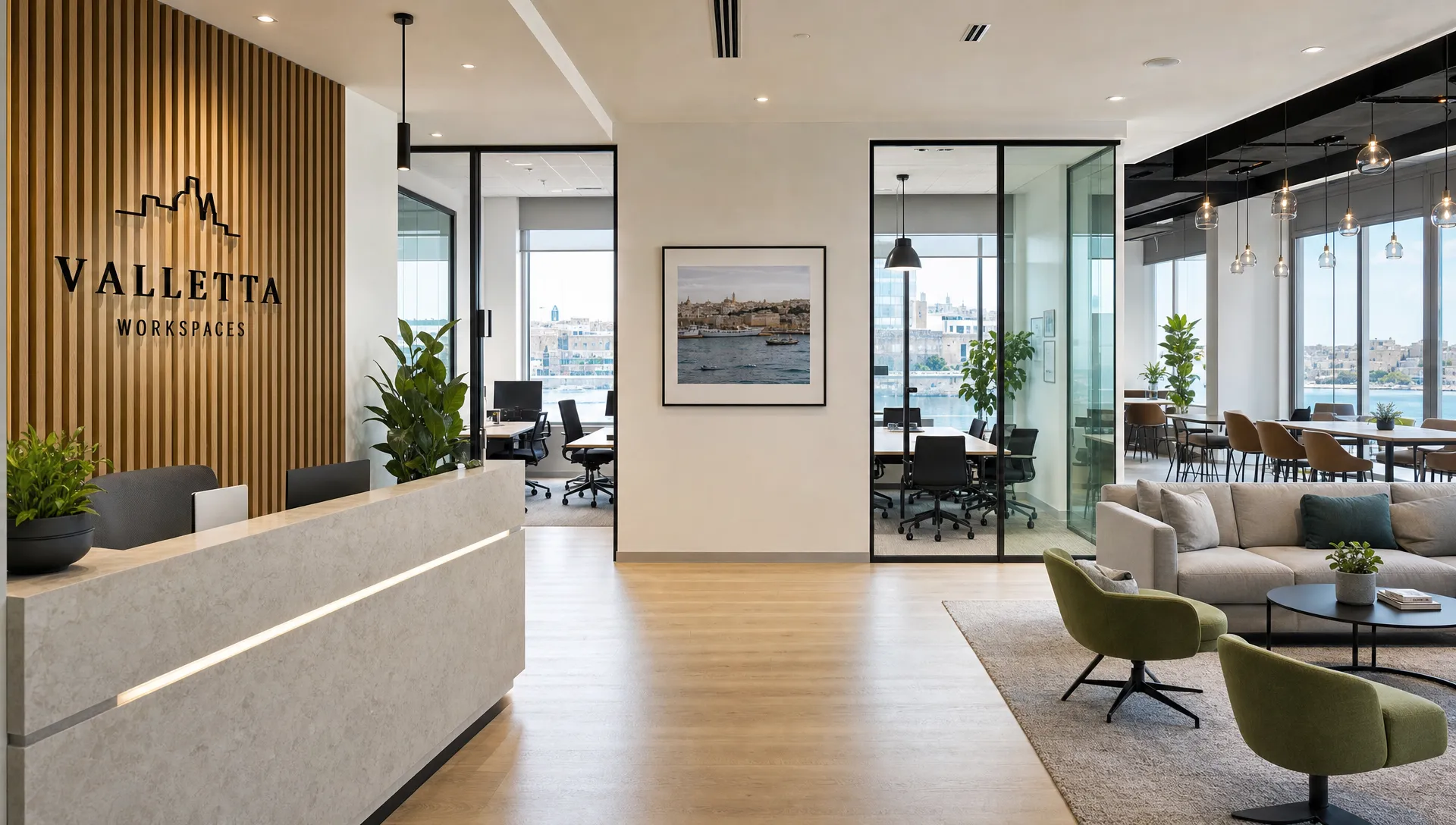
A polished brochure is not enough. Visit at the times your team will actually arrive and leave, especially if staff commute during peak hours. Check the surrounding streets, parking pressure, noise levels, nearby food options and how easy it is for a first-time visitor to find the entrance.
Test the operational details during the viewing
During a viewing, ask to see the exact office your team would occupy, not only a show suite. If the building offers shared meeting rooms or lounges, check whether they are quiet enough for confidential discussions. For law firms, financial services providers, insurance companies and management teams, privacy can be as important as location.
A central serviced office can look ideal online but feel unsuitable in person if the acoustics are poor, the layout is cramped or the building does not match your brand. Bring at least one person who understands daily operations, not only the person responsible for budget approval.
Match the location to your sector and clients
Different sectors use office space in different ways. An iGaming company may prioritise talent access, nightlife proximity and an address familiar to international recruits. A financial services firm may focus more on meeting rooms, confidentiality, parking and the quality of reception. Architects and lawyers may need a place that reassures clients while still giving staff a practical commute.
A central serviced office should fit the expectations of your market. For insurance, finance, legal and advisory work, the space must feel stable and professional. For blockchain, crypto, gaming and technology companies, flexibility and fast onboarding may carry more weight, especially when teams scale around product launches or licence milestones.
Location also affects recruitment. If your staff are split across Malta and Gozo ferry connections, road access may matter more than a fashionable address. If your clients are concentrated around Sliema, St Julian’s, Valletta or Ta’ Xbiex, meeting convenience may justify a higher cost.
Read the contract with the same care as a lease
Serviced office agreements are often more flexible than traditional leases, but they are still commercial commitments. Review the contract length, notice period, deposit, renewal process, included services, payment terms and any limits on access or use.
Before committing to a central serviced office, ask how the agreement handles growth. Can you move to a larger room in the same building? What happens if you need fewer desks? Are you allowed to use the address for company registration, licensing or correspondence? The answer can vary by provider and by your business activity.
For regulated businesses, do not rely on a verbal assurance. Confirm whether the premises satisfy your operational and compliance requirements, then validate the position with your advisors. This is particularly relevant for financial services, insurance, gaming, crypto and other licensed sectors.
Questions to ask before signing
Use these questions to make each provider easier to compare. The aim is not to find a perfect office, but to avoid hidden compromises that only appear after move-in.
- What exactly is included in the monthly price?
- How many meeting room hours are included and how are extras charged?
- What are the access hours for staff, managers and visitors?
- Is parking available, and is it dedicated or first come, first served?
- Can the company use the address for registration or licensing purposes if needed?
- What notice period applies if the team grows, shrinks or relocates?
- Who is responsible for internet issues, maintenance requests and access cards?
Create a shortlist and compare like for like
A structured shortlist prevents the decision from becoming a debate about personal preference. Score each option against the same criteria: location, total cost, contract flexibility, building quality, privacy, meeting rooms, transport access, parking, scalability and brand fit.
If you are close to choosing a central serviced office, arrange a second viewing before signing. Visit with the people who will use the office most, and if possible, test the commute at the right time of day. A 20-minute difference in daily access can matter more than a small saving on monthly rent.
You can also compare real options such as the Central Serviced Offices listing in St Venera to see how rent, size, features and building information are presented before building your own shortlist.
Frequently Asked Questions
Is a serviced office better than a traditional lease in Malta? It depends on your priorities. A serviced office is often better for speed, flexibility and lower setup work, while a traditional lease can suit larger teams that need full control, branding or a long-term headquarters.
Which areas are considered central for offices in Malta? Common central business areas include Sliema, Gzira, Ta’ Xbiex, St Julian’s, Valletta, Mriehel, Birkirkara and St Venera. The best area depends on your clients, staff commute patterns and operational needs.
How long should I commit to a central serviced office? Choose a term that matches your business visibility. If your Malta headcount is uncertain, prioritise shorter commitments or expansion options. If your team is stable, you may negotiate better value with a longer agreement.
Can regulated companies use serviced offices in Malta? Many regulated or professional businesses consider serviced offices, but suitability depends on the activity, licence requirements, privacy needs and address rules. Confirm the details with the provider and your legal or compliance advisors.
What is the biggest mistake when choosing a serviced office? The most common mistake is comparing only the monthly price. Total cost, meeting room access, parking, privacy, contract terms and building quality often have a bigger impact on day-to-day value.
Need help finding the right office in Malta?
Choosing office space is easier when you compare the market with clear criteria. OfficeSpace.Rent helps companies review listings, compare locations, understand pricing and arrange viewings for serviced offices, traditional leases and larger commercial properties in Malta.
Start by browsing office space for rent in Malta, or use the platform to create a shortlist that fits your team size, sector, location preference and budget before you commit to viewings.