Choosing office space in Malta is rarely a simple rent comparison. For an SME, the wrong office can drain cash, limit hiring or create daily friction for staff and clients. For an overseas firm entering Malta, the office decision also affects first impressions, licence applications, relocation planning and how quickly the local operation can become functional.
The good news is that Malta offers a broad mix of workspace options, from serviced offices that can be occupied quickly to larger commercial properties suitable for headquarters. The challenge is knowing which type of office fits your stage, sector and time horizon.
This guide takes a practical view of the office space Malta market for SMEs, scaleups and overseas firms. It focuses on the decisions that matter before you sign: location, cost, office type, lease flexibility, compliance and the search process.
Why Malta office decisions need a sharper brief
Malta is compact, but office demand is concentrated in a few high-activity areas. A location that looks close on a map can feel very different during peak commuting hours, especially if your staff are travelling from different parts of the island or if clients expect easy parking.
For local SMEs, the main pressure is usually balancing cost with credibility and convenience. A professional office in Sliema, St Julian’s, Gzira or Valletta may support client trust, but a central inland location may give you more space for the same budget. The right answer depends on how often clients visit, how many employees need to commute daily and whether the office is mainly operational or client-facing.
For overseas firms, the office often has a second role. It is part of market entry. A company relocating management, setting up a regulated operation or building a Malta-based team needs an address that works commercially and practically. For sectors such as iGaming, financial services, insurance, legal, architecture, crypto and blockchain, an office also needs to suit compliance expectations, meeting requirements and staff recruitment.
Before comparing listings, define what the office must achieve in the first 12 to 24 months. A short, clear brief saves time and prevents the search from becoming a tour of attractive spaces that do not match your operating model.
Start with your operating model, not the postcode
The most common mistake is starting with the question, “Which area is best?” A better first question is, “What must the office support every week?”
A lean consultancy with five employees and client meetings twice a month has different needs from a gaming company hiring 40 people in phases. A law firm may prioritise privacy, reception quality and proximity to courts or professional services. An architecture studio may need open work areas, sample storage and meeting space for project reviews. A financial services firm may place more weight on boardroom access, secure IT infrastructure and a location that feels established.
For an SME or overseas entrant, the brief should cover these points:
- Expected headcount now and in 12, 18 and 24 months
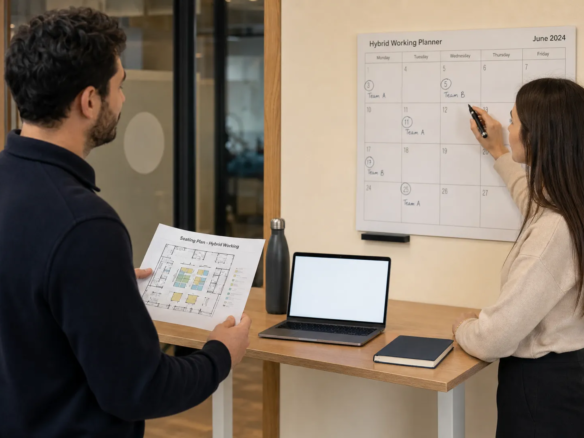
- Work pattern, including hybrid, shift-based or fully office-based teams
- Need for private meeting rooms, boardrooms or confidential calls
- Client visit frequency and the impression the office should create
- Parking, public transport and staff commute patterns
- Fit-out requirements, including cabling, air conditioning, furniture and branding
- Regulatory or licensing considerations that may affect the premises
Once those points are clear, the location and office type become much easier to assess.
Main office types to compare in Malta
Malta’s office market includes several formats. The right choice usually depends on speed, flexibility, budget certainty and how much control you need over the premises.
| Office type | Best suited to | Main advantage | Watch before committing |
|---|---|---|---|
| Serviced office | Overseas entrants, small teams, project offices | Fast setup with lower operational burden | Check what is included, meeting room access and any limits on branding |
| Private office in a shared workspace | Startups, SMEs, satellite teams | Flexibility and shared amenities | Confirm noise levels, privacy and expansion options |
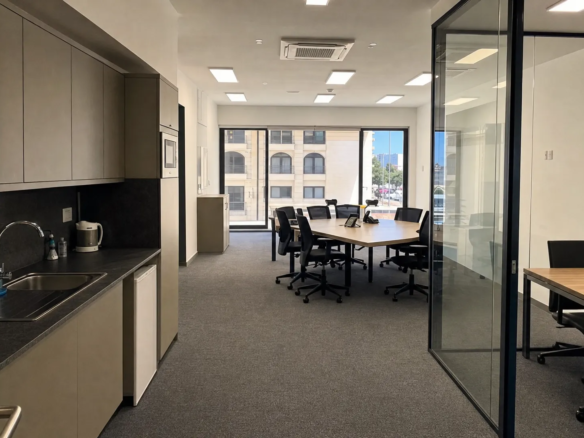
| Fitted office lease | Growing SMEs, professional firms, established local teams | More control without a full build-out | Inspect furniture, IT readiness and maintenance responsibilities |
| Shell or partly finished office | Larger teams, HQ moves, firms with specific layout needs | High control over design and layout | Budget for fit-out, permits, time and landlord approvals |
| Office for sale | Long-term Malta presence, owner-occupiers | Asset ownership and control | Higher upfront capital, legal due diligence and reduced flexibility |
Serviced offices are popular with overseas firms because they reduce setup friction. They can be useful while a company registers locally, hires its first team or tests a location before moving into a larger lease. A traditional lease may become more cost-efficient once the headcount is stable and the business needs dedicated meeting rooms, storage, branding or bespoke design.
If you are still deciding between these models, the broader guide to renting office space in Malta is a useful next step for understanding lease structures, office categories and market basics.
Best Malta locations for SMEs and overseas firms
There is no single best office location in Malta. The right area depends on sector, hiring needs, client expectations and budget.
Sliema and St Julian’s remain strong choices for businesses that want visibility, a central commercial setting and access to restaurants, hotels and services. They are often attractive to iGaming, finance, consulting and international teams, although parking and rent levels need careful assessment.
Gzira and Ta’ Xbiex can suit firms that want a business-friendly location close to the harbour area, with good access to Sliema, Valletta and central Malta. These areas are often considered by professional services, tech firms and companies that want to be near other commercial operators without necessarily choosing the highest-profile streets.
Valletta and Floriana offer a strong address, proximity to public administration and a more formal business environment. They can suit legal, financial, advisory and representative offices, particularly when clients or institutions are part of the working week.
Birkirkara, Mriehel and central business districts often appeal to SMEs that need more space, better road access or a more practical daily setup for staff. For businesses with operational teams, back-office functions or planned growth, these areas may offer a better balance between space and cost.
Mosta, Naxxar, Qormi, Marsa, Luqa and nearby industrial or commercial zones can be relevant for companies that need storage, logistics access, hybrid office and light operational space or a location outside the most expensive coastal districts.
| Business priority | Locations often considered | Why they may fit |
|---|---|---|
| International client presence | Sliema, St Julian’s, Valletta, Ta’ Xbiex | Recognisable business addresses and nearby hospitality |
| Staff access and value | Birkirkara, Mriehel, Mosta, Qormi | Central or inland access with broader space options |
| Government and institutional proximity | Valletta, Floriana | Close to public bodies, courts and formal meeting venues |
| Growing operational teams | Mriehel, Marsa, Luqa, Qormi | Practical layouts, access routes and potential for larger footprints |
| Harbour area business environment | Gzira, Ta’ Xbiex, Sliema | Good connectivity and established commercial surroundings |
Do not judge a location only by distance from the airport or the capital. Visit at commute times, check parking in practice and ask staff how the location affects their daily routine. In a small market, these details have an outsized impact on retention and productivity.
Budget beyond monthly rent
Monthly rent is only one part of the total cost of office space in Malta. SMEs and overseas firms should build a simple total occupancy budget before shortlisting properties.
Costs can include rent, VAT where applicable, common area charges, utilities, internet, cleaning, maintenance, insurance, furniture, fit-out works, legal review, deposits and reinstatement obligations at the end of the lease. If the office is delivered in shell form, the fit-out budget and timeline may become as important as the rent itself.
VAT deserves specific attention. Malta’s standard VAT rate is 18 percent, but the VAT treatment of commercial property can depend on the landlord, lease structure and tenant circumstances. Overseas companies should clarify this early with a local adviser because recoverability and cash flow treatment can affect the true cost of the office.
Lease terms also affect the budget. A lower rent on a longer lease may not be a saving if the company outgrows the premises quickly. On the other hand, a flexible serviced office may look more expensive per desk, but it can reduce setup costs, management time and exit risk during the first year.

Space planning for teams that expect to grow
SMEs and overseas firms often underestimate growth. A company may rent for the team it has today, then need extra desks, more call rooms or a larger meeting area within six months. This is especially common in iGaming, financial services, customer support, insurance, fintech and professional services, where hiring can move in waves.
Think in scenarios rather than one fixed headcount. Your base case may be 12 employees, but what happens if you reach 18 or 25 faster than expected? Can the landlord offer adjacent space? Can the layout be reworked? Is there enough electrical capacity and air conditioning for a denser team?
As a rough planning approach, separate your office into workstations, meeting areas, informal collaboration, storage, reception and circulation. A business with frequent client visits may need fewer desks per square metre and more private rooms. A support or operations team may prioritise efficient workstation planning and reliable amenities.
For a more detailed look at sizing, the guide to office space per employee in Malta can help you estimate how much space your team may need before you start booking viewings.
Due diligence before signing a lease
A polished office can still hide practical issues. Before signing, SMEs and overseas firms should check the property from legal, operational and commercial angles.
Confirm that the premises are suitable for office use and that the relevant permits or classifications are in place. In Malta, office use is commonly associated with Class 4A, but you should verify the current status with the landlord, agent or a professional adviser. The Planning Authority is the relevant public body for planning matters.
Ask about the building’s internet options, backup arrangements, lift access, air conditioning, fire safety, security, signage rights, waste collection and maintenance responsibilities. If you will host clients, inspect the entrance, common areas and toilets as carefully as the office itself. These are part of the impression your business gives.
Review the lease in detail. Key points include the term, break clauses, rent increases, deposit, common area costs, repairs, assignment, subletting, fit-out approvals and end-of-lease reinstatement. Overseas firms should allow enough time for legal review before target move-in dates.
Regulated firms should also check whether the premises support their licensing and governance needs. iGaming operators can refer to the Malta Gaming Authority for sector information, while financial services businesses should review relevant guidance from the Malta Financial Services Authority. The office search should not be treated separately from the licensing or operational setup plan.
A practical search process for overseas firms
Overseas companies often arrive with limited local context. The fastest way to lose time is to request every available office in a preferred area without first matching the search to business needs.
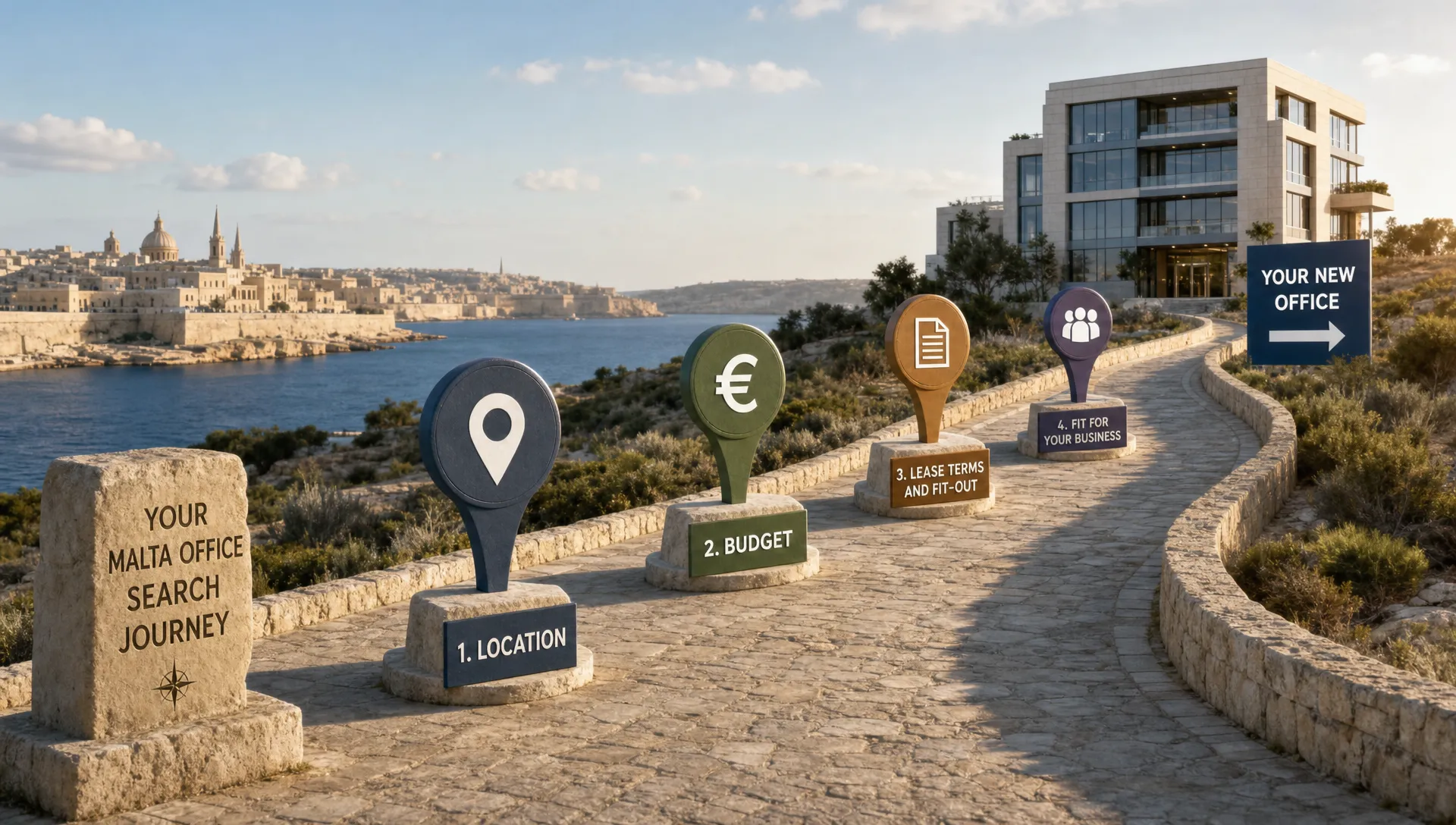
A more efficient process usually looks like this:
- Define the Malta operating plan: Confirm the local function, expected headcount, regulatory considerations, client needs and preferred move-in date.
- Set a realistic budget: Include rent, VAT treatment, service charges, fit-out, utilities, deposits and legal costs.
- Choose two or three location clusters: Compare areas by staff access, client perception, cost and available supply.
- Shortlist by use case: Focus on properties that fit your office type, size range, lease flexibility and required amenities.
- View in person or by trusted local support: Check the commute, building condition, access, noise and surrounding services.
- Negotiate with alternatives: Use comparable properties to assess value and avoid committing under time pressure.
- Complete legal and operational checks: Review lease terms, permits, handover condition, VAT treatment and fit-out obligations.
This approach is especially useful when directors are visiting Malta for a short property tour. A focused shortlist can make a two-day visit productive, while an unfocused tour can create confusion and delay.
Company setup tasks may also be running in parallel. The Malta Business Registry and Business First provide official information for businesses operating in Malta, but property negotiations should still be handled with specific advice when lease commitments are material.
Negotiation points that matter
Negotiating office space in Malta is not only about reducing rent. For SMEs and overseas firms, flexibility and risk control are often just as valuable.
A tenant may negotiate on rent-free periods, handover condition, fit-out contributions, included furniture, deposit level, break clauses, renewal options, parking, signage, common area costs or staged occupation. In a serviced office, negotiation may focus on included meeting room hours, extra desks, upgrade rights, contract length and what happens if the team grows.
The best negotiation position comes from having alternatives. If you understand comparable properties in the same area, you can assess whether the landlord’s terms are competitive. This is where a curated shortlist is more useful than a long list of unrelated options.
If you want a structured framework for comparing premises, the commercial office selection guide for Malta covers the criteria that usually separate a suitable office from a merely attractive one.
Common mistakes to avoid
The office market rewards preparation. Many costly mistakes happen before the lease is even drafted.
One common mistake is committing to a prestigious address that creates daily problems for staff. Another is renting too little space because the current team is small, then losing time and money on another move soon after. Some companies also underestimate fit-out time, especially when the office is not fully finished or requires landlord approvals.
Overseas firms may overlook VAT, local lease customs or the practical impact of parking. They may also assume that a serviced office and a traditional lease are directly comparable by monthly price, when the cost structure is completely different.
A final mistake is viewing too many unsuitable offices. A better search starts with a clear brief, filters for budget and size, then compares a manageable number of properties that genuinely fit the business.
How OfficeSpace.Rent can help
OfficeSpace.Rent helps businesses find and compare office space in Malta, including serviced offices, traditional leases and larger commercial properties. You can use the platform to browse office listings, search by location, compare size and pricing options and identify properties that fit your shortlist.
For SMEs, this reduces time spent filtering unsuitable listings. For overseas firms, it adds local context before a visit, relocation or lease negotiation. The platform also supports viewings, negotiation guidance and practical topics such as legal and VAT considerations.
If you are at the early stage, start by exploring verified office space listings in Malta and build a shortlist around your headcount, preferred areas and move-in timeline.
Frequently Asked Questions
What is the best type of office space in Malta for an overseas company? Serviced offices are often the fastest route for an overseas company entering Malta, especially when the team is small or still hiring. A traditional lease may be better once the local operation is stable, needs stronger branding or requires a larger dedicated layout.
Which Malta locations are best for SMEs? Many SMEs compare Sliema, St Julian’s, Gzira, Ta’ Xbiex, Valletta, Birkirkara, Mriehel and central inland areas. The right location depends on budget, client access, staff commutes, parking and how much space the business needs.
Should I rent a serviced office or a traditional office lease in Malta? Choose a serviced office if speed, flexibility and reduced setup work matter most. Choose a traditional lease if you need long-term control, a custom layout, dedicated meeting rooms or better cost efficiency for a larger stable team.
How much office space should an SME plan per employee? It depends on layout, meeting room needs, hybrid work and storage requirements. A dense operations team needs a different plan from a client-facing professional firm. SMEs should plan for current headcount and likely growth over the next 12 to 24 months.
Do overseas firms need local legal advice before signing an office lease in Malta? Yes, it is sensible to obtain local legal and tax advice before signing. Lease terms, VAT treatment, permits, fit-out responsibilities and break clauses can materially affect the true cost and flexibility of the office.
Ready to shortlist office space in Malta?
The right office should support your team, reassure clients and give the business room to operate without locking you into the wrong cost base. For SMEs and overseas firms, that means comparing more than rent. Location, lease flexibility, fit-out, VAT, compliance and growth all matter.
Use OfficeSpace.Rent to compare available space Malta, narrow your shortlist and arrange viewings with clearer expectations. A focused search now can save months of friction after move-in.