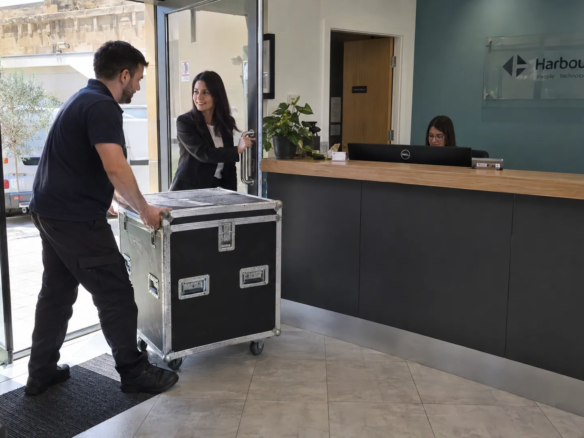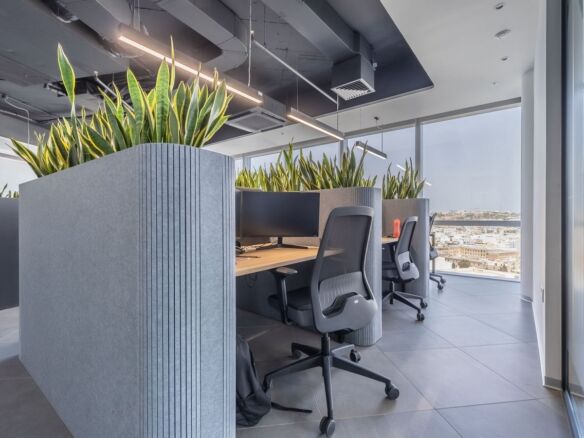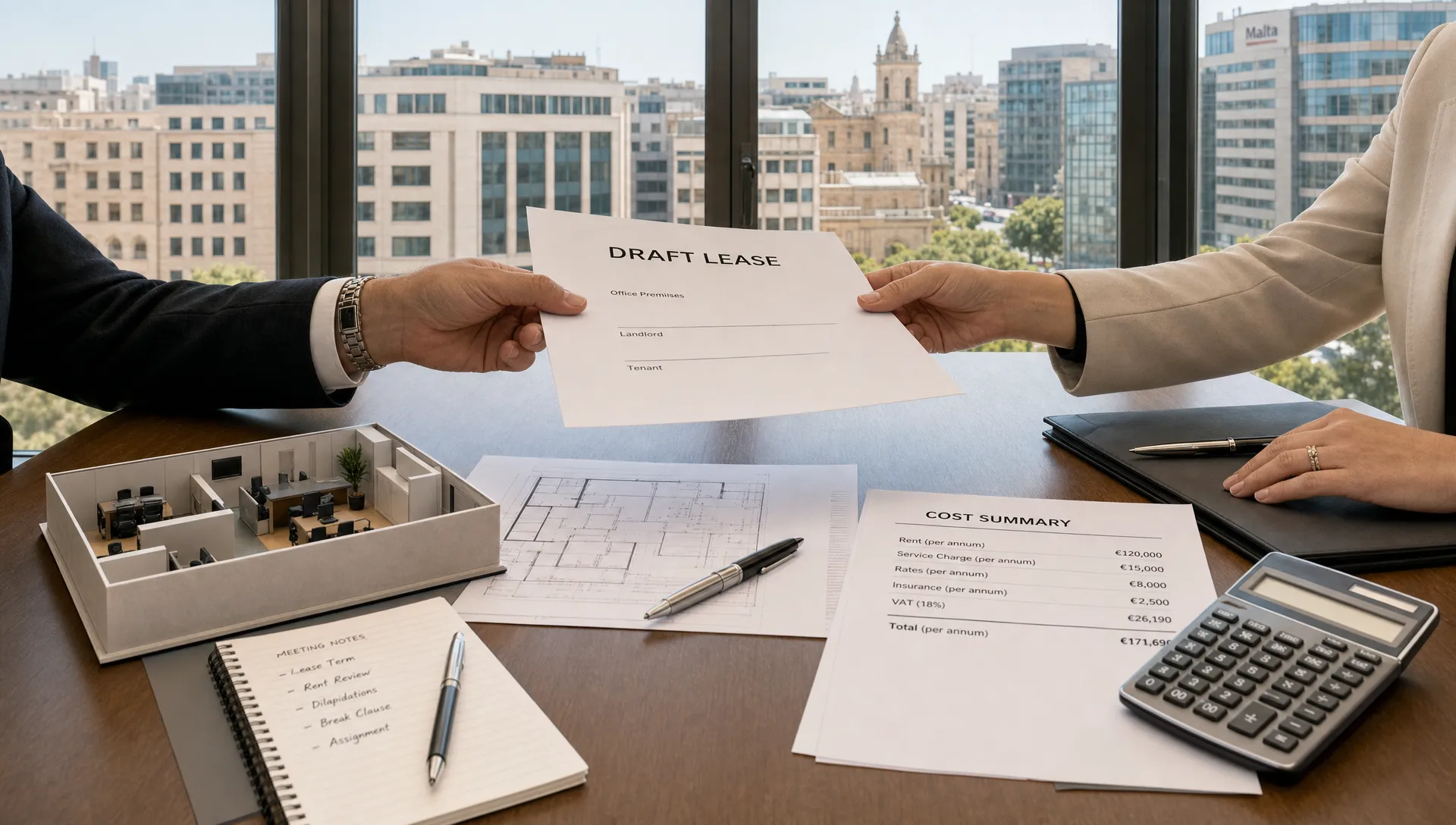
Leasing office space in Malta is not just a property decision. It affects hiring, cash flow, client perception, compliance, staff retention, and how quickly your business can adapt when the market changes.
For many companies, the risk is not failing to find an office. Malta has a varied market, from serviced offices and private suites to larger HQ-style commercial properties. The real risk is committing too early to a lease term, location, fit-out, or floor area that no longer suits the business six months later.
The goal is not to avoid commitment altogether. The goal is to lease office space with enough structure to support your team, while keeping enough flexibility to handle growth, contraction, hybrid work, regulatory change, or a relocation within Malta.
What overcommitting looks like in an office lease
Overcommitting rarely starts with one bad decision. It usually comes from a series of optimistic assumptions. A company forecasts aggressive hiring, chooses a prestigious address, accepts a long fixed term, invests heavily in fit-out, and only later discovers that half the team works remotely, a new department needs different space, or the location creates parking problems.
In Malta, overcommitment can show up in several ways. You may take more square metres than you actually need. You may sign for longer than your business plan can confidently support. You may accept repair, maintenance, reinstatement, or service charge obligations that make the true cost higher than expected. You may also choose a location that works for directors and clients, but not for the employees who need to commute there every day.
Before you compare offices, define what flexibility means for your business. A regulated financial services firm may need private rooms, secure filing areas, and a stable address. An iGaming or technology company may prioritise fast scaling, open collaboration space, and access to talent. A law firm or architecture studio may value client-facing rooms and a location that reinforces trust. Each of these businesses can lease sensibly, but they should not assess commitment in the same way.
Start with a planning horizon you can defend
A common mistake is to search for a “future-proof” office without agreeing what future you are planning for. In practice, most businesses should separate their forecast into three layers: what they need now, what is highly likely within 12 months, and what is possible but uncertain beyond that.
Your lease should comfortably cover the first two layers. It should not be built entirely around the third. If the business might double headcount, open a new division, or change its working model, build those possibilities into the negotiation rather than paying for empty desks from day one.
This is especially important for SMEs, relocation projects, and companies entering Malta for the first time. It can be tempting to make a confident statement with a large office immediately. However, a phased approach often protects cash flow and gives management time to understand hiring, employee travel patterns, supplier needs, and client meeting frequency.
If your first uncertainty is size rather than lease term, it is worth reviewing how to calculate office space size requirements in Malta before you speak to landlords. A clear headcount and usage model makes every viewing more productive.
Match the office type to your level of uncertainty
Not every company needs a traditional lease on day one. Malta offers several office models, and each carries a different level of commitment. The right choice depends on how confident you are about headcount, budget, location, and operational needs.
| Office model | Best suited to | Main commitment risk | How to reduce overcommitment |
|---|---|---|---|
| Serviced office | New market entrants, small teams, project teams, temporary expansion | Higher monthly cost per desk compared with some long leases | Use it as a bridge while you test location, hiring, and working patterns |
| Private office in a business centre | SMEs needing privacy without full operational setup | Limited control over layout and branding | Confirm meeting room access, growth options, and notice terms before signing |
| Shorter traditional lease | Businesses needing a dedicated office but still forecasting growth | Less availability than longer leases and potentially less negotiating leverage | Negotiate break options, renewal rights, and clear maintenance obligations |
| Longer traditional lease | Stable teams with predictable space needs | Being locked into space, cost, and location | Secure flexibility on assignment, subletting, rent review, and expansion options |
| Larger HQ-style office | Established companies, regulated firms, larger iGaming or financial teams | Significant fit-out cost and longer decision cycle | Phase the fit-out, test occupancy assumptions, and negotiate future-proof clauses |
A serviced office is not automatically the safest option, and a longer lease is not automatically a mistake. The key is alignment. If you have stable revenue, clear headcount forecasts, and a strategic need for a permanent address, a longer lease may be sensible. If your team structure is uncertain, paying a premium for flexibility may be cheaper than being trapped in the wrong property.
Look beyond headline rent
Headline rent is only one part of your office cost. A lower rent can become expensive if the building requires substantial fit-out, parking is limited, service charges are unclear, or the lease pushes too many repair obligations onto the tenant.
When comparing office space for rent in Malta, build a total occupancy cost rather than a simple rent comparison. This should include rent, deposits, common area maintenance or service charges, utilities, internet, furniture, cleaning, insurance, fit-out, signage, professional fees, and any reinstatement obligations at the end of the term.
VAT also deserves early attention. Malta’s standard VAT rate is 18%, according to the Malta Tax and Customs Administration, but how VAT applies to your arrangement can depend on the structure of the lease, the services provided, and your business circumstances. A serviced office package may be treated differently from a bare lease with separate charges. Always ask your accountant to confirm the impact before you compare options.
| Cost item | Why it can create overcommitment | What to ask before signing |
|---|---|---|
| Fit-out and furniture | Upfront spend can make it expensive to move early | Who owns improvements, and what must be removed later? |
| Service charges | Variable costs can distort the real monthly budget | What is included, excluded, capped, or reconciled annually? |
| Repairs and maintenance | Vague clauses can transfer unexpected costs to the tenant | Which items are landlord responsibility and which are tenant responsibility? |
| Parking | Shortage can affect recruitment and staff satisfaction | How many spaces are included, reserved, or available at extra cost? |
| Internet and technical setup | Delays or limitations can affect operations | Which providers serve the building, and what lead time is required? |
| End-of-lease reinstatement | Exit costs can be substantial if not planned | What condition must the office be returned in? |
The most useful comparison is not “which office has the lowest rent?” It is “which office gives us the lowest risk-adjusted cost for the next stage of the business?”
Build flexibility into the contract
A flexible office layout helps, but the lease itself is where many businesses win or lose. If the contract is too rigid, movable desks and modular meeting rooms will not solve the bigger problem.
Before signing, pay close attention to break clauses, renewal rights, assignment, subletting, rent review, indexation, deposit return, and notice periods. If Maltese lease terminology such as di fermo or di rispetto appears in the draft, ask a lawyer to explain exactly what it means in practical terms. What matters is not the legal label alone, but whether you can exit, renegotiate, or adapt if circumstances change.
This is also where negotiation matters. A landlord may resist reducing the rent, but may be open to a phased start date, a rent-free period, a cap on certain charges, permission to assign the lease, or an option on adjoining space. These points can be more valuable than a small discount on monthly rent. For a deeper look at negotiation points, see this guide to office lease negotiation in Malta.
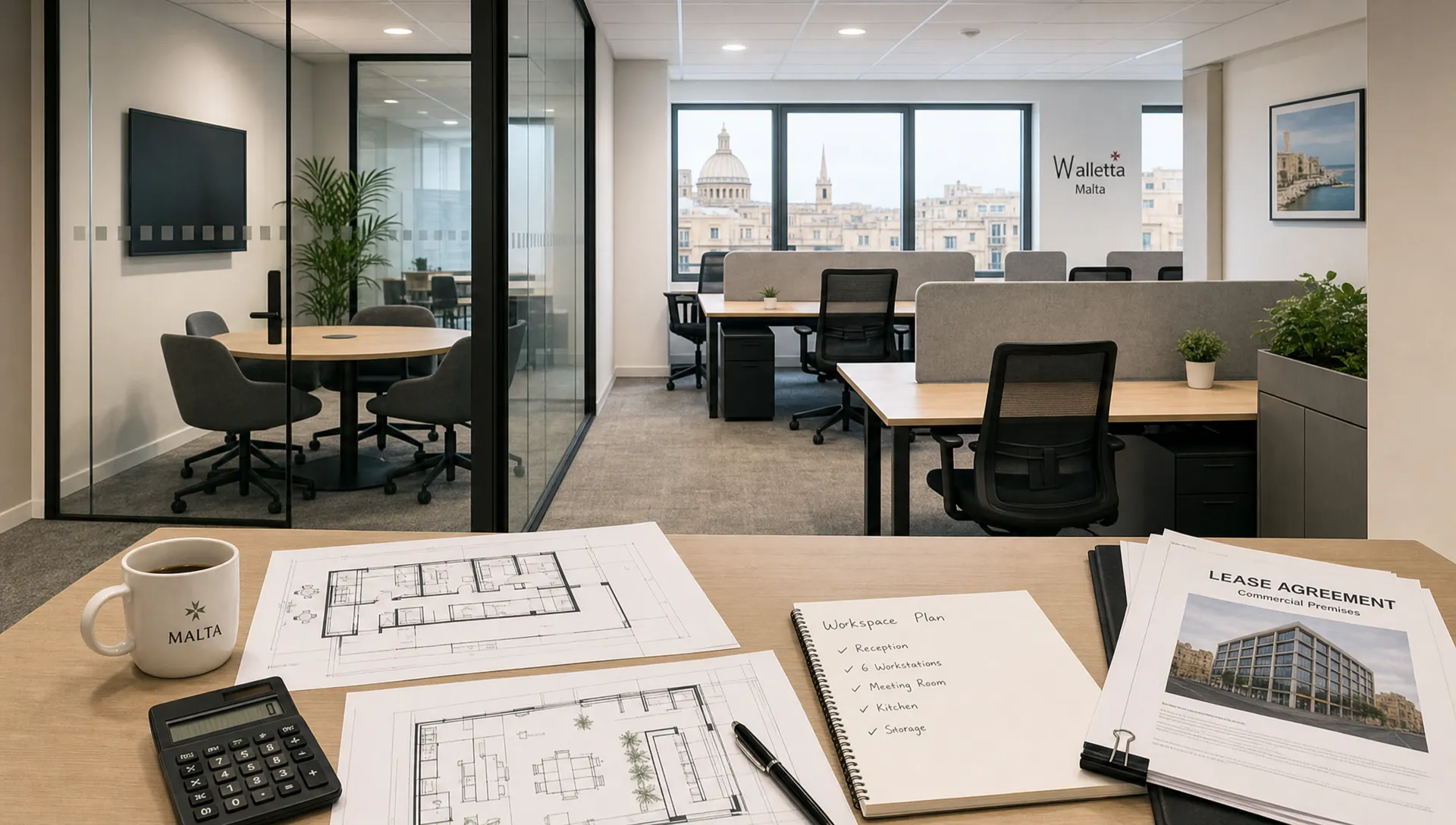
Right-size for real usage, not theoretical capacity
The post-pandemic office has made space planning more complex. Some teams are in five days a week. Others rotate. Some businesses need more meeting rooms because hybrid work increases video calls. Others need fewer desks but more private rooms for client calls, compliance discussions, or focused work.
Do not calculate office size by multiplying total headcount by a generic desk ratio. Instead, consider peak occupancy. Which days are busiest? How many people need fixed desks? How many need occasional workstations? How often do clients visit? Do departments need acoustic separation? Are there regulatory or confidentiality requirements that make open-plan working unsuitable?
For iGaming, fintech, insurance, and professional services firms, the answer may differ by department. Customer support teams may need dense, operational space. Management may need private meeting rooms. Compliance and legal teams may need secure storage and confidential call areas. Creative and product teams may benefit from collaborative zones.
The safest approach is to design for the space you will actually use, then negotiate for growth capacity. That could mean an option on adjacent space, a right of first refusal if another unit becomes available, or a lease structure that allows relocation within the same building or business centre if your team expands.
Treat location as a cost and risk factor
Location is one of the easiest ways to overcommit because it is emotionally persuasive. A prestigious address in Sliema, St Julian’s, Valletta, or a prominent business district can help with recruitment, client perception, and brand positioning. But it can also increase rent, parking pressure, commuting time, and competition for space.
A central or premium location may be justified if clients visit frequently, senior hiring depends on it, or your sector expects a certain level of presence. For some firms, proximity to banks, legal advisers, regulators, embassies, or other professional services is genuinely valuable. For others, a more practical location with better parking, easier access, or larger floor plates may create better day-to-day performance.
When reviewing locations, test the commute at real travel times, not just on a quiet afternoon. Ask where employees live, how clients arrive, whether visitors can park, and whether the office remains convenient if the team grows. Also check whether the building has the correct commercial use and whether any planned works, signage, or change of use issues need approval from the Malta Planning Authority.
Use a staged search process
A rushed office search increases the chance of overcommitment. If you only view a handful of spaces and negotiate under time pressure, you may accept terms that a more structured process would have challenged.
Start with a written brief that covers team size, budget, preferred locations, lease flexibility, parking, technical needs, meeting rooms, access requirements, and move-in date. Then compare offices against that brief rather than reacting to each viewing emotionally.
OfficeSpace.Rent is designed to help businesses compare listings across Malta, including serviced offices, traditional leases, and larger commercial properties. You can use OfficeSpace.Rent to browse location-based options, apply price and size filters, review serviced office possibilities, and get support with viewings, negotiation, and practical lease considerations.
The advantage of a staged process is that it creates evidence. If a landlord asks for a longer term, you can assess whether the property is worth that commitment. If a serviced office seems expensive, you can compare it against the fit-out and exit costs of a traditional lease. If a premium location looks attractive, you can check whether the total cost still makes sense.
A practical pre-signing checklist
Before you sign, slow the process down and test the lease against realistic business scenarios. This is where many expensive mistakes can be avoided.
- Confirm the minimum fixed term, notice dates, renewal process, and any break option conditions.
- Ask for a clear schedule of rent, deposits, service charges, utilities, VAT treatment, and other recurring costs.
- Clarify who pays for repairs, maintenance, common areas, air conditioning, lifts, and building systems.
- Check whether you can assign, sublet, expand, downsize, or terminate if business circumstances change.
- Confirm what fit-out is allowed, who approves works, and what must be removed at the end of the lease.
- Review parking, access, internet availability, signage rights, security, and after-hours use.
- Have legal and tax advisers review the draft lease before any deposit or binding commitment is made.
This checklist will not replace professional advice, but it will help you identify the clauses that most often turn a good office into a long-term burden. You can also review common issues in this guide to avoiding office lease traps in Malta.
When a longer lease is the right decision
Avoiding overcommitment does not always mean choosing the shortest lease when you are looking to lease office space in malta. Sometimes a longer lease is the more strategic choice.
If your business has stable headcount, strong visibility on revenue, a need for a branded office, or sector-specific compliance requirements, longer control over a suitable property can be valuable. It may justify fit-out investment, support staff retention, and give clients confidence that your Malta operation is permanent.
The important point is that a longer lease should be intentional. It should be supported by realistic occupancy modelling, legal review, cost analysis, and negotiated protections. You are not overcommitting simply because the lease is long. You are overcommitting if the lease assumes certainty your business does not actually have.
Frequently Asked Questions of Lease Office Space in Malta
What is the safest way to lease office space in Malta if my team is still growing? Start with a realistic 12-month headcount plan, compare serviced and traditional options, and negotiate growth flexibility such as expansion rights, assignment rights, or break options.
Is a serviced office better than a traditional lease? It depends on your certainty. A serviced office can reduce setup costs and commitment, while a traditional lease can offer more control and better long-term value for stable teams.
How much office space should I lease per employee? There is no single correct figure. The right amount depends on hybrid work, meeting rooms, fixed desks, storage, client areas, compliance needs, and peak occupancy.
Can I negotiate a shorter office lease in Malta? Often, yes, but availability and landlord flexibility vary by property. You may need to balance lease length against rent, deposit, fit-out contribution, or break clause terms.
What should I check before signing an office lease? Review the fixed term, break rights, deposit, service charges, maintenance obligations, VAT treatment, fit-out permissions, reinstatement obligations, parking, and internet availability.
Lease with confidence, not guesswork
The best office lease is not always the cheapest, shortest, or most prestigious. It is the one that supports the next stage of your business without forcing you into assumptions that may not hold.
If you are planning to lease office space in Malta, compare options carefully, model the full cost, and negotiate flexibility before you sign. OfficeSpace.Rent can help you search verified listings, compare suitable offices, arrange viewings, and approach negotiations with a clearer understanding of your options.