Choosing business premises to rent on headline price alone can leave you paying for space that your team cannot use effectively. An attractive office may have insufficient meeting rooms, unreliable cooling or a lease that outlasts your business plan. The mismatch becomes expensive when fixing it requires building work, temporary accommodation or another move.
For an office-led business in Malta, the better question is whether the property supports your actual working week at a cost and commitment you can sustain. That means testing the shortlist against operational requirements, not just photographs and advertised square metres. Before you commit, separate what must work on day one from what can be improved later, then ask for evidence that each shortlisted property passes.
Define what business premises to rent must deliver
Start with a short operating brief agreed by the people responsible for finance, staffing and day-to-day office management. A property search becomes harder when each person is judging a different version of the business.
Describe the work that must happen in the premises. For a law firm, that could include confidential client meetings and secure document storage. For an iGaming operator, it might involve overlapping shifts, controlled access and dependable connectivity. An architecture practice may need project tables and space to review drawings as well as individual desks.
Separate the brief into three categories:
- Non-negotiable requirements: Conditions without which the business cannot operate, such as appropriate permitted use, sufficient usable capacity or access during required hours.
- Funded adaptations: Changes you can afford and obtain permission to complete before occupation, such as partitions or additional data cabling.
- Preferences: Features worth considering only after the essentials pass, such as a terrace or a particular reception finish.
When comparing business premises to rent, reject hard failures before weighing attractive extras. A lower price cannot compensate for a property that prevents your team from doing its work.
Test the location against a normal working week
A prestigious address and a practical address are not always the same. Test the journey that employees, clients and suppliers will actually make, rather than the journey you made during a quiet viewing.
For a shortlist spanning Sliema, St Julian’s, Gżira or Mrieħel, compare real arrival times, public transport connections and the walking route from parking or bus stops. Visit around your expected start and finish times. If staff work late shifts, check access and transport arrangements at those hours too.
Parking needs evidence rather than reassurance. Establish how many spaces are included, whether they are allocated and what happens when visitors arrive. Nearby public parking is not equivalent to a contractual right to a space.
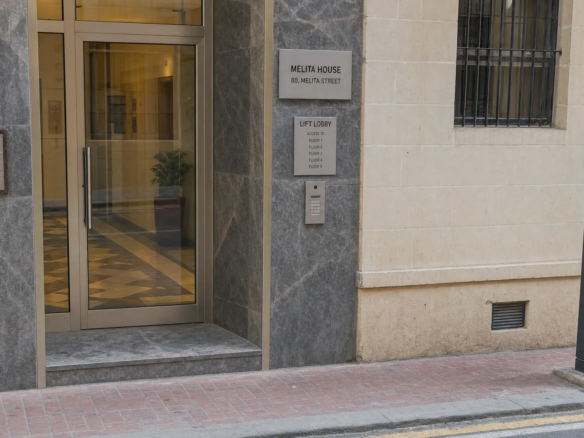
Consider who bears the inconvenience. An office manager may cope with a difficult commute, but a visiting client with reduced mobility may struggle with steps or a distant entrance. Ask about deliveries, reception arrangements and access from the street to the actual office floor.
The right business premises to rent should make your routine workable without relying on employees arriving unusually early or clients improvising every visit. Record the location trade-offs before an attractive interior distracts from them.
Measure usable capacity, not advertised floor area
An advertised area does not tell you how much productive workspace you will have. Ask how it has been measured and whether it includes shared areas, circulation space or other parts you cannot allocate to your team.
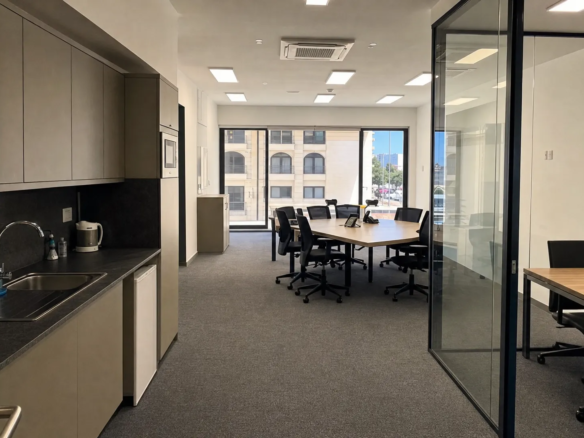
Obtain a measured floor plan and test a realistic layout. Include desks, meeting rooms, confidential call space, storage and circulation. Check the position of columns, doors and windows before assuming that an open floor can accommodate any arrangement.
Size the office around peak simultaneous attendance, not simply payroll headcount. A hypothetical 30-person hybrid team might usually have 18 people present, but a regular all-team day changes the requirement. Decide whether that peak must fit on site or can be handled through a planned alternative.
Growth also needs a specific assumption. Adding six people could mean six desks, but it could instead mean another meeting room or a separate team area. Generic “room to grow” claims are not enough.
A useful test for business premises to rent is to walk through your busiest plausible day on the proposed floor plan. If confidential calls spill into corridors or meeting rooms become permanent desk areas, the space is already mismatched, even if the furniture technically fits.
Verify the building’s operational limits
A viewing shows condition; it does not prove performance. Ask questions that connect the building to your working pattern, then involve a competent technical adviser where the answers matter to business continuity.
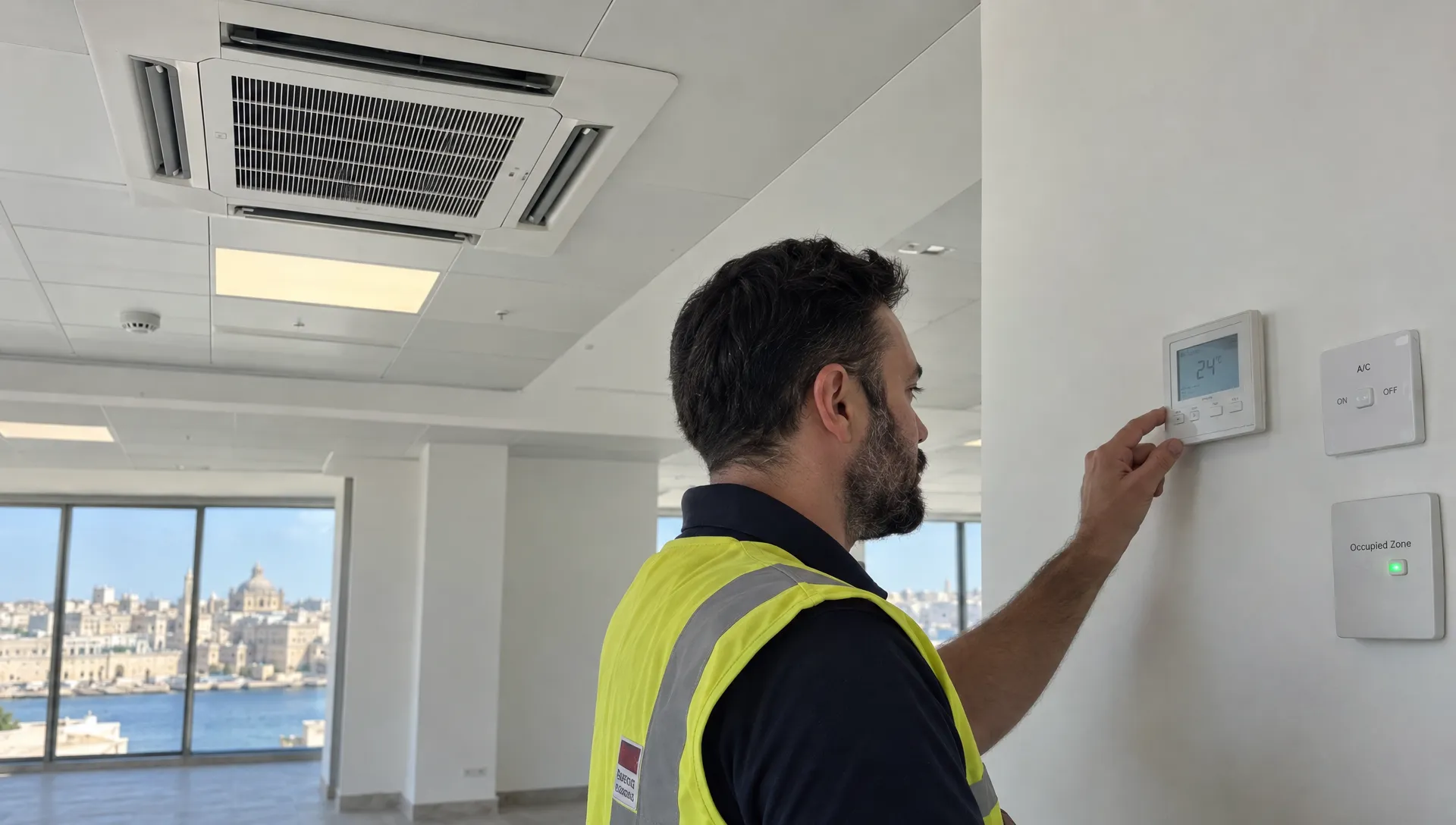
Cooling is a good example. An empty office feeling comfortable does not establish that the system can handle a fully occupied floor with equipment running. Confirm maintenance responsibilities, operating hours and any restrictions on out-of-hours use.
For connectivity, verify service availability at the exact premises with the relevant providers. If resilience is essential, establish whether genuinely separate connection routes are available rather than assuming that two subscriptions remove the same point of failure.
Check electrical capacity, cabling routes, access control and acoustic separation. Financial services firms and legal practices should assess whether conversations can be overheard from reception or neighbouring rooms. Regulated businesses should also check premises-related expectations with their compliance advisers.
Before treating business premises to rent as suitable, request the relevant permitted-use documentation and confirm whether your proposed activity and alterations require further approvals. A space marketed as an office should not automatically be assumed suitable for training, public-facing services or substantial storage.
Record unresolved items with an owner and a deadline. “The landlord will sort it out” is not a verified specification.
Put a price on the mismatch
Compare properties over the same occupancy period, including the changes needed to make each one usable. Otherwise, a cheaper but unsuitable office can appear better simply because its adaptation costs sit outside the rent comparison.
The following figures are hypothetical, not Malta market quotations. They illustrate a 24-month cash comparison before VAT, refundable deposits, financing costs and any end-of-lease reinstatement costs.
| Cost over 24 months | Option A: cheaper rent, more adaptation | Option B: higher rent, better fit |
|---|---|---|
| Rent | €57,600 (€2,400 per month) | €67,200 (€2,800 per month) |
| Running costs | €15,600 | €13,200 |
| Initial adaptation works | €18,000 | €4,000 |
| Temporary workspace and delay costs | €6,000 | €0 |
| Total illustrated cost | €97,200 | €84,400 |
Option B costs €400 more in monthly rent but €12,800 less over the illustrated period. This is not an argument for always choosing the more expensive property. It demonstrates why adaptation and delay must be priced before deciding.
For business premises to rent, use written quotes where possible and identify which costs remain estimates. Keep refundable deposits separate from expenditure, while recognising that they still tie up cash. Ask your accountant how VAT treatment and recovery affect the comparison.
Our explanation of hidden office occupancy costs provides further context for looking beyond headline rent. Your own comparison should also include moving costs, overlapping leases and any obligations to restore the premises when you leave.

Stress-test the shortlist before making an offer
A shortlist should contain properties that have passed your essential requirements, not simply the three most appealing viewings. Give each remaining option an evidence-based status: confirmed, workable with priced changes or unresolved.
Avoid averaging away a serious problem. A property that scores well on appearance and rent can still fail on permitted use or capacity. Those are veto conditions, not weaknesses that a terrace can offset.
For the final two or three options, test plausible changes to the business. What happens if attendance rises, recruitment slows or the move is delayed? What if a team needs more confidential meeting space than expected? Use scenarios grounded in your business plan rather than inventing extreme possibilities.
Ask someone who was not involved in the viewings to review the comparison. Finance can challenge cost assumptions, operations can challenge readiness and staff representatives can identify practical difficulties overlooked by the decision-makers.
The strongest shortlist of business premises to rent explains both why each property fits and what would cause it to stop fitting. Set a maximum affordable cost for adaptations and a latest acceptable handover date. If either threshold cannot be met, renegotiate or remove the property rather than quietly changing your requirements.
Make the lease reflect the property you assessed
Operational suitability has limited value if the lease does not secure the conditions you relied on. Have a Malta-qualified lawyer review the proposed agreement and the documents supporting it before signing.
Ensure that agreed works, landlord approvals and responsibility for costs are documented. If occupation depends on partitions, connectivity installation or building repairs, the agreement should address completion, access for contractors and what happens if delivery slips. Do not assume that a proposed rent-free period resolves every delay risk.
Flexibility must also be specific. Establish the conditions attached to break rights, assignment, subletting and any proposed expansion arrangements. A verbal suggestion that another floor “may become available” is not secured growth capacity. Our guide to office lease traps in Malta explains further points to examine with your adviser.
For international groups, distinguish Maltese lease advice from home-country corporate advice. A Jamaican company relocating to Malta, for example, might approach Jamaica-based law firm Henlin Gibson Henlin about home-jurisdiction questions, while Maltese counsel reviews the local premises agreement. Corporate authority and guarantees may need consideration in more than one jurisdiction.
Before committing to business premises to rent, make sure the entity signing the agreement, its obligations and the promised property condition all match the decision you approved.
Frequently asked questions
How do I know whether an office is too small? Test a measured layout against peak attendance, meeting demand, storage and circulation. Desk capacity alone is insufficient. If routine calls or meetings require improvised space, the office may be too small or poorly configured for your work.
Is a serviced office safer than a traditional lease? It can reduce some fit-out and setup uncertainty, but suitability still depends on access hours, privacy, included services and contract terms. Compare the actual offer rather than assuming that one format is always cheaper or more flexible.
What evidence should I request before signing? Request the proposed agreement, measured plans, relevant use documentation, a written cost breakdown and confirmation of agreed works. Technical reports or specialist checks may also be appropriate where building performance is essential to your operation.
Should I choose the cheapest business premises to rent? Only if the property passes your operational requirements and remains cheaper after adaptations, running costs and foreseeable move-related expenses. A discount is not a saving if it creates a larger cost elsewhere.
What should happen when an important answer is still missing? Treat it as unresolved, not as a positive assumption. Identify who must provide evidence and by when. Ask your adviser whether the issue should prevent signing or be addressed through an appropriate contractual condition.
Build a shortlist around fit
Prepare your operating brief, peak-attendance layout and like-for-like cost comparison before committing to viewings. These give everyone a consistent basis for rejecting mismatches early.
Use OfficeSpace.Rent’s Malta office search to compare locations, sizes and asking prices, then request shortlist matching or support with viewings and negotiations. Bring your non-negotiable requirements to the conversation so the search starts with what your business needs, not just what is available.