Choosing an office in Malta is not just about finding enough desks at the right rent. If you’re searching for office space to rent near me, it’s important to consider more than just cost. The island is compact, but the wrong location, lease structure or building specification can make daily operations harder, especially for teams serving clients, hiring specialist staff or working in regulated sectors.
If your search starts with office space to rent near me, treat that as a starting signal rather than the full strategy. Near your current address may not be near your employees, clients, banks, advisers, transport routes or future hires. A better approach is to define what the office must do for the business, then compare properties against a clear scorecard.
Start with the business reason for moving
Before you open listings, agree why the company needs a new workspace. A start-up moving from remote work, an iGaming operator scaling support teams, and a law firm looking for a client-facing address will need very different offices.
Ask a few practical questions early:
- How many people need desks on a normal working day?
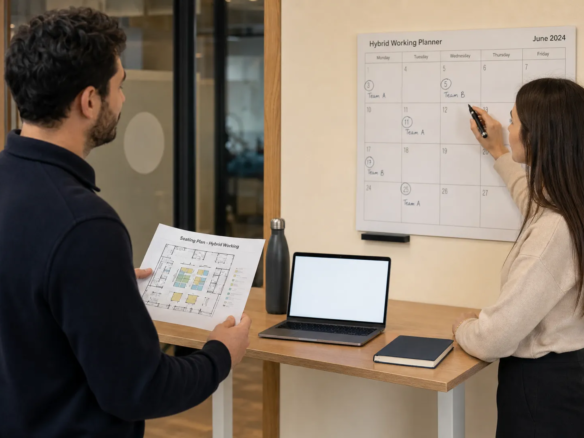
- Will the team work full-time in the office, hybrid, or in shifts?
- Do you need meeting rooms for clients, interviews or board meetings?
- Is the office mainly for operations, prestige, compliance, collaboration or talent attraction?
- How much growth should the space support over the next 12 to 36 months?
For most SMEs in Malta, the answer is not simply more space. It is the right balance between usable area, location, lease flexibility, fit-out condition and operating cost. If you expect fast headcount changes, flexible offices or serviced offices may reduce risk. If you need brand control, private meeting rooms and a long-term HQ, a conventional lease may be more appropriate.
| Decision factor | Why it matters | What to define before shortlisting |
|---|---|---|
| Headcount | Prevents under-renting or paying for empty desks | Current staff, likely hires, peak occupancy |
| Working model | Changes desk density and meeting room needs | Hybrid policy, visitor frequency, shift patterns |
| Client use | Affects reception, parking and district choice | Client visits per week and confidentiality needs |
| Growth plans | Determines lease flexibility | Break clauses, expansion options, nearby availability |
| Brand position | Influences building quality and address | Grade of building, visibility, neighbouring occupiers |
Choose the office format that matches your risk profile
Malta offers several types of workspace, and each has a different cost and commitment profile. The best choice depends on how certain you are about team size, budget and long-term location.
| Office type | Best for | Main advantages | Watchouts |
|---|---|---|---|
| Serviced office | New market entrants, small teams, project teams | Fast move-in, furnished space, shorter commitments | Less control over branding and layout |
| Private office in a shared centre | Growing SMEs, consultants, remote-first teams | Privacy with shared amenities | Meeting room access and noise policies vary |
| Traditional lease | Established businesses, professional firms, HQ teams | More control, stronger identity, possible lower long-term cost | Fit-out, maintenance and lease terms need careful review |
| Larger commercial property | Corporations, iGaming, financial services, insurance groups | Scale, branding, operational control | Longer search, more due diligence, higher upfront costs |
| Office for sale | Owner-occupiers, long-term Malta operations | Asset ownership and stability | Less flexibility and higher capital commitment |
A serviced space may look more expensive per desk, but it can include furniture, utilities, reception services and shared facilities. A traditional lease can look cheaper on paper, yet require deposits, fit-out, furniture, IT installation, maintenance obligations and professional fees. Always compare the full occupancy cost, not only the headline rent.
Shortlist locations around people, clients and sector fit
Location is usually the most important decision after budget. In Malta, a few kilometres can make a noticeable difference to commuting time, parking availability, client access and employee satisfaction.
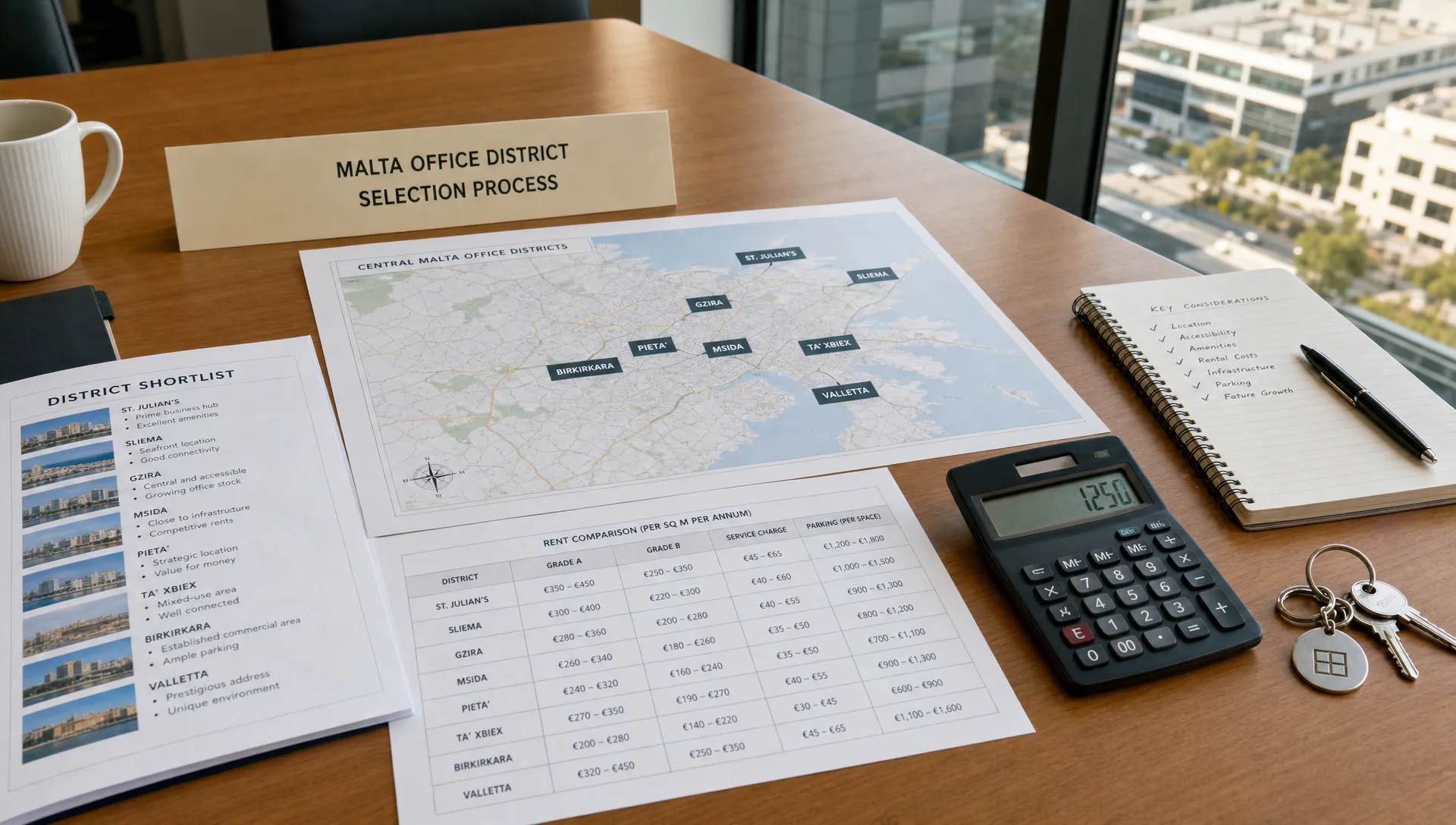
Sliema, St Julian’s and Gżira are popular for businesses wanting a central commercial address, proximity to hospitality and access to international talent. Valletta and Floriana can suit professional services, legal firms, finance-related businesses and organisations that value proximity to public administration. Mrieħel, Birkirkara and surrounding central areas may offer strong access to road networks and larger commercial buildings. Northern, southern and central town locations can work well for SMEs that prioritise affordability, staff convenience or local client bases.
For regulated sectors, including financial services, gaming, crypto and insurance, location also affects practical operations. You may need secure meeting rooms, reliable connectivity, controlled access, boardroom facilities or proximity to advisers and service providers. If the business is licensed or supervised by bodies such as the Malta Financial Services Authority or the Malta Gaming Authority, confirm any premises-related expectations with your compliance advisers before signing.
A good location shortlist should consider:
- Staff commute times from actual home clusters, not just distance from the CEO’s address
- Parking, nearby garages and realistic visitor access
- Public transport options and walkability for employees without cars
- Nearby cafés, lunch options, gyms, childcare and business services
- Fibre availability, mobile coverage and building-level telecoms access
- Reputation of the district for your sector and client base
For a deeper framework, OfficeSpace.Rent has a dedicated guide to location factors for office space in Malta that can help you compare districts more objectively.
Build a full budget before comparing properties
Office rent is only one part of the cost. A property that appears affordable can become expensive once you include common area charges, VAT treatment, utilities, fit-out, furniture and ongoing maintenance. Conversely, a serviced office may cost more per month but reduce upfront capital expenditure.
Confirm whether the rent is quoted monthly or annually, whether it is exclusive of VAT, and whether any common area maintenance or service charges apply. Malta’s standard VAT rate is 18 percent, but the VAT treatment of property transactions can depend on the specific arrangement and should be checked with a qualified adviser or the Commissioner for Tax and Customs guidance.
| Cost item | Questions to ask |
|---|---|
| Rent | Is it quoted per month, per year, per square metre or as a total unit price? |
| VAT | Is VAT applicable, and can the business recover it? |
| Service charges | What common area or building management costs are charged separately? |
| Utilities | Are electricity, water, cooling and internet included or separate? |
| Fit-out | Is the office delivered finished, partly fitted or shell form? |
| Furniture and IT | Are desks, chairs, meeting room equipment and cabling included? |
| Deposit | How many months are required, and when is it refundable? |
| Reinstatement | Must the office be returned to its original condition at lease end? |
If the budget is tight, do not simply reduce the size of the office. You may achieve better value by widening the location search, choosing a fitted unit, considering flexible terms, or negotiating the handover condition.
Check the building, not just the office
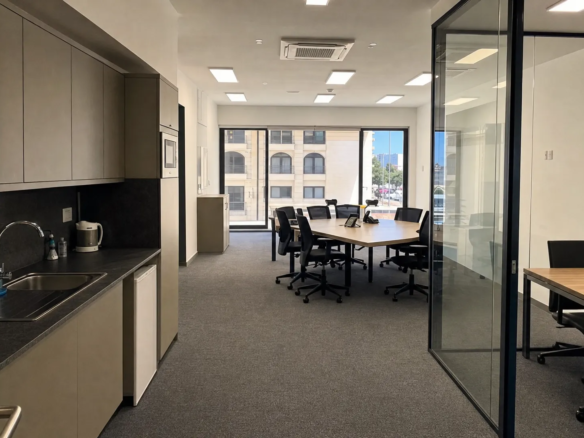
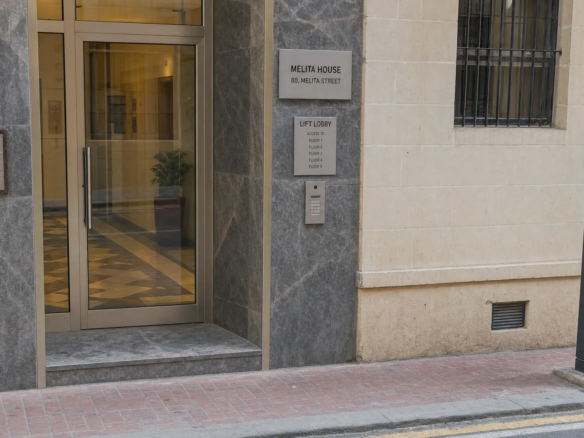
A great-looking office inside a weak building can create daily problems. During viewings, assess the common areas, lifts, access, parking, security, loading arrangements, air conditioning, building management and surrounding environment.
For office use in Malta, you should also confirm that the property has appropriate planning permission for office activity. Many office occupiers look for premises suitable for Class 4A office use, but the exact requirement can depend on the building and activity. Ask the landlord, agent or legal adviser to verify this with the relevant planning documentation before you commit.
Infrastructure deserves particular attention. This is especially true for iGaming, fintech, blockchain, insurance, legal and architectural firms, where client confidentiality, uptime, video calls and secure file handling may be business-critical.
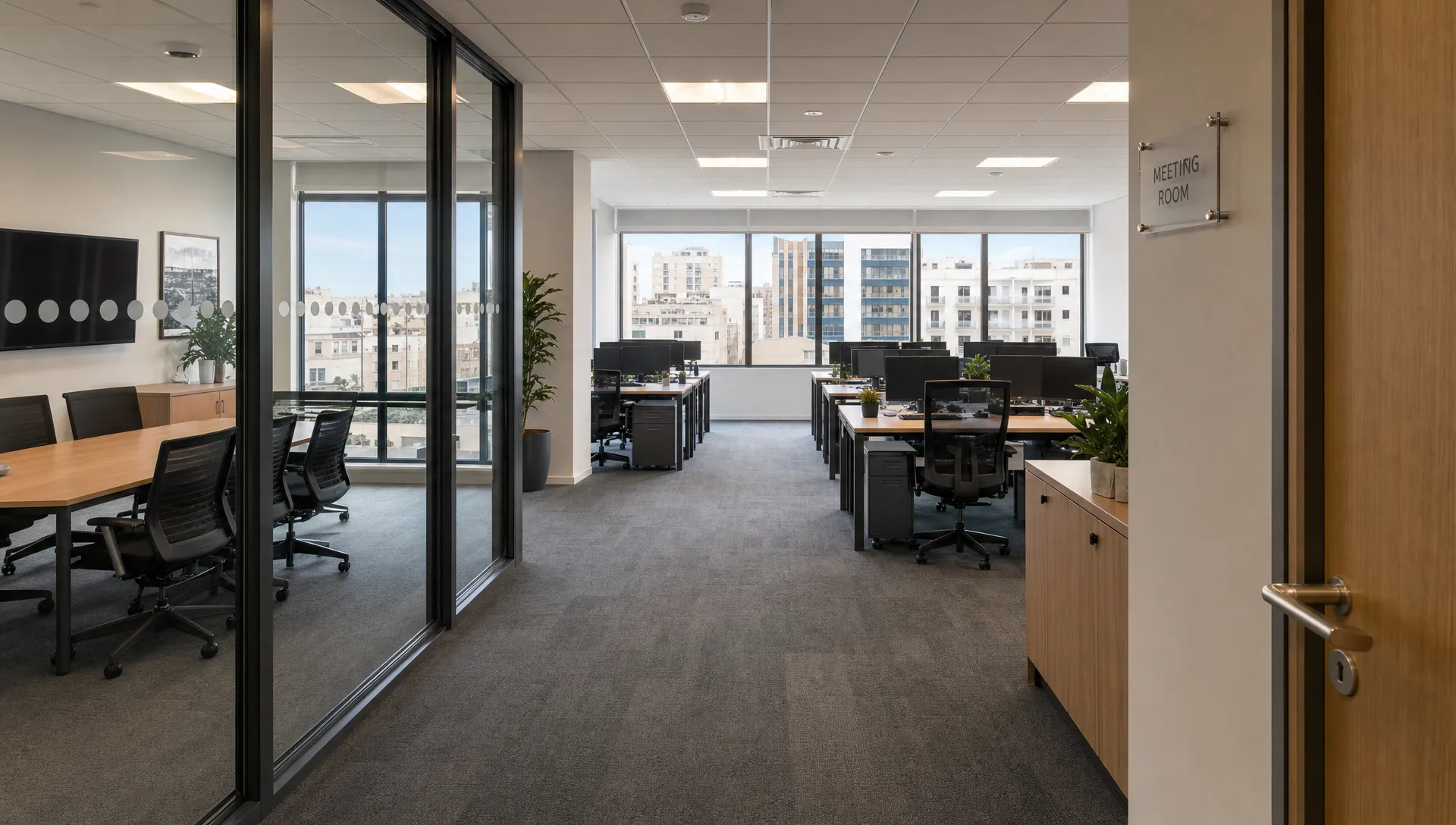
When viewing a property, look beyond the polished photos. Test mobile reception in meeting rooms, ask about internet providers, check the number and position of power points, inspect air conditioning zones, and understand who handles repairs. If staff will work late, confirm access arrangements, lighting, security and nearby transport after normal business hours.
Use a viewing scorecard to remove emotion
Office viewings can be misleading. A stylish reception or sea view may impress the team, but the property still might fail on commute, cost or expansion potential. A simple scorecard keeps the decision grounded.
| Criteria | Suggested weight | What to look for |
|---|---|---|
| Location and commute | 25% | Staff access, client convenience, parking and public transport |
| Total monthly cost | 20% | Rent, VAT, service charges, utilities and fit-out impact |
| Building specification | 20% | Lift access, air conditioning, telecoms, security and condition |
| Lease flexibility | 15% | Term, break clauses, renewal options and expansion potential |
| Fit for operations | 15% | Layout, meeting rooms, storage, privacy and acoustic comfort |
| Brand and client impression | 5% | Address, entrance, common areas and neighbouring occupiers |
You can adjust the weighting to match your business. A client-facing law firm may increase the brand and privacy score. A support-led iGaming company may give more weight to desk density, transport and 24-hour access. A hybrid SME may focus on meeting rooms and collaboration areas rather than desk count.
After each viewing, record comments immediately. If possible, visit the top two or three options at different times of day. Morning traffic, lunchtime congestion and late afternoon parking can change how practical a location feels.
Review lease terms before you fall in love with the space
The lease can matter as much as the property. A good office with unsuitable terms may limit growth, create unexpected liabilities or make it expensive to leave. Before signing, obtain professional advice and clarify the commercial points in writing.
Key terms to review include:
- Lease duration and renewal rights
- Break clauses and notice periods
- Annual rent increases or indexation
- Deposit amount and conditions for release
- Maintenance responsibilities for the tenant and landlord
- Rules on alterations, signage and branding
- Subletting or assignment rights if the company changes size
- Parking spaces and whether they are included or separate
- Handover condition at entry and exit
In Malta, it is also sensible to clarify whether the lease covers only the internal office or includes rights over shared areas, terraces, storage, parking or signage. If your business needs a registered office address, client confidentiality controls or special licensing conditions, raise these points before negotiations are finalised.
OfficeSpace.Rent’s practical guide on how to rent an office in Malta explains more about preparation, landlord expectations and the steps typically involved.
Match the office to your sector
Different businesses use offices in different ways. A generic search can miss sector-specific needs, so refine your checklist according to how your team works.
An iGaming or gambling company may prioritise large open-plan floors, staff amenities, transport access, shift-friendly building access and reliable connectivity. A financial services or insurance company may need stronger privacy, meeting rooms, secure access and a professional client experience. A law firm may value a central address, reception area, confidential consultation rooms and document storage. Architects and design studios often need collaborative space, sample storage, printing areas and a showroom-style meeting environment.
Blockchain and crypto companies may combine the needs of a tech company and a regulated business. They may require excellent connectivity, flexible growth options, private meeting rooms and a building that supports a credible corporate presence. In all regulated or compliance-sensitive sectors, premises decisions should be coordinated with legal, tax and compliance advisers.
Avoid the most common mistakes
The wrong office choice often comes from rushing the process or comparing properties too narrowly. These are the mistakes to avoid:
- Choosing the cheapest rent without calculating total occupancy cost
- Renting for today’s headcount without considering near-term growth
- Choosing a prestigious location that staff find difficult to reach
- Ignoring parking until after the lease is signed
- Assuming serviced offices and traditional leases can be compared on rent alone
- Forgetting to verify planning use, telecoms and maintenance responsibilities
- Accepting verbal promises that are not reflected in the lease
- Underestimating fit-out lead times and move coordination
The best office is rarely the one that wins on every category. It is the one that fits your operating model, budget and future plans with the least hidden risk.
How OfficeSpace.Rent can help you choose faster
A structured process makes the search easier, but the Malta market still requires local knowledge. OfficeSpace.Rent helps businesses compare office space across Malta, including serviced offices, traditional leases and larger commercial properties.
You can browse office space listings in Malta by location, size and other practical filters, then compare options according to your budget and requirements. The platform also offers pricing guidance, a pricing calculator, shortlist matching, support with viewings and negotiation, plus guidance around legal and VAT considerations. For businesses relocating, expanding or entering Malta for the first time, this can reduce wasted viewings and help you focus on spaces that genuinely fit.
If you want a broader overview of the rental market before shortlisting, the guide to office space in Malta covers office types, lease structures, pricing considerations and the search process in more depth.
Frequently Asked Questions
How much office space do I need per employee in Malta? It depends on your working model, meeting room needs and layout. Hybrid teams may need fewer fixed desks but more collaboration space. As a starting point, calculate peak daily occupancy, then add meeting rooms, storage, reception and circulation space before comparing properties.
Is a serviced office better than a traditional lease? A serviced office is often better for fast move-ins, smaller teams and uncertain headcount. A traditional lease may suit established companies that need more control over layout, branding and long-term cost. Compare the full cost and commitment, not just the monthly rent.
Which Malta locations are best for office space? It depends on your staff, clients and sector. Sliema, St Julian’s and Gżira are popular for central commercial activity, while Valletta, Floriana, Mrieħel, Birkirkara and other areas may suit different budgets and operational needs. Commute and parking should be tested before deciding.
What should I check during an office viewing? Check layout, natural light, air conditioning, lifts, common areas, parking, internet options, mobile reception, security, maintenance responsibilities and the surrounding area. Also ask for confirmation of permitted office use and the main lease terms.
Can OfficeSpace.Rent help with negotiations? Yes. OfficeSpace.Rent supports businesses with viewings and negotiations, as well as location-based search, property comparisons, pricing guidance, legal and VAT guidance, and shortlist matching.
Ready to choose the right office in Malta?
Choosing office space to rent in Malta is easier when you compare the right factors in the right order: business need, location, office type, full cost, building quality and lease terms.
Start by exploring verified Malta office listings on OfficeSpace.Rent, or use the platform to build a shortlist that matches your size, budget, preferred locations and move-in requirements. The right office should support your team from day one and still make sense as the business grows.