Office Fit-Out and Dilapidations in Malta: A Tenant's Guide to What You Build, What You Pay For, and What You Hand Back
TL;DR:
- In Malta, an office tenant is usually responsible for two big-ticket items that never appear on the headline rent: the fit-out at the start of the lease (turning a shell or bare space into a working office, typically €300–€500 per sqm) and the dilapidations at the end (returning the space to its agreed condition, including removing your alterations).
- Both are negotiable and both are routinely underestimated — either can cost more than several months' rent if you ignore it when you sign.
- The single best protection is a dated, photographed schedule of condition annexed to the lease, which caps your liability at the condition you actually received rather than an idealised standard the landlord might argue for later.
Most businesses searching for office space focus almost entirely on the monthly rent. That is understandable — but it is also where the most expensive surprises hide. Two offices can advertise the same rate per square metre and end up costing wildly different amounts once you account for who fits the space out at the beginning and who pays to reinstate it at the end. This guide explains how office fit-out Malta and dilapidations actually work under Maltese practice, and how to protect yourself before you sign anything.
Table of Contents
- Why this matters before you sign anything
- Understanding the condition you're renting
- The fit-out: what it costs and how it's funded
- Dilapidations: the bill at the end nobody plans for
- The single best protection: a schedule of condition
- Negotiating fit-out and dilapidations together
- Fit-out and dilapidations checklist
- Plan the full cost, not just the rent
- Frequently asked questions
Key Takeaways
| Point | Details |
|---|---|
| Two hidden costs | Fit-out at the start and dilapidations at the end are the two big-ticket items that never appear on the headline rent. |
| Budget €300–€500 per sqm | A typical fit-out planning figure; a 200 sqm office can therefore carry a €60,000–€100,000 fit-out before furniture and IT. |
| The deposit is not a cap | Three to six months' rent is held against dilapidations and unpaid rent — if your make-good obligations exceed it, you pay the difference. |
| "All repairs" has limits | Under Maltese case law, an "all repairs" clause covers only ordinary repairs unless extraordinary works are explicitly accepted in the contract. |
| Schedule of condition is your shield | A dated, photographed record annexed to the lease caps your liability at the condition you actually received. |
Why this matters before you sign anything
Most businesses searching for office space focus almost entirely on the monthly rent. That is understandable — but it is also where the most expensive surprises hide. Two offices can advertise the same rate per square metre and end up costing wildly different amounts once you account for who fits the space out at the beginning and who pays to reinstate it at the end.
We have advised startups, iGaming operators, fintech firms, and professional-services companies on office leases across Malta for more than a decade, and fit-out and dilapidations are the two areas where tenants most often sign first and discover the cost later. The good news: once you understand the mechanics, both become predictable line items you can budget for and negotiate down.
This guide pairs naturally with our deeper reads on how to negotiate an office lease in Malta and how to assess office rental costs in Malta — but here we zoom in on the build-and-handback cycle specifically.
Understanding the condition you're renting
Before you can plan a fit-out, you need to know what state the space is actually in. Maltese listings use a handful of terms that have real cost consequences. The further left you sit on the scale below, the lower your rent but the higher your fit-out spend — and, crucially, the larger your potential reinstatement bill at the end.
| Condition | What you get | Rent vs fit-out trade-off |
|---|---|---|
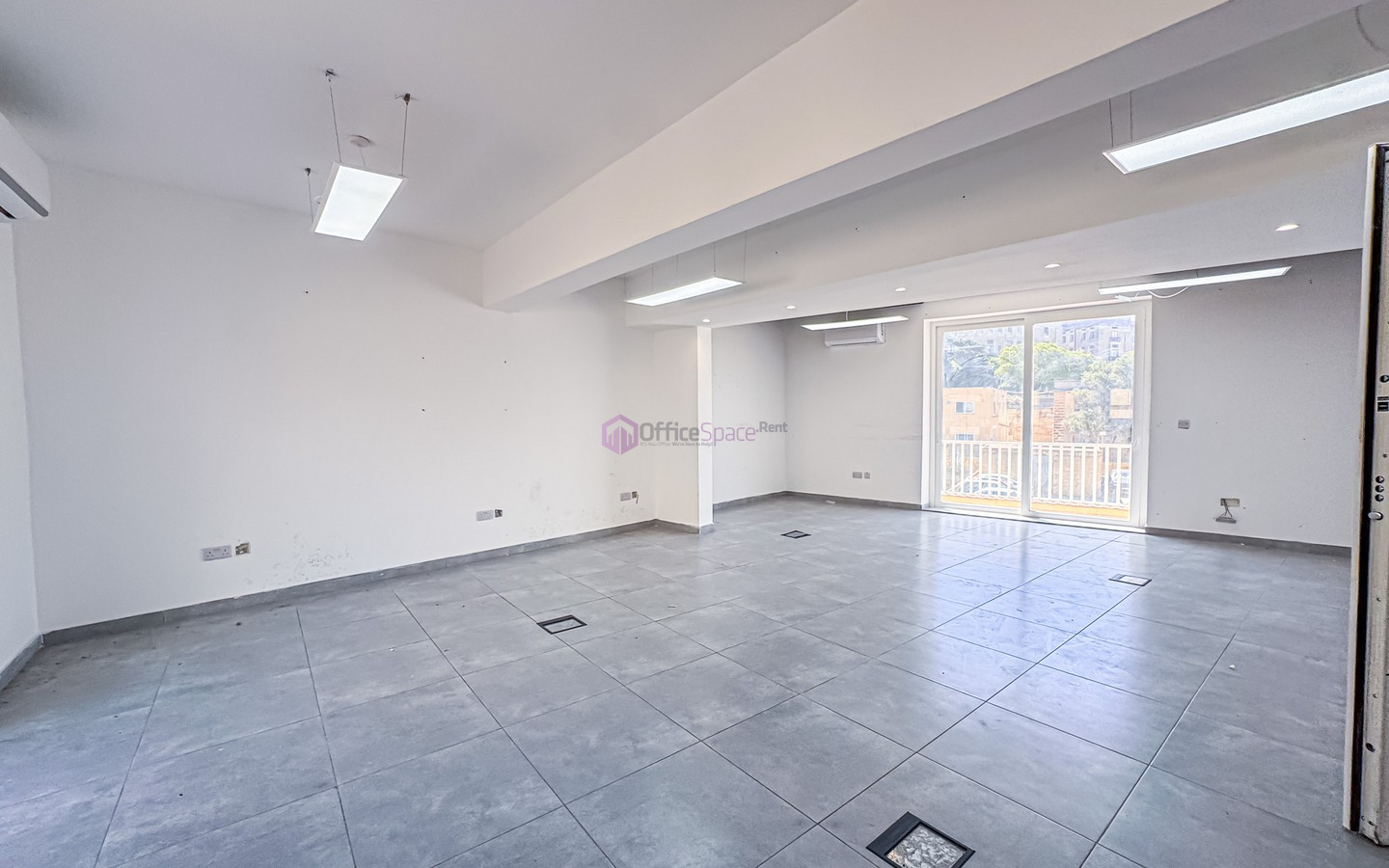
| Shell (shell-and-core) | External walls, concrete floors, roof, windows, building core (stairs, lifts, risers). Everything else is yours. | Cheapest rent, most expensive fit-out |
| Bare / unfinished | Similar to shell, sometimes with basic services brought to the floor. Still expects a full tenant fit-out. | Low rent, high fit-out |
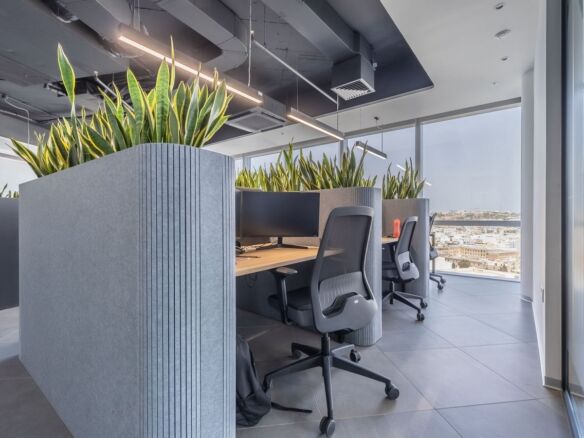
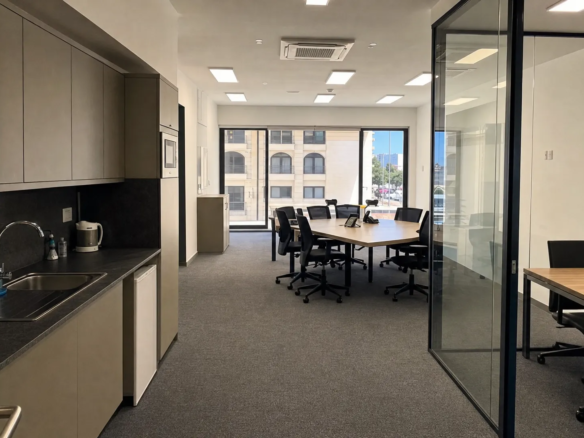
| Semi-fitted | Some base elements in place (ceilings, lighting, HVAC); you add partitions, flooring, kitchenettes, and your layout. | Middle ground — landlord may offer a fit-out contribution |
| Fully fitted / turnkey | Move-in ready, sometimes furnished. | Higher rent, minimal upfront capital, simpler exit obligations |
If you want to avoid the build-and-handback cycle entirely, a serviced office shifts all of it onto the provider in exchange for a higher all-inclusive monthly rate. Our guide on serviced vs traditional offices walks through that trade-off in detail.
The fit-out: what it costs and how it's funded
As a planning figure, fit-out and furnishing in Malta commonly runs between €300 and €500 per sqm, though a high-specification or technical fit-out — think raised floors, extensive AV, or specialised power for a trading floor — can push well beyond that. For context, a modest 200 sqm office could therefore carry a fit-out budget of €60,000–€100,000 before furniture and IT, a number that dwarfs a single month's rent and needs to be planned as capital expenditure, not an afterthought.
Fit-out costs generally divide into three categories: construction and base build (partitions, ceilings, flooring, electrical and data cabling, HVAC adjustments, sanitary works), fixtures and finishes (kitchenettes, glazing, doors, branding, joinery), and client-direct items (furniture, audio-visual equipment, and professional fees for an architect, project manager, or perit).
Remember that any office fit-out in a traditionally leased space will also need to satisfy the relevant permits to operate legally — see our resource on the Class 4A office permit in Malta. Building works and a change of use can have planning implications, so confirm these before committing to a design.
Who pays? Fit-out contributions and rent-free periods
You are not necessarily on the hook for the whole bill. In a tenant-friendly market — or for a longer commitment — landlords in Malta routinely offer two forms of help. The first is a fit-out contribution: a capital sum (often expressed per sqm or as a lump amount) the landlord puts toward your works, most common on semi-fitted and shell spaces. The second is a rent-free period: typically one to four months depending on lease length, intended to cover the period when you're building rather than trading.
Both are standard negotiation levers rather than favours. The length of your commitment is your leverage: a landlord will contribute more toward a five-year tenant than a one-year one. Tie the contribution to your actual fit-out scope and get it written into the lease, not agreed by handshake.
A practical fit-out sequence
- Confirm the exact condition being handed over and get it in writing.
- Commission a measured survey and a test-fit/layout before you finalise rent.
- Price the fit-out properly — three quotes, with a contingency of 10–15%.
- Negotiate contribution and rent-free in parallel with the headline rent.
- Verify permit and planning requirements before works begin.
- Photograph and document the space on day one (more on why below).
Dilapidations: the bill at the end nobody plans for
Dilapidations are the costs of returning the premises to the condition required by your lease when you leave. In practice, that usually means three things: repairing wear and damage beyond ordinary use, redecorating to the agreed standard, and removing the alterations you made and making good — the part that catches tenants out most often.
The Maltese context: deposits, di fermo, and di rispetto
A few features of Maltese commercial leasing shape how dilapidations play out. The first concerns your deposit. Grade-A and traditional offices typically require three to six months' rent as a deposit (serviced offices, two to three). That deposit is held against unpaid rent and dilapidations — it is not applied to your final months of rent, and it is not a cap on what you can owe. If your make-good obligations exceed the deposit, you pay the difference. Budget for dilapidations from day one and do not assume the deposit covers them.
The second concerns lease structure. Maltese commercial leases are commonly structured over a minimum term — often five years with a two- or three-year di fermo (a binding period during which you must keep paying rent regardless of circumstances) and the remainder as di rispetto (a period during which you may terminate with proper notice). Your exit timing, and therefore when reinstatement is triggered, is governed by this structure. Read more in our office lease negotiation guide.
The "all repairs" trap
This one matters and is specific to how Maltese law reads lease wording. A clause requiring the tenant to carry out "all repairs" covers only ordinary repairs — not extraordinary or structural works — unless those are explicitly and specifically accepted in the contract. Maltese case law has confirmed this point. The practical lesson runs both ways: vague repair wording protects nobody, and you should never sign up to open-ended "all repairs" or "full reinstatement" language without understanding precisely what it captures. Equally, a tenant who stays passive and fails to use the statutory remedies available cannot later claim for losses — so engage early, don't sit on problems.
Key takeaway: Always have a qualified Maltese commercial-property advocate review repair and reinstatement wording before you sign. The cost of an hour of legal review is trivial against a five-figure reinstatement claim.
The single best protection: a schedule of condition
If you take one thing from this guide, take this: annex a schedule of condition to your lease.
A schedule of condition is a dated, photographed record of the exact state of the premises at the start of your tenancy, referenced in the repair clauses of the lease. It does one enormously valuable thing — it caps your liability at the condition you actually received, rather than some idealised standard the landlord might argue for years later. Without it, end-of-term negotiations become one person's memory against another's, and the tenant usually loses.
Pair the schedule with your own day-one photo and video record, store it somewhere permanent, and keep copies of every fit-out drawing and approval. When the landlord serves a schedule of dilapidations at or near lease end (the list of everything they believe needs repairing, reinstating, or redecorating), your evidence is what keeps that list honest.
The build-and-handback cycle at a glance
The two costs sit at opposite ends of the lease, but they are linked by the decisions you make on day one. Here is how the cycle runs from signing to handback.
Negotiating fit-out and dilapidations together
The smartest tenants treat the start and the end of the lease as a single negotiation, because the levers are linked. There are five worth pursuing.
Cap reinstatement explicitly. Push for wording that limits your obligation to removing only the alterations the landlord asks to be removed, rather than a blanket "return to shell." Some incoming tenants want your partitions and cabling — in which case removing them destroys value for everyone.
Trade fit-out contribution against reinstatement scope. A landlord funding your fit-out may also accept keeping it, which removes your removal obligation at exit.
Get a "yield-up" standard defined. Agree the precise handback condition in writing, ideally referencing the schedule of condition, so there is no ambiguity at exit.
Negotiate the deposit mechanism. A bank guarantee can sometimes replace a large cash deposit, freeing working capital. Clarify exactly what the deposit can be drawn against.
Factor it into Total Occupancy Cost. Headline rent is only one input. Our cost-assessment guide shows how to build fit-out and dilapidations into a true cost-per-year comparison across shortlisted offices.
Fit-out and dilapidations checklist
Use this structured checklist across the three phases of the lease to keep both costs predictable.
| Phase | Actions |
|---|---|
| Before signing | Confirm handover condition in writing (shell / semi-fitted / fitted); obtain a professional schedule of condition and annex it to the lease; price fit-out with contingency and line up contribution and rent-free; have an advocate review repair, reinstatement and "yield-up" wording; define the exact handback standard; confirm Class 4A permit and any planning requirements. |
| During the lease | Keep all fit-out drawings, approvals and invoices; meet ongoing repair and decoration obligations and don't let issues accumulate. |
| Before exit | Review your reinstatement obligations 6–12 months ahead; get your own dilapidations estimate before the landlord serves theirs; use your schedule of condition and photos to challenge over-scoped claims. |
Plan the full cost, not just the rent
Fit-out and dilapidations are the bookends of every traditional office lease — and the two costs most likely to blow a budget that was planned around rent alone. Get the condition documented, the wording reviewed, and the obligations capped before you sign, and both become manageable, predictable line items.
If you're weighing up offices in Malta and want help comparing the true cost of each — fit-out, reinstatement, deposit structure and all — get in touch with our team or browse current listings. We represent both tenants and landlords, and we'll help you avoid the surprises that sit between the headline rent and the final handback.
Frequently asked questions
What is the difference between fit-out and dilapidations?
Fit-out is the work you do at the start to make a space usable — partitions, flooring, lighting, cabling, furniture. Dilapidations are the costs at the end of returning the space to its agreed condition, including repairing damage and removing the alterations you made.
How much does an office fit-out cost in Malta?
As a planning figure, expect roughly €300–€500 per sqm for fit-out and furnishing, with high-specification or technical fits costing more. Always get three quotes and add a contingency.
Does my deposit cover dilapidations?
No — at least not reliably. The deposit (commonly three to six months' rent on traditional offices) is held against dilapidations and unpaid rent, but it is neither a cap nor a substitute for budgeting. If your obligations exceed it, you pay the balance.
Can I avoid dilapidations entirely?
Largely, yes — by choosing a serviced or fully fitted office, where the provider owns the fit-out and handback risk. You pay a higher monthly rate instead of upfront capital and exit costs.
Can I negotiate the reinstatement clause?
Yes. Reinstatement scope is one of the most negotiable terms in a Maltese lease. Aim to limit it to alterations the landlord actually wants removed, and define the handback standard precisely against a schedule of condition.
Recommended
- How to Negotiate an Office Lease in Malta
- How to Assess Office Rental Costs in Malta
- Serviced vs Traditional Offices: Which Is Right for You?
- The Class 4A Office Permit in Malta Explained
This article is general guidance, not legal advice. Always have lease terms reviewed by a qualified Maltese commercial-property advocate before signing. Last updated: May 2026 · OfficeSpace.Rent