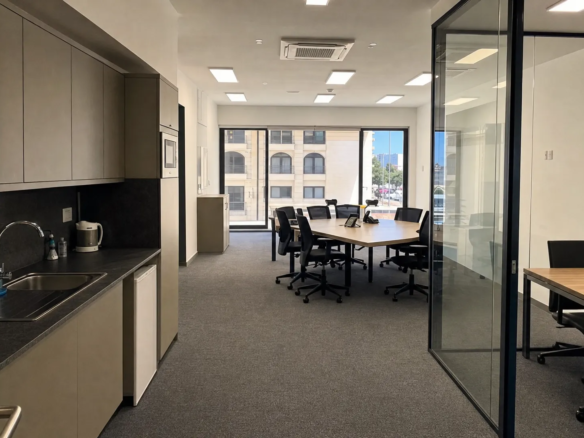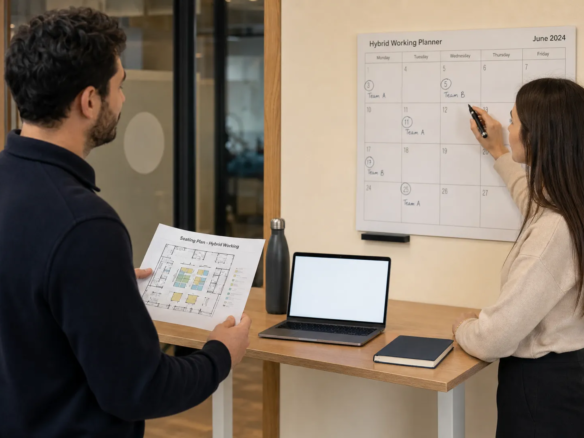
For many businesses, upgrading existing office space can be one of the most cost-effective ways to improve workplace performance without the disruption of relocating. It typically costs 30 to 40 percent less than relocating, especially with sound infrastructure. The most effective upgrades focus on adaptability for hybrid work, acoustic design, and wellness features.
Upgrading office space in 2026 is the single most cost-effective lever businesses have for improving productivity, retaining talent, and preparing for hybrid work. Various workplace studies have reported productivity improvements of up to around 20% following well-planned office redesigns, although results vary depending on the organisation and the scope of the changes. Some employers report meaningful improvements in employee retention following workplace upgrades, particularly where employee wellbeing and collaboration are enhanced.
Renovating an existing office can often cost substantially less than relocating where the existing building’s structure and infrastructure remain suitable. For facilities managers and business decision-makers in Malta weighing their options, the case for upgrading rather than moving has never been stronger — particularly in a market where quality commercial stock is limited and relocation costs include lease break penalties, fit-out expenditure, and staff disruption.
Why upgrade office space in 2026: productivity and retention gains
The measurable business case for office upgrades rests on workforce performance data. Strategic design changes deliver up to a 20% productivity increase and a 30% improvement in employee retention. Those are not marginal gains. For a 50-person firm, a 30% retention improvement translates directly into reduced recruitment costs, lower onboarding time, and preserved institutional knowledge.

Wellness-focused renovations add a further layer of impact. Turnover reduction of up to 25% is achievable through design changes that address physical comfort, air quality, and noise. That figure matters because replacing a mid-level employee typically costs a significant proportion of their annual salary in recruitment and lost productivity.
Deep-work environments deliver the sharpest gains. Workflow-optimised renovations can improve concentration (sometimes by up to 40%) in dedicated focus low noise environment zones.
The mechanism is straightforward: reducing acoustic distraction and visual clutter removes friction from cognitively demanding tasks.
Specific upgrades linked to measurable benefits include:
- Acoustic panels and sound masking reduce noise distraction and support deep-work concentration
- Ergonomic furniture and sit-stand desks lower physical fatigue and reduce absenteeism
- Biophilic elements such as planting and natural light improve mood and reduce stress — particularly relevant in Malta’s climate, where maximising natural light and managing solar gain are both design priorities
- Improved air quality systems raise alertness and reduce sick-day frequency
- Dedicated collaboration zones separate from focus areas reduce interruption-driven productivity loss
Pro Tip: Design your brief around reducing workflow friction, not aesthetics. Map the physical paths employees take between tasks and identify where noise, poor lighting, or inadequate furniture creates delay. Fix those points first.
Is renovating cheaper than relocating in Malta?
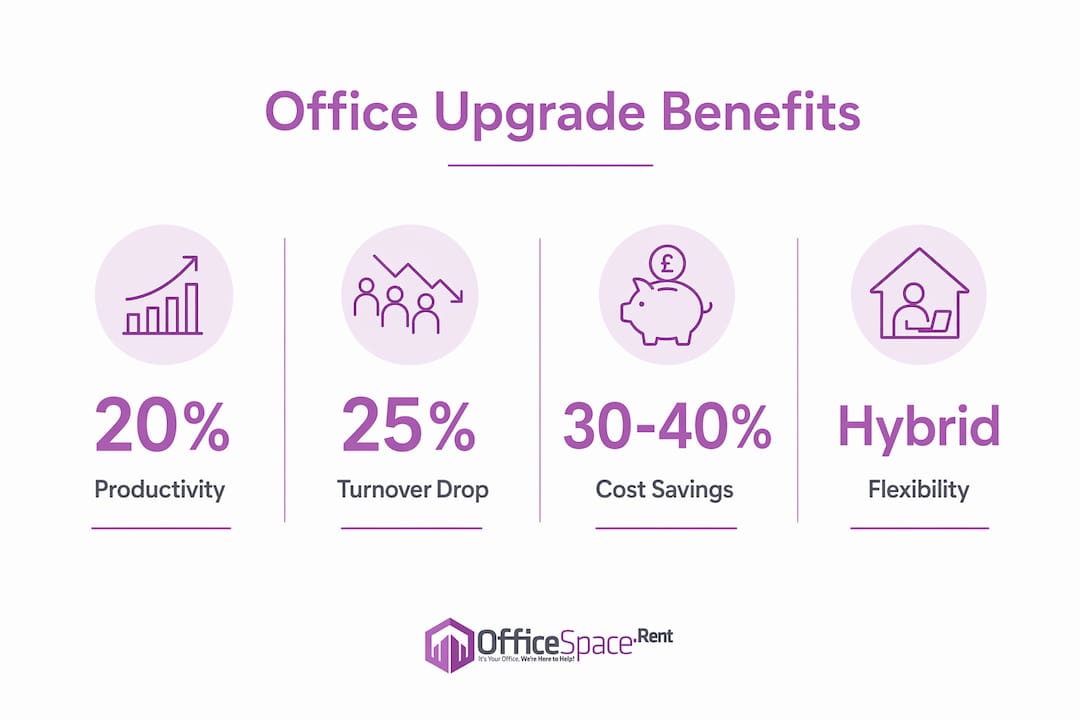
Renovation is 30 to 40% cheaper than relocation when the existing building’s infrastructure is viable. That cost advantage disappears quickly if air conditioning systems, fibre connectivity, power capacity, or ceiling heights are inadequate. In Malta, where older commercial stock in Valletta, Sliema, and Gzira frequently presents infrastructure constraints, a site feasibility audit before committing to renovation is not optional. It is the decision that determines whether the cost advantage holds.
The comparison between renovation and relocation involves more than headline costs. Disruption, lease risk, reinstatement liability, and long-term adaptability all factor into the true cost of moving.
| Factor | Renovation | Relocation |
|---|---|---|
| Upfront cost | 30–40% lower | Higher fit-out, legal, and reinstatement costs |
| Business disruption | Phased, manageable | Full move, higher operational risk |
| Infrastructure risk | Audit-dependent | New building with known specification |
| Long-term flexibility | Adaptable in place | Dependent on new lease terms and break clause |
| Staff impact | Familiar location retained | Commute change and culture disruption |
Relocation carries hidden costs that rarely appear in initial estimates. Lease break penalties, fit-out of a new space, reinstatement of the vacated premises, IT migration, and staff disruption all add up. Renovation, by contrast, preserves existing relationships with the building, the location, and the workforce.
Pro Tip: Build a 10 to 20% growth buffer into your renovation brief from the outset. Late changes to office plans cause most cost overruns. Locking in flexibility at the design stage costs far less than a refit two years later.
What features should a 2026 office upgrade prioritise?
The most effective 2026 office upgrades share a common principle: adaptability to hybrid work through modular, multi-purpose spaces that can evolve without major structural intervention. Fixed desk layouts are being replaced by activity-based neighbourhoods, where employees choose their setting based on the task at hand. This shift is as relevant for businesses in Mriehel business centres as it is for Grade A office tenants in St Julian’s.
Technology integration is now a baseline requirement, not a premium addition. IoT occupancy sensors track real-time space usage and inform future layout decisions. Smart lighting systems adjust automatically to occupancy and natural light levels. Desk-booking platforms such as Robin or Condeco remove the friction of hybrid attendance planning and generate utilisation data that supports lease renegotiations.
Key features to specify in a 2026 office upgrade brief:
- Activity-based work zones with distinct areas for focus, collaboration, and social interaction
- Modular furniture and demountable partitions that reconfigure without structural work and reduce reinstatement liability at lease expiry
- Zoom-ready huddle rooms with acoustic treatment, good lighting, and reliable AV equipment
- Biophilic design elements including planting, natural materials, and maximised daylight — particularly valuable in Malta’s older building stock where glazing ratios are lower
- IoT occupancy sensors to monitor space utilisation and reduce wasted floor plate
- Acoustic zoning to separate noisy collaboration areas from quiet concentration zones
Acoustic design deserves particular attention. Open-plan offices without acoustic treatment consistently underperform on both focus work and employee satisfaction. Specifying acoustic panels, ceiling baffles, and soft furnishings at the design stage costs a fraction of retrofitting them later — and the benefit in Malta’s typically hard-surfaced commercial interiors is immediate and measurable.
How do office upgrades support hybrid work and employee experience in Malta?
The shift from one desk per person to activity-based neighbourhoods is the defining office design change of the post-pandemic period. Employees working hybrid patterns do not need a permanent assigned desk. They need a range of settings that match their daily tasks, from a quiet focus booth for deep work to a social hub for team collaboration.
Practical features that support this shift include café-style breakout areas, standing meeting points, phone booths for private calls, and wellness rooms for rest or quiet time. These are not luxuries. They are the functional infrastructure of a modern hybrid office. Facilities managers who treat them as optional additions typically see lower voluntary attendance and higher attrition among mid-career staff.
Key takeaways
Office upgrades in 2026 deliver measurable returns through productivity gains, retention improvements, and cost savings that consistently outperform the financial and operational case for relocation.
| Point | Details |
|---|---|
| Productivity and retention gains | Strategic design delivers up to 20% productivity increase and 30% retention improvement. |
| Renovation cost advantage | Renovation costs 30–40% less than relocation when building infrastructure is sound; conduct a site feasibility audit first. |
| Wellness design reduces turnover | Wellness-focused upgrades cut employee turnover by up to 25%. |
| Adaptability is the core principle | Modular furniture and activity-based zones future-proof the space without structural cost and reduce reinstatement liability. |
| Plan for growth from the outset | A 10–20% growth buffer in the brief prevents costly redesigns within two years. |
Officespace’s view: upgrades are a business decision, not a design exercise
The businesses that get the most from office upgrades are the ones that treat the brief as a performance specification, not an interior design project. The question is not “what should the office look like?” It is “what friction does the current space create, and how do we remove it?”
Facilities managers often face pressure to produce a visually impressive result. That pressure leads to cosmetic spending that delivers no measurable return. The better approach is to audit workflow paths, measure acoustic performance, and assess technology infrastructure before a single design decision is made. In Malta’s commercial market, where older building stock frequently presents constraints around power capacity, air conditioning, and data infrastructure, the feasibility audit is the single most important step before any renovation commitment. The office space considerations that matter most are rarely the ones that photograph well.
Post-pandemic work culture has permanently changed what employees expect from a physical office. Businesses that upgraded their spaces with genuine flexibility and employee experience at the centre are seeing stronger voluntary attendance and lower attrition. Those that spent the same budget on aesthetics are not. The data is consistent on this point, and it applies as directly to Malta’s commercial market as it does to any major European city.
— OfficeSpace.Rent
Finding the right space for your 2026 upgrade in Malta
For businesses operating in Malta, the decision to upgrade or find a better-suited commercial property is one Officespace supports directly. The Maltese commercial market includes a range of properties well-suited to refurbishment, from commercial premises in Birkirkara to modern floor plates in Mriehel.
Officespace provides detailed listings with infrastructure specifications, pricing transparency, and direct access to local agents who understand the feasibility questions that matter before any upgrade commitment is made. Whether you are assessing an existing lease or evaluating a Mriehel commercial lease for a new fit-out, Officespace connects you with the right property and the right guidance.
FAQ on why upgrade office space 2026
What is the productivity benefit of upgrading office space?
Strategic office design can increase productivity by up to 20%. Workflow-optimised deep-work zones can improve concentration by up to 40% by reducing acoustic distraction and visual clutter.
Is renovation cheaper than moving office in Malta?
Renovation typically costs 30 to 40% less than relocation, provided a site feasibility audit confirms the building’s infrastructure — including air conditioning capacity, power supply, and data connectivity — is adequate. In Malta, older commercial stock requires this check before any renovation commitment.
How do office upgrades support hybrid working in Malta?
Activity-based neighbourhoods and modular layouts give hybrid workers a range of settings matched to their tasks, increasing the value of attending the office over working from home. IoT sensors and desk-booking platforms provide the utilisation data needed to right-size the space over time.
What should a 2026 office upgrade brief include?
A strong brief specifies acoustic zoning, IoT occupancy sensors, modular and demountable furniture, Zoom-ready meeting rooms, biophilic design elements, and a 10 to 20% growth buffer to avoid costly redesigns within the first two years.
How much can office upgrades reduce staff turnover?
Wellness-focused renovations reduce employee turnover by up to 25%, making them one of the highest-return investments available to facilities managers. In Malta’s competitive talent market — particularly in iGaming, fintech, and professional services — that retention advantage has direct commercial value.
Recommended
- Best for Your Office Space: Key Considerations – Offices in Malta To Let & For Sale
- Strategic Office Space Design: Enhance Your Culture – Offices in Malta To Let & For Sale
- Hybrid Offices in Malta: Choosing the Right Workspace – Offices in Malta To Let & For Sale
- Why More Businesses Are Rethinking Office Leases