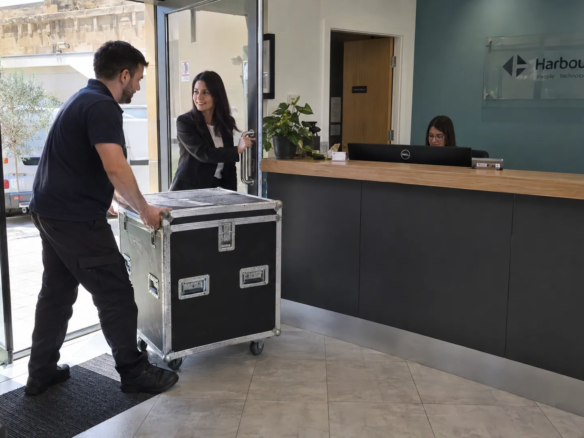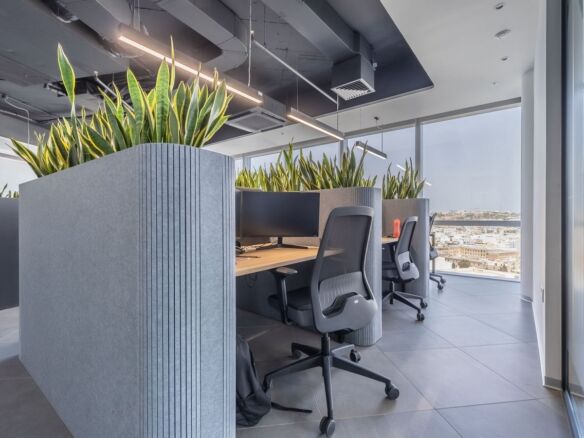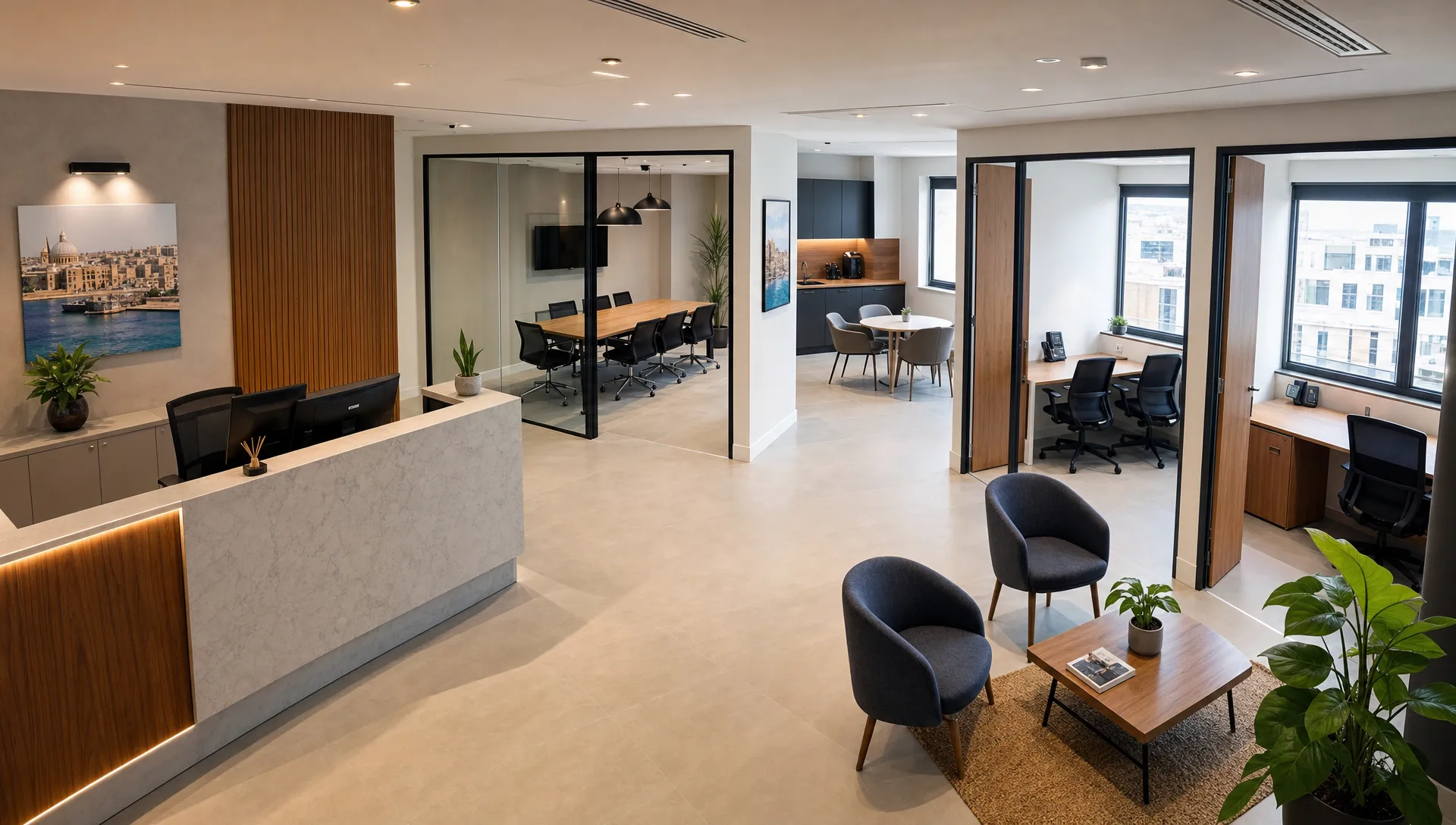
Serviced offices in Malta can be an excellent choice for companies that need speed, flexibility and a professional base without managing a full fit-out. When considering options, what businesses should compare between different serviced office providers becomes crucial. They are especially useful for international teams entering the Maltese market, SMEs that want predictable monthly overheads, and high-growth companies in sectors such as iGaming, finance, insurance, blockchain, legal services and professional consulting.
The challenge is that two serviced offices can look similar on a listing page but behave very differently once your team moves in. One may include reception, furniture, utilities, meeting room allowance and maintenance. Another may advertise a lower monthly rate but charge extra for core services. Location, contract terms, privacy, scalability and sector compliance can change the real value of the space.
If you are comparing serviced offices Malta-wide, use the process below to judge the full operating setup, not just the headline price.
Start with the business outcome you need
Before comparing buildings, define what the office must solve. A serviced office for a five-person legal practice in Valletta or Sliema will be judged differently from a 60-person iGaming team needing room to scale near St Julian’s, Gzira or Mriehel.
Your brief should include the number of desks required today, realistic headcount growth over the next 6 to 18 months, preferred locations, client visit frequency, parking needs, privacy requirements, regulatory expectations and budget ceiling. This keeps the search practical and prevents attractive but unsuitable spaces from distracting the decision.
A useful rule is to compare each serviced office against four questions: can the team work effectively there, can the company afford the full cost, can the agreement flex if plans change, and does the address support the brand you want to present?
| What to compare | Why it matters | Red flag to watch for |
|---|---|---|
| Total monthly cost | Shows the real cost after extras, VAT and usage fees | Low desk rate but high add-ons |
| Location | Affects hiring, client access, parking and commute quality | Good rent but poor access for staff or clients |
| Contract flexibility | Determines how easily you can grow, reduce or exit | Long commitment with limited break options |
| Included services | Impacts admin workload and budget certainty | Unclear meeting room, internet or cleaning terms |
| Privacy and compliance | Important for regulated and confidential work | Shared spaces with weak access control |
| Scalability | Supports growth without another office search | No adjacent space or upgrade path |
Compare the total cost, not the advertised desk rate
Serviced offices are often marketed as simple monthly packages, but the total cost can still vary significantly. For business owners and office managers, the most important comparison is not the price per desk. It is the total monthly operating cost for the way your team will actually use the space.
Ask whether the quoted price includes furniture, utilities, internet, reception services, cleaning, building maintenance, air conditioning, kitchen access, business rates where applicable, shared area access and a meeting room allowance. If the office is offered on a per-desk basis, confirm whether every employee needs a dedicated desk or whether a hybrid working pattern can reduce the package size.
Also check one-off costs. Some providers charge setup fees, deposits, access card fees, branding costs or charges for private network installation. Meeting rooms, printing, phone answering, mail handling, storage and out-of-hours access may also be extra. VAT treatment can affect cash flow, so confirm whether prices are quoted inclusive or exclusive of VAT and speak to your accountant about recoverability.
For a deeper view of how serviced office costs differ from a private office, compare the cost categories in this serviced office vs private office cost breakdown in Malta.
Compare location through the lens of staff, clients and regulators
Location is not only a map pin. In Malta, a few kilometres can materially affect commute times, parking availability, client perception and proximity to sector clusters. St Julian’s and Sliema may appeal to iGaming, fintech and internationally facing teams that value visibility and amenities. Gzira and Ta’ Xbiex can work well for professional services and companies wanting central access. Mriehel, Birkirkara and surrounding commercial areas may offer better value and easier access for larger teams.
The right location depends on who needs to reach the office. A finance or insurance company may prioritise a reputable address and meeting room quality for client visits. A tech or gaming company may care more about talent access, nearby hospitality, late working patterns and expansion options. Lawyers, architects and consultants may need a balance of professional image, accessibility and quiet meeting space.
When comparing serviced offices, test the location at the times your team will actually travel. Morning traffic, school run congestion, summer tourist flows and parking pressure can all change the experience. If your leadership team is relocating to Malta, also consider nearby housing options and airport access.
To understand how different areas compare, this guide to serviced offices in Malta by location is a helpful next step.
Compare contract terms before you fall in love with the space
One of the main advantages of serviced offices is flexibility, but flexibility still needs to be written into the agreement. Do not assume that every serviced office allows easy expansion, contraction or exit.
Start with the minimum term. A short-term agreement can be ideal for market entry, project teams or companies awaiting a larger lease. A longer commitment may offer better pricing but can become a constraint if hiring plans change. Ask about notice periods, renewal conditions, deposit requirements, payment terms and what happens if you need more desks halfway through the term.
Pay attention to break clauses and downgrade rights. A fast-growing company may need first refusal on nearby rooms or the ability to move into a larger suite. A company testing the Malta market may need a low-risk agreement that does not lock it into more space than it needs.
The best serviced office agreement is not always the shortest. It is the one that matches your forecast, your risk tolerance and your operational certainty.
Compare what is actually included in the service
A serviced office should reduce management burden. That only happens if the included services are clear. Office managers should request a written schedule of inclusions rather than relying on a verbal summary from a viewing.
Important areas to clarify include internet speed and backup, Wi-Fi and wired connection options, reception coverage, mail handling, cleaning frequency, kitchen supplies, printing, meeting room booking rules, visitor access, maintenance response times, heating and cooling control, furniture changes, signage, storage and after-hours access.
Fit-out and maintenance standards are especially important because they shape daily experience. Ask who handles repairs, painting, furniture replacement and refresh works, and how disruption is managed while tenants are in the building. For companies comparing service standards across markets, the same principle applies whether a landlord uses local facilities teams in Malta or specialist business-facing trades such as commercial painting contractors in Denmark: the provider should be clear about who maintains the workspace, how quickly issues are handled and what level of finish is included.
This matters because a serviced office is not just a rental product. It is an operating environment. If the provider is slow to resolve air conditioning, access, noise or connectivity issues, your team loses productivity and your clients notice.
Compare privacy, security and compliance fit
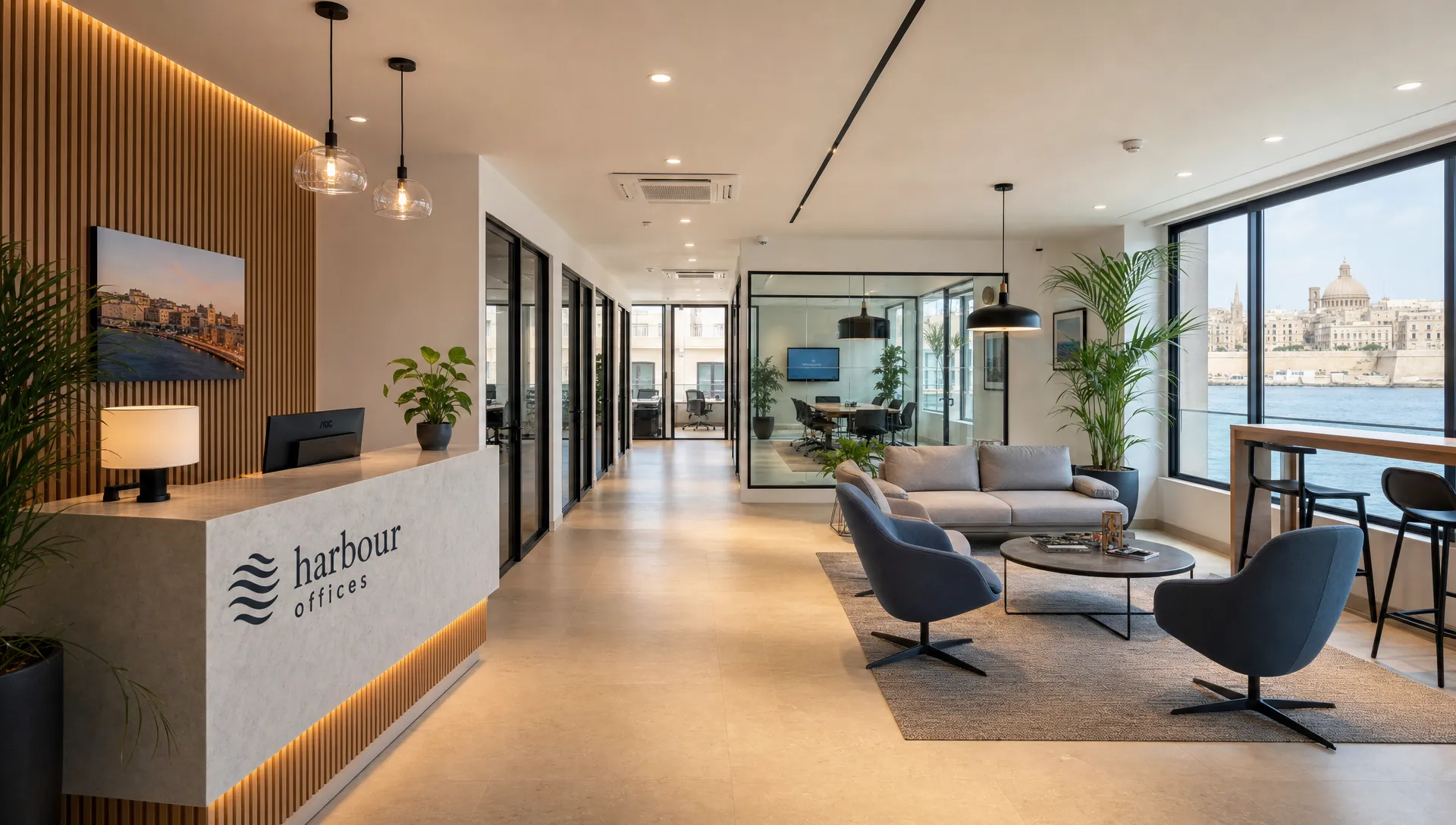
Privacy requirements differ by sector. A small design studio may be comfortable in a lively shared environment. A financial services firm, insurance company, legal office or blockchain business may need stronger controls around client data, confidential calls and visitor access.
Ask whether the office provides lockable private rooms, controlled entry, secure storage, CCTV in common areas, visitor sign-in procedures and options for private networks. If your team handles regulated activity, check whether the space supports your internal policies for confidentiality, document handling and business continuity.
Meeting room privacy is often overlooked. During viewings, test whether conversations can be heard from corridors or neighbouring rooms. For law firms, accountants, recruiters, insurers and advisory firms, poor acoustic separation can be a real business risk.
Data and IT questions also matter. Confirm who manages the network, whether dedicated bandwidth is available, whether you can install your own equipment, and what support exists if connectivity fails. For remote-first teams using the office as a client hub, meeting room video conferencing quality may be as important as desk space.
Compare workspace quality and brand impression
A serviced office should support your employer brand and client confidence. This is particularly relevant for companies hiring in competitive talent markets or welcoming overseas clients, investors, regulators or partners.
Look beyond the reception area. Review desk density, natural light, noise levels, air quality, restrooms, kitchen condition, lift reliability, accessibility, common area cleanliness and the overall professionalism of the building. A polished entrance loses value if the actual workspace feels cramped or poorly maintained.
Brand fit is also sector-specific. An iGaming or tech company may want energy, amenities and proximity to hospitality. A law firm or insurance company may prefer calm, discretion and a more formal environment. A finance company may value a prestigious address and premium meeting rooms. An architecture firm may care about design quality and client presentation.
During viewings, imagine the space on a busy Tuesday, not on a quiet viewing slot. Where will people take private calls? Where will visitors wait? Is there enough informal space for quick discussions? Will the office still feel functional if every desk is occupied?
Compare scalability and future options
Serviced offices are often chosen because they help companies avoid committing to too much space too early. That advantage disappears if the provider cannot support growth.
Ask what happens if you add five, ten or twenty employees. Can you move to a larger private suite in the same building? Are there adjacent rooms? Can you reserve expansion space? Will the provider honour similar pricing if you scale? If you downsize, can you reduce desks at renewal?
For companies entering Malta, a serviced office can act as a bridge between remote operations and a permanent headquarters. For established SMEs, it can be a way to upgrade address and service quality without taking on fit-out risk. For larger businesses, it can support overflow teams, temporary projects or relocation periods.
If you are still deciding whether a serviced setup or a more conventional lease is the right long-term path, this serviced vs traditional offices guide explains the broader trade-offs.
Compare providers with a structured viewing scorecard
Viewings are useful, but they can become subjective. A scorecard helps decision-makers compare options fairly, especially when a CEO, office manager and finance lead are all involved.
Use a simple 1 to 5 score for each criterion and add notes immediately after each viewing. The aim is not to turn the decision into a spreadsheet exercise. It is to make sure you do not forget practical issues after seeing several attractive spaces.
| Criterion | Questions to ask during the viewing |
|---|---|
| Cost clarity | What is included, what is extra and how is VAT shown? |
| Daily usability | Is the space comfortable, quiet and practical at full occupancy? |
| Connectivity | What internet service, backup and IT support are available? |
| Meeting rooms | How many are available, how are they booked and what is included? |
| Access and security | How are staff, visitors and deliveries managed? |
| Growth options | Can the provider support more desks or a larger suite? |
| Contract risk | What are the notice period, deposit and renewal rules? |
| Brand fit | Does the building support the image you want clients and staff to see? |
After the viewing, request the full proposal in writing. The proposal should make it easy to compare desk count, room size, term, deposit, monthly cost, included services, extras and any special conditions.
Common mistakes when choosing serviced offices in Malta
Many office searches go wrong because the team compares only the obvious factors. The office looks good, the rent seems manageable and the location is familiar. The issues appear later, when meeting rooms are constantly booked, internet options are limited, the team outgrows the space or the agreement is less flexible than expected.
The most common mistakes are choosing the cheapest quote without modelling extras, underestimating parking and commute impact, ignoring noise and privacy, failing to ask about expansion, and not checking whether the provider understands business users in regulated or client-facing sectors.
Another mistake is comparing serviced offices against traditional leases too late. Some businesses assume serviced space is always cheaper because it avoids fit-out. Others assume a private lease is always better value because the square metre rate is lower. In reality, the right answer depends on term length, headcount certainty, included services, fit-out needs, management capacity and cash flow.
Frequently Asked Questions
Are serviced offices in Malta suitable for regulated businesses? They can be, but the details matter. Finance, insurance, legal, gaming and crypto-related companies should check privacy, access control, meeting room confidentiality, IT setup and whether the workspace supports internal compliance policies.
What is usually included in serviced offices Malta providers offer? Many serviced offices include furniture, shared facilities, utilities and some level of reception, cleaning and maintenance, but inclusions vary. Always ask for a written schedule showing what is included and what costs extra.
Is a serviced office cheaper than a traditional office in Malta? It depends on your time horizon and operating needs. Serviced offices can reduce setup costs and admin burden, while traditional leases may offer better long-term control for stable teams. Compare total cost, not only rent.
How long should a serviced office agreement be? The right term depends on your growth forecast and risk tolerance. Shorter terms suit market entry, temporary projects and uncertain headcount. Longer terms may improve pricing if you are confident about your needs.
What should I bring to a serviced office viewing? Bring your headcount plan, budget range, must-have locations, IT requirements, meeting room needs and any sector-specific privacy or compliance requirements. This makes the viewing more focused and helps providers give accurate proposals.
Compare serviced offices in Malta with a clearer brief
The best serviced office is the one that fits how your business actually works. Price matters, but it should be weighed alongside location, flexibility, inclusions, privacy, scalability and brand impression.
OfficeSpace.Rent helps businesses find and compare office space in Malta, including serviced offices, traditional leases and larger commercial properties. You can browse listings, filter by location, price and size, compare options, and get support with viewings, negotiations, legal considerations and VAT guidance. If you are relocating, expanding or reassessing your workspace in Malta, start with a clear comparison brief and shortlist only the spaces that genuinely fit your team.