Sliema is a preferred commercial base for multinationals because it combines a premium seafront address, modern purpose-built office stock, and direct access to Malta’s iGaming and fintech talent clusters. But what makes Sliema offices so attractive? Understanding why Sliema offices are popular with multinationals is key to appreciating the area’s strong market demand. Officespace listings across the area show consistent demand for serviced suites, sea-view floors, and flexible mid-sized spaces, reflecting a market that has matured considerably since 2020. Developers have responded by upgrading floor plates, improving energy efficiency, and introducing plug-and-play terms that reduce time-to-occupancy risk for incoming occupiers.
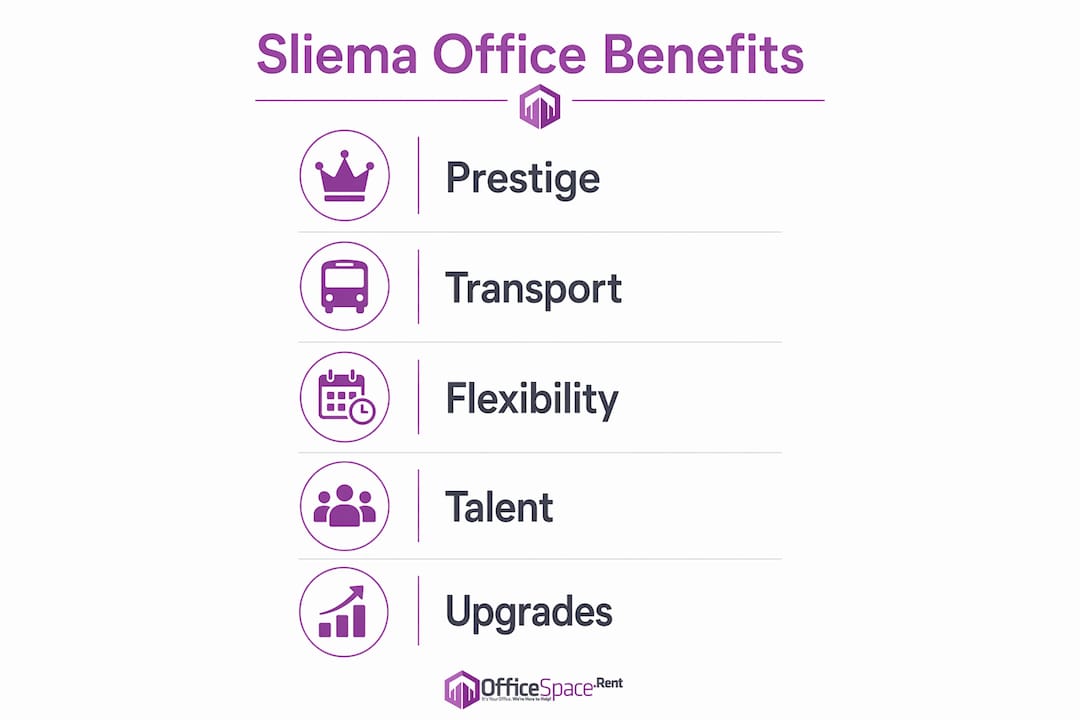
The headline reasons multinationals choose Sliema:
- Prestige address with international recognition and seafront visibility
- Modern, flexible office stock ranging from compact serviced suites to open mid-sized floors
- Proximity to Malta’s iGaming, fintech, and financial services clusters
- Strong transport links to Valletta, St Julian’s, and Malta International Airport
- English-fluent professional workforce with sector-specific experience
- Competitive occupancy costs relative to comparable European commercial addresses
Table of Contents
- 1. Why does a Sliema address carry genuine commercial weight?
- 2. How do transport links and accessibility affect daily operations?
- 3. What types of office stock are available in Sliema?
- 4. How does Sliema’s talent pool and business ecosystem support multinationals?
- 5. What do rental costs look like, and how should multinationals evaluate them?
- 6. Which types of multinationals and business functions fit Sliema best?
- 7. How have developers upgraded Sliema’s office market since 2020?
- 8. A decision checklist for executives evaluating Sliema offices
- Key takeaways
- Sliema through the lens of multinational placement
- Officespace: your starting point for Sliema office search
- Selected sources and further reading
1. Why does a Sliema address carry genuine commercial weight?
A Sliema address does specific work for a multinational that a generic business park cannot replicate. The seafront location is internationally legible: clients arriving from London, Amsterdam, or Dubai recognise it as a premium district, which matters when the office functions as a regional headquarters or client-hosting venue. That recognition reduces the effort required to position the brand locally.
Pro Tip: When briefing internal stakeholders on a Malta location decision, use the seafront address as a proxy for employer brand value. Candidates evaluating competing offers respond to address prestige in ways that a back-office park cannot match.
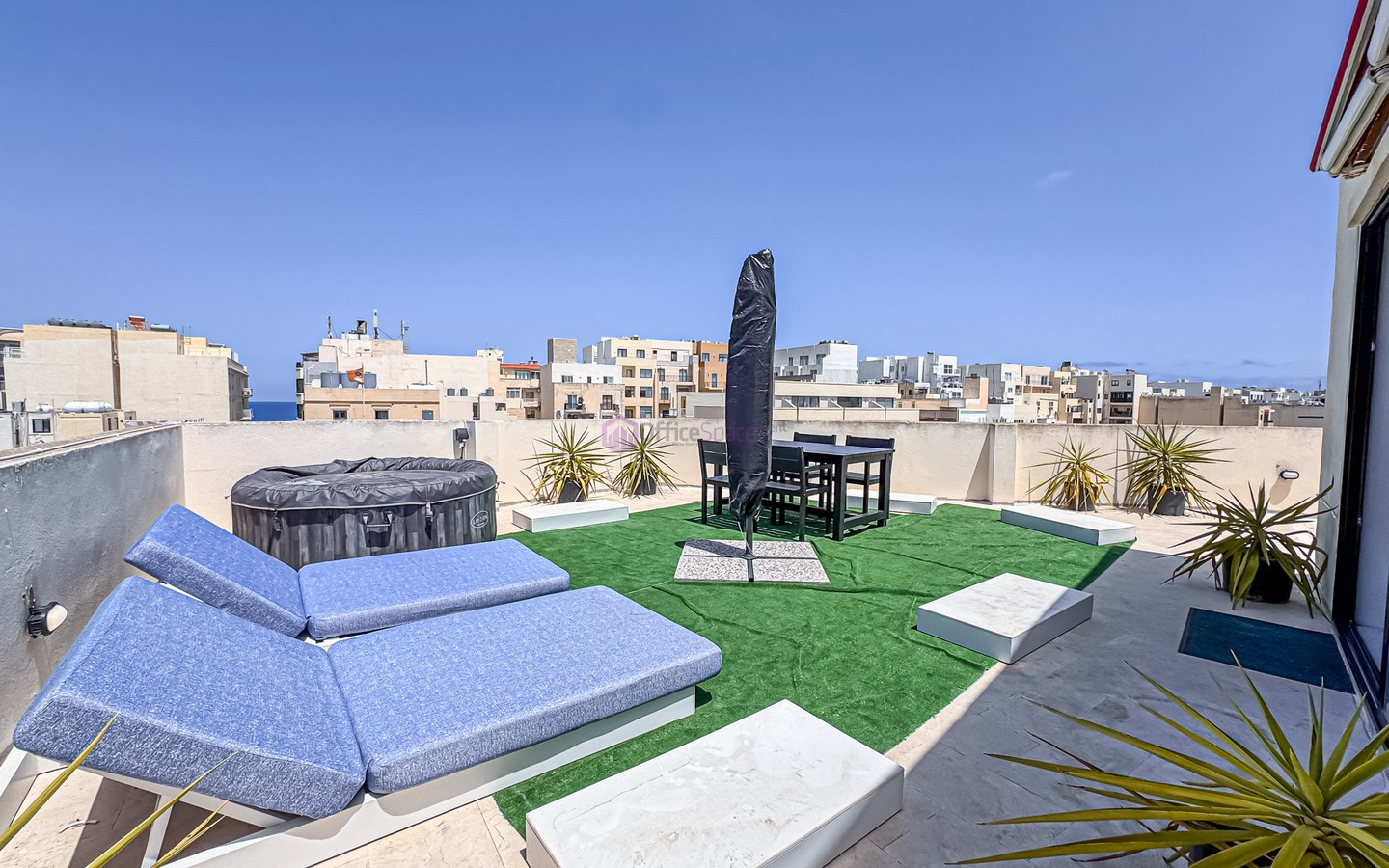
Prestige also translates into measurable commercial outcomes. Client visits are easier to arrange when the office is within walking distance of Sliema’s hotels, restaurants, and waterfront meeting venues. Recruitment improves when the address signals that the organisation takes its Malta presence seriously. Prominent seafront premises in the area illustrate the kind of high-profile positioning that client-facing teams and regional HQs typically require.
Market signal: Officespace listings data shows that seafront and centrally located Sliema offices consistently attract enquiries from representative offices, regional finance teams, and iGaming operators, confirming that address prestige is an active selection criterion, not a secondary consideration.
2. How do transport links and accessibility affect daily operations?
Sliema’s connectivity is a practical operational advantage, not simply a location benefit. The town sits between Valletta and St Julian’s, placing it within a short drive of both Malta’s capital and the primary iGaming and tech cluster to the north. Malta International Airport is reachable in a convenient time by road under normal traffic conditions, which matters for multinationals whose executives and consultants travel frequently.
Key connectivity points for multinational operations:
- Valletta is approximately 10–15 minutes by road or ferry, giving teams direct access to government ministries, the Malta Financial Services Authority (MFSA), and legal and corporate-services firms
- St Julian’s (Paceville and Portomaso) is adjacent, enabling staff to move between the two commercial clusters without significant commute friction
- Ferry service from the Sliema waterfront to Valletta operates regularly and is used by both staff and visiting clients as a practical alternative to road travel
- Public bus routes serve Sliema extensively, connecting to the wider island network
- Taxi and ride-hailing services are readily available at the waterfront and main thoroughfares
Accessibility note: For visiting executives arriving at Malta International Airport, the direct road route to Sliema is straightforward and well-signposted, with no complex motorway interchanges. That simplicity reduces friction for first-time visitors and supports a professional first impression.
The ferry link to Valletta deserves particular attention. For teams that interact regularly with MFSA, Malta Enterprise, or government departments, the 10-minute crossing is faster than driving and avoids parking constraints in the capital.
3. What types of office stock are available in Sliema?
Sliema’s office market covers a wider product range than many decision-makers expect. The stock divides broadly into three categories, each suited to different occupier profiles and operational requirements.

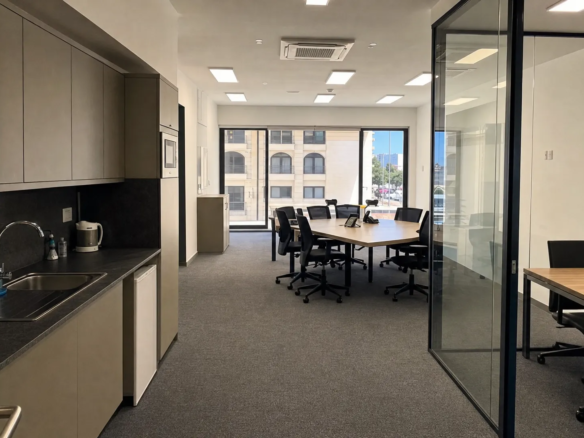
Traditional leased floors offer larger, self-contained spaces where the tenant fits out and manages the environment. These suit established teams with defined headcount and a preference for brand-specific fit-out. Spacious Sliema office space listings illustrate the mid-sized floor plates available for growing teams that need layout flexibility without committing to a full building.
Serviced and business-centre suites provide plug-and-play occupancy: furniture, fibre connectivity, reception, and meeting rooms are included. A multinational entering Malta for the first time can be operational within days rather than weeks. The Sliema Business Centre is a representative example of this format, offering short-term and flexible terms that reduce early-phase occupancy risk.
Premium sea-view offices occupy upper floors of seafront buildings and combine the prestige of the address with modern MEP infrastructure. These are the product type most associated with client-facing and representative functions.
Pro Tip: For a first-phase Malta entry, a serviced suite in a Sliema business centre lets you validate headcount and operational requirements before committing to a longer traditional lease. Use the plug-and-play period to negotiate fit-out concessions on any subsequent conventional space.
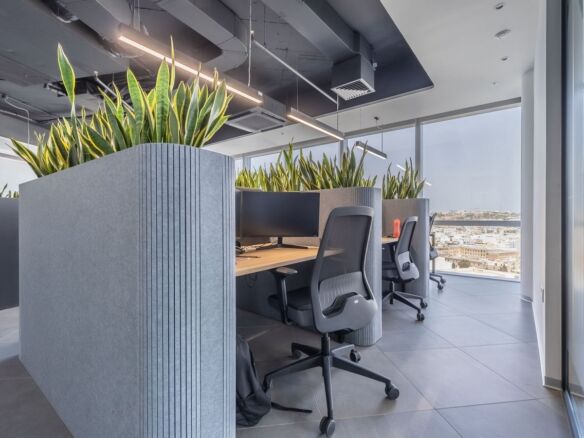
Modern Sliema stock increasingly features energy-efficient building systems, raised floors for cabling, and collaborative breakout areas. The modern office at Sliema Centre reflects these infrastructure improvements, which matter for multinationals with ESG reporting obligations or IT infrastructure requirements.
4. How does Sliema’s talent pool and business ecosystem support multinationals?
Malta’s workforce is English-fluent by default, a product of the island’s British colonial history and its education system. That baseline removes a significant operational friction point for multinationals establishing regional teams. Within Sliema and the adjacent St Julian’s cluster, the concentration of iGaming, fintech, and financial services firms has produced a professional talent pool with sector-specific experience that is difficult to replicate in smaller European jurisdictions.

The iGaming and fintech cluster that underpins Malta’s economy is a direct driver of Sliema’s office demand. Gaming operators, payment processors, and regulated financial services firms have built a critical mass of compliance, technology, and commercial talent on the island. A multinational entering the market can recruit from this pool rather than relocating staff from elsewhere.
Ecosystem elements that reduce operational friction for incoming multinationals:
- Corporate-services firms (legal, accounting, company secretarial) concentrated in Sliema and Valletta, within easy reach
- Banking and financial infrastructure accessible via MFSA-regulated institutions operating locally
- Hospitality and client amenities — hotels, restaurants, and conference facilities within walking distance of most Sliema offices
- Professional networks built around the iGaming and finance sectors, facilitating introductions and partnerships
Sector context: Gaming, tourism, and financial services are Malta’s primary revenue streams, and the concentration of these sectors in and around Sliema means that the local business culture is commercially sophisticated and internationally oriented.
Malta’s business culture blends Mediterranean relationship-building with British-influenced formality. For multinationals accustomed to structured corporate dealings, that combination is familiar enough to operate in without significant cultural adjustment, while the relationship-oriented dimension rewards early investment in local professional networks.
5. What do rental costs look like, and how should multinationals evaluate them?
Sliema commands a premium over secondary Maltese locations, and that premium is justified by the combination of address prestige, modern stock quality, and ecosystem access. The table below provides indicative rental bands based on current Officespace market data; actual figures depend on floor, specification, lease term, and service charge structure.
| Product type | Indicative rent range (per sq m / month) | Typical lease term | Key cost drivers |
|---|---|---|---|
| Serviced suite (plug-and-play) | Higher end of market | Monthly to 1 year | Inclusive of services, fibre, reception |
| Mid-market traditional floor | Mid-range | 2–5 years | Fit-out cost, service charge separate |
| Premium sea-view office | Premium band | 3–5 years | Address prestige, MEP specification |
| Compact suite | Mid-to-premium | 1–3 years | Client-facing location, limited supply |
Note: Specific per-square-metre figures vary by building and are confirmed at listing level. Contact Officespace for current market data.
Multinationals evaluating total occupancy cost should account for rent, service charges, fit-out capital (or the premium for plug-and-play terms), business rates, and any landlord-incentive packages. The implications of renting in Malta guide covers the transactional and legal considerations that affect total cost modelling.
Pro Tip: Negotiate fit-out contribution or a rent-free period on traditional leases rather than accepting a headline rent reduction. Landlords in Sliema are more likely to offer capital concessions than to reduce the headline rate, which protects the building’s valuation.
For cost-sensitive operations, small seafront offices and compact suites offer a way to maintain a Sliema address without committing to a full floor. The trade-off is limited expansion capacity, which makes them most suitable for representative offices and small client-facing teams rather than growing operational hubs.
6. Which types of multinationals and business functions fit Sliema best?
Sliema suits multinationals where the office serves a client-facing, regulatory, or brand-positioning function. It is less suited to large back-office operations where cost per square metre is the primary driver and address prestige is secondary.
Occupier categories that consistently choose Sliema:
- iGaming and tech support hubs requiring proximity to the sector’s talent concentration and regulatory contacts
- Regional finance and treasury teams that interact regularly with MFSA and need a credible address for counterparty meetings
- Client-facing sales and business development offices where the seafront setting supports client hosting
- Representative offices and regional HQs where the address signals organisational commitment to the Malta market
- Legal and compliance functions that benefit from proximity to Valletta’s regulatory and legal infrastructure
Functions that may find Sliema’s premium harder to justify include large-scale data processing, logistics coordination, and back-office administration, where Birkirkara, Mriehel, or Attard offer lower occupancy costs without a material operational disadvantage.
The Sliema office space overview on Officespace covers the range of available options across team sizes, which helps decision-makers match function to product type before engaging agents.
7. How have developers upgraded Sliema’s office market since 2020?
The Maltese office market has undergone a significant quality upgrade since 2020, moving from a stock base characterised by converted residential buildings and basic commercial units to purpose-built, specification-grade developments. Sliema has been at the centre of that transition.
The practical effect for multinational occupiers is a shorter gap between lease signing and operational readiness. Buildings with raised floors, pre-installed fibre infrastructure, and compliant MEP systems eliminate the fit-out delays that older stock required. Communal areas, reception services, and building management standards have also improved, which matters for organisations where the office environment reflects on the brand.
Market maturation signal: Developer activity in the 2020–2026 period has produced a cohort of buildings in Sliema that meet the specification requirements of global firms, reducing the need for bespoke fit-out and the associated capital commitment and time risk.
Pro Tip: When assessing a Sliema building, ask the landlord for the building’s energy performance certificate and the MEP specification sheet. Purpose-built post-2020 developments will have these readily available; older conversions may not, which signals a higher fit-out cost.
These upgrades also shift risk. A multinational taking a plug-and-play suite in a post-2020 development carries minimal fit-out exposure and can exit or expand at lease break without stranded capital. That risk profile is materially different from a traditional long-lease commitment in an older building.
8. A decision checklist for executives evaluating Sliema offices
Before engaging agents or presenting a location recommendation internally, work through these questions to sharpen the brief and avoid avoidable delays.
- Occupancy timetable — What is your target move-in date, and does it allow for a traditional fit-out period (typically 8–16 weeks) or do you require plug-and-play occupancy?
- Headcount and growth plan — What is your day-one headcount, and what is the 24-month projection? Sliema’s compact floor plates suit small to medium-sized teams; larger teams may need to plan for multi-floor or adjacent-building expansion.
- MEP and IT requirements — Do you need dedicated fibre circuits, server room capacity, or specific power load? Confirm these with the building’s technical specification before shortlisting.
- Visitor and meeting needs — How frequently do clients, board members, or regulators visit? If visitor frequency is high, proximity to hotels and the quality of meeting facilities should be weighted heavily.
- Budget vs brand trade-off — Is the Sliema premium justified by the function the office serves? Client-facing and regulatory functions typically justify it; pure back-office functions may not.
- Service charge transparency — Request a full service charge schedule and a breakdown of what is included. Sliema buildings vary significantly in what the headline rent covers.
- Break options and lease flexibility — Negotiate a break clause at year two or three if headcount uncertainty is high. Landlords in active Sliema buildings are more willing to accommodate this than in secondary locations with lower demand.
- Tenant mix — Ask who else occupies the building. A building with established iGaming or financial services tenants signals that the infrastructure and management standard meet sector requirements.
- Fit-out timeline and landlord contribution — If taking a traditional space, agree the fit-out contribution and timeline in heads of terms before instructing solicitors.
- Shortlist and site day — Use Officespace to shortlist three to five properties, then arrange a structured site day to assess each against the criteria above before making a recommendation.
Review the renting in Malta implications guide alongside this checklist to understand the legal and transactional framework before entering negotiations.
Key takeaways
Sliema’s combination of prestige address, modern office stock, and proximity to Malta’s iGaming and financial services clusters makes it the most commercially defensible office location on the island for client-facing and regulatory-function multinationals.
| Point | Details |
|---|---|
| Prestige address drives commercial outcomes | Seafront visibility supports client hosting, employer brand, and talent attraction in ways secondary locations cannot match. |
| Modern stock reduces occupancy risk | Purpose-built post-2020 developments offer plug-and-play terms, energy efficiency, and short time-to-occupancy for incoming multinationals. |
| Ecosystem access is a structural advantage | Proximity to Malta’s iGaming, fintech, and financial services clusters provides talent, corporate services, and regulatory access in one location. |
| Total occupancy cost requires full modelling | Headline rent is one component; service charges, fit-out, and break-clause terms determine the true cost relative to secondary locations. |
| Officespace for market data and shortlisting | Officespace listings cover the full Sliema product range, from compact seafront suites to mid-sized floors, with agent introductions and market pricing data. |
Sliema through the lens of multinational placement
The conventional wisdom on Malta office locations tends to flatten the differences between districts. Sliema, St Julian’s, and Valletta are often presented as interchangeable options at slightly different price points. That framing misses what actually drives multinational location decisions.
Sliema’s advantage is not simply that it is central or that it has sea views. It is that the address does commercial work that the occupier does not have to do separately. A regional HQ in a recognised seafront building arrives with implicit credibility. Clients accept meeting invitations more readily. Candidates accept offers more readily. Regulators and counterparties form a baseline assumption of organisational seriousness.
The risk for decision-makers is over-indexing on cost at the shortlisting stage and selecting a secondary location that requires the organisation to compensate through other means. The Sliema premium, evaluated against the full commercial picture, is frequently the more efficient spend.
Officespace: your starting point for Sliema office search
For multinationals evaluating Sliema, the most time-efficient starting point is a structured property search with current market data rather than a series of uncoordinated agent calls. Officespace provides detailed listings across the full Sliema product range, from compact seafront suites to mid-sized open floors, with pricing context, floor-plan data, and direct agent introductions built into the process.
The platform’s market insights and rental guidance help you model total occupancy cost before entering negotiations, reducing the risk of late-stage surprises on service charges or fit-out timelines. Agent introductions through Officespace come with local market knowledge that shortens the time between shortlisting and heads of terms.
Search current Sliema office listings on Officespace to build your shortlist, or request market data directly through the platform to support an internal location recommendation.
Selected sources and further reading
The following sources informed this analysis and provide additional depth for decision-makers conducting due diligence on Malta office locations.
- The evolution of Malta’s office market — The Business Picture: market maturation analysis covering developer activity, stock quality, and occupier demand from 2020 to 2026.
- Top locations in Malta to set up your business — QLC Malta: comparative location analysis covering Sliema, Valletta, St Julian’s, and secondary hubs.
- Implications of renting in Malta — Officespace: practical guide to the legal and transactional framework for commercial tenants in Malta.
- Industry breakdown of companies in Malta — HitHorizons: sector concentration data identifying Malta’s largest employers and dominant industries.
- Malta management culture guide — Commisceo Global: guidance on business culture, management expectations, and relationship norms for incoming multinationals.
For regulatory and tax verification, decision-makers should consult Malta Enterprise (the national investment promotion agency) and the Malta Financial Services Authority (MFSA) directly. Both publish current guidance on corporate incentives, licensing requirements, and sector-specific regulatory frameworks that affect location and entity structure decisions.
Note: This article provides general market information for decision-making purposes. Regulatory, tax, and legal positions should be confirmed with qualified Maltese advisers and the relevant primary sources before any commitment is made.