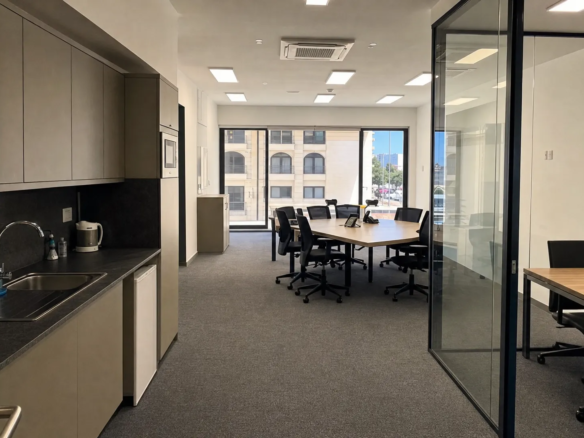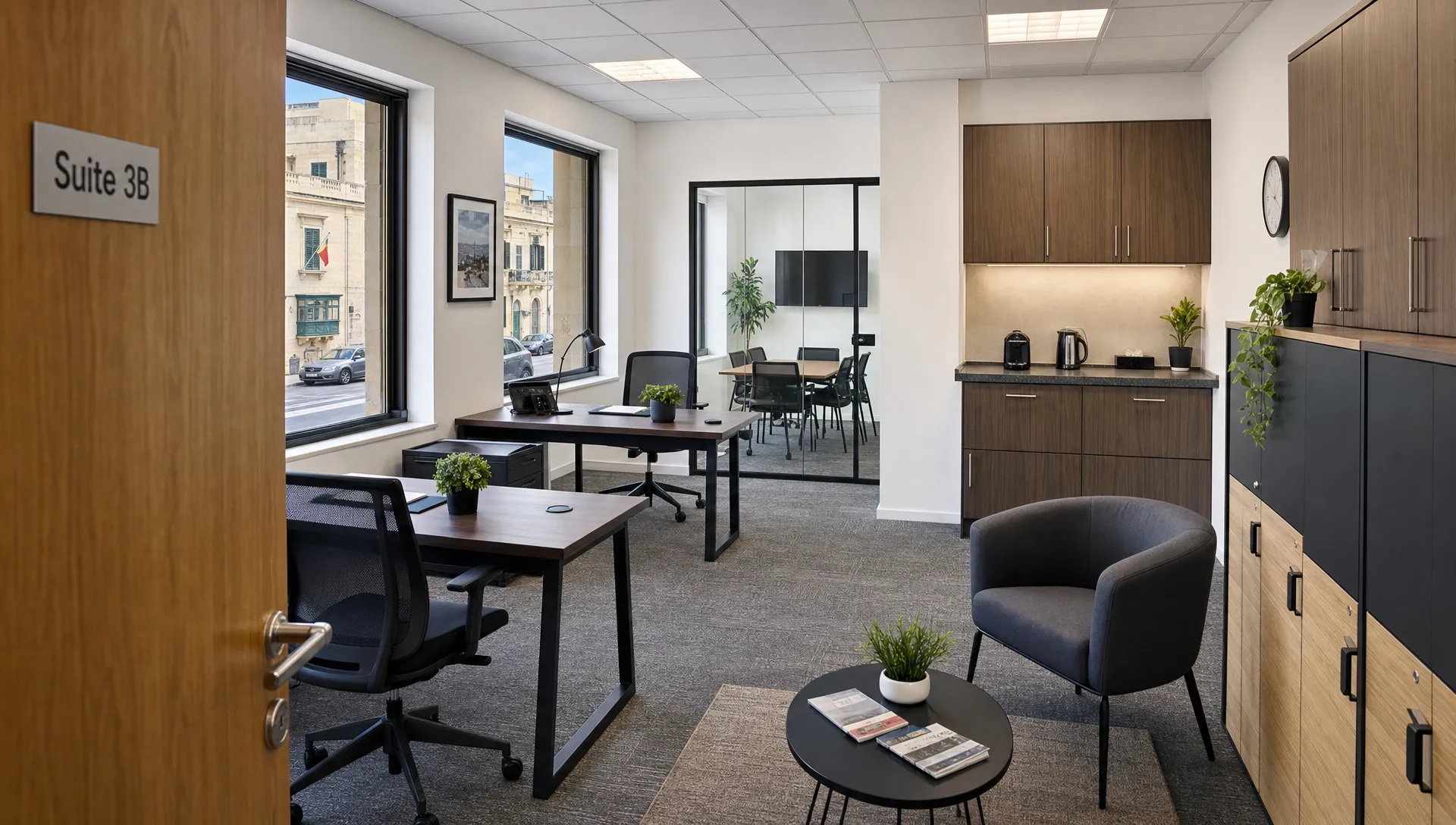
Choosing a furnished office for rent in Malta is rarely just about desks and chairs. For many companies, especially international operators setting up on the island, it is about speed, certainty and reducing the number of decisions needed before a team can start work.
That is why furnished offices are popular with iGaming companies, fintech and crypto firms, financial services providers, insurance businesses, legal practices, architects and SMEs that need a professional base without managing a full fit-out from day one.
But furnished does not automatically mean simple. The wrong agreement can leave you paying for furniture you do not need, accepting technical limitations that affect productivity, or taking on liability for items that were already worn before you moved in. In Malta, where location, parking, building quality and service charges can materially change the real cost of office space, the details matter.
This guide explains the main pros, cost items and risks to check before signing for a furnished office in Malta.
What does a furnished office usually include in Malta?
The term furnished office can mean different things depending on whether you are dealing with a serviced office operator, a landlord, a managed office provider or a tenant assigning an existing lease. Before comparing prices, clarify exactly what is included and what remains your responsibility.
| Type of furnished office | Usually included | Typically suits |
|---|---|---|
| Serviced furnished office | Workstations, chairs, shared meeting rooms, reception, internet, utilities, cleaning and flexible terms | Small teams, new Malta entities, project teams and companies testing the market |
| Furnished conventional lease | Existing desks, chairs, storage, basic meeting room furniture and sometimes kitchenette furniture | SMEs and established teams that want a private office but lower upfront fit-out cost |
| Managed or fitted HQ office | Furniture, layout planning and operational set-up agreed with the provider or landlord | Larger teams that need a dedicated branded space without managing every supplier |
The distinction is important because a serviced office is usually sold as an operational package, while a furnished conventional lease may only include the physical furniture. In the second case, you may still need to arrange internet, access control, cleaning, maintenance, insurance, utilities and sometimes air-conditioning servicing.
If you are still deciding between serviced, traditional and hybrid office models, it is worth reading a broader guide to office space in Malta before shortlisting furnished options.
The main pros of renting a furnished office in Malta
Faster move-in and less operational disruption
The biggest advantage is speed. A furnished office can reduce the time between signing and occupation because the workspace is already laid out, equipped and presentable. For companies relocating staff to Malta or opening a local office for licensing, client meetings or operational delivery, that time saving can be significant.
Instead of waiting for furniture orders, contractor availability and fit-out snagging, your team can often focus on connectivity, compliance requirements and internal onboarding. This is especially useful for teams under commercial pressure, such as a gaming operations unit launching before a busy season or a financial services firm that needs a credible address for meetings.
Lower upfront capital expenditure
Furnishing an office from scratch can require a meaningful upfront budget. Even a modest office needs desks, task chairs, meeting tables, storage, kitchen items, reception furniture and sometimes acoustic solutions. Furnished offices shift part of that cost into the rent or licence fee, which can help preserve cash flow.
This can be attractive for growing SMEs and foreign companies that want to avoid committing capital before they know how quickly the Malta team will scale. It can also simplify internal approvals because the office becomes a recurring operating cost rather than a separate procurement project.
Easier budgeting when services are bundled
Some furnished offices, especially serviced offices, include utilities, cleaning, internet, reception services and shared facilities in one monthly fee. That does not always make them cheaper, but it can make budgeting easier.
For managers comparing several locations, a single monthly figure can be useful as long as it is genuinely comprehensive. The key is to check what is excluded, such as meeting room overages, printing, additional bandwidth, dedicated parking, after-hours air-conditioning or private signage.
Flexibility for uncertain headcount
Malta-based teams in iGaming, software, finance and professional services often change quickly. A company may start with a country manager and compliance team, then add customer support, payments, marketing or legal staff later. Furnished offices can support that transition because they reduce the friction of adding or moving workstations.
In serviced or managed environments, expansion may be possible within the same building if space is available. That can be valuable when you want to retain a central location but avoid committing to too much space too early.
A more polished first impression
A well-furnished office can immediately look credible to clients, candidates, auditors, suppliers and visiting executives. This matters in sectors where trust and professionalism affect commercial perception, including law, financial services, insurance, architecture and B2B technology.
However, this benefit only applies if the furniture, lighting, meeting rooms and common areas are genuinely in good condition. A tired furnished office can create the opposite impression, so the viewing should assess both function and appearance.
The real cost of a furnished office for rent in Malta
The headline rent is only one part of the total cost. In Malta, location, building specification, lease length, included services, parking and technical requirements can all change the final monthly commitment. For detailed local cost context, see this guide to the cost of renting offices in Malta.
When comparing furnished offices, build a full monthly cost model rather than focusing only on rent per square metre or price per desk.
| Cost item | Why it matters | Questions to ask |
|---|---|---|
| Base rent or licence fee | This is the core monthly cost and may include a furniture premium | Is the price quoted monthly, annually, per desk or per square metre? |
| Service charges or common area costs | These can cover lifts, common areas, security, reception, maintenance and building management | Are service charges fixed, capped or reconciled annually? |
| Furniture premium | Furnished offices may cost more because the landlord or operator has invested in furniture | Is the premium justified by the quality and condition of the furniture? |
| Utilities and air-conditioning | Electricity and cooling can be material, particularly in summer | Are utilities included, metered separately or estimated? |
| Internet and IT | Basic internet may not suit regulated or high-volume businesses | Is dedicated bandwidth, redundancy or private networking available? |
| Cleaning and waste | A serviced office may include this, while a private lease may not | How often is cleaning provided and what areas are covered? |
| Parking | Central areas can make parking costly or limited | How many spaces are included and what is the monthly cost for extra spaces? |
| Deposits, legal costs and VAT | These affect upfront cash requirement and accounting treatment | Are prices VAT inclusive or exclusive, and what deposit is required? |
| Meeting rooms and extras | Shared office packages may charge for usage beyond an allowance | Are meeting rooms, printing, storage and signage included? |
A simple way to compare options is to calculate your all-in monthly office cost, then divide it by the number of people who will use the office on a normal working day. Hybrid working can make this more accurate than calculating based on total payroll headcount.
Your formula should look like this:
All-in monthly cost = rent or licence fee + service charge + utilities + internet + cleaning + parking + recurring extras + VAT where applicable.
Malta uses VAT on many goods and services, and the standard rate is commonly 18%. Commercial property VAT treatment can depend on the structure of the arrangement, so always confirm whether quoted figures are inclusive or exclusive and take professional advice where needed.
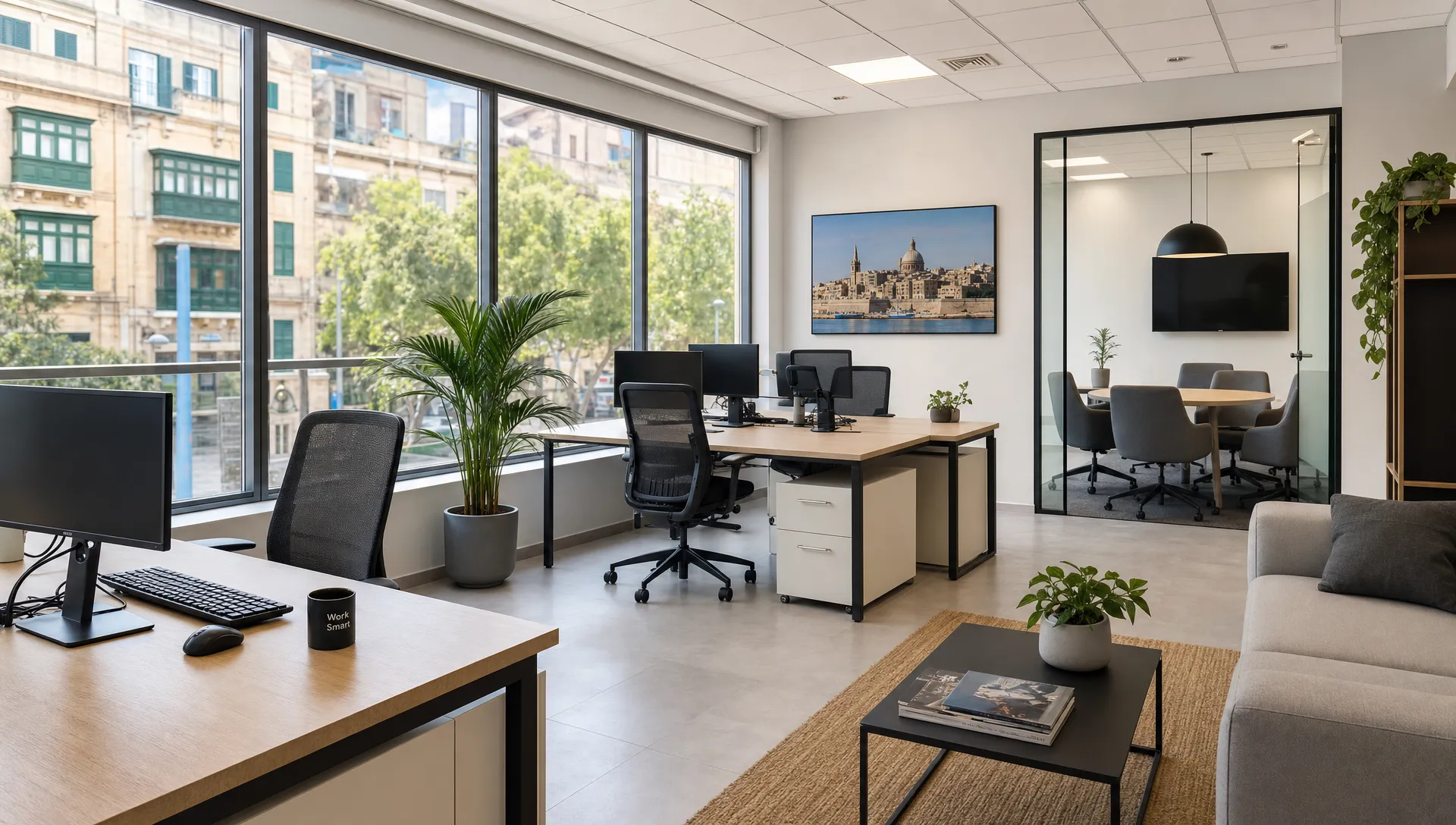
Key risks to check before signing
The inventory is vague or incomplete
A furnished office should have a written inventory attached to the agreement. This should list desks, chairs, storage units, meeting room furniture, kitchen items, appliances and any equipment included in the premises. Ideally, it should also record the condition of each item at handover.
Without a proper inventory, disputes can arise when you leave. You may be asked to replace items that were already damaged or lower quality than expected. This is particularly important when taking over a previously occupied office where the furniture has been used for several years.
The all-inclusive price is not truly all-inclusive
Furnished and serviced offices are sometimes marketed as simple packages, but the exclusions can be important. Meeting room use, extra access cards, additional cleaning, signage, storage, high-speed internet, after-hours HVAC and parking may all sit outside the headline price.
Ask for a sample invoice or a written cost schedule showing the charges you would pay in a normal month. This is more useful than relying on verbal assurances during the viewing.
The IT set-up does not match your business needs
For many Malta businesses, the furniture is the easy part. The bigger risk is whether the office can support your technical and compliance requirements. An iGaming company, financial services provider or crypto business may need reliable connectivity, secure access, private meeting rooms, data protection measures and sometimes dedicated server or network arrangements.
A furnished office with standard Wi-Fi may be fine for a small consultancy but unsuitable for a regulated operator or a team handling sensitive client information. Before signing, involve your IT or operations lead in the viewing process.
Furniture quality affects productivity and health
A desk may look acceptable in a photo but feel uncomfortable after a full working day. Poor chairs, bad lighting, cramped desk spacing and noisy layouts can reduce productivity and increase staff complaints.
This matters in Malta because companies often compete for talent across similar sectors. A furnished office that saves money but feels uncomfortable can undermine recruitment, retention and team morale.
Flexibility can come at a premium
Shorter agreements and serviced furnished offices can be valuable, but they often cost more per workstation than a longer conventional lease. That premium may be worth paying if your headcount is uncertain. It may be expensive if your team size is stable and you expect to stay for several years.
For a longer-term commitment, compare the furnished option with an unfurnished or partly fitted office. Sometimes paying for your own furniture becomes more economical over time, especially if you can reuse it in a future office.
Reinstatement obligations are unclear
Even if the office is already furnished, the lease may still require you to return it in a specific condition. If you add branding, cabling, partitions, access control or security equipment, you may need to remove these items at the end of the term.
Clarify reinstatement obligations before signing. This is especially important for businesses that need compliance upgrades, private meeting rooms or restricted areas.
Due diligence checklist for a furnished office viewing
A viewing should test the office as a working environment, not just as a property. Walk through the space as if your team were arriving on a normal Monday morning.
Use this checklist to compare options consistently:
- Confirm the exact number of usable desks, not just the advertised capacity.
- Check chair quality, desk spacing, lighting, storage and acoustic comfort.
- Ask for a full furniture and equipment inventory with condition notes.
- Test mobile signal and ask about internet speed, redundancy and support.
- Confirm which services are included and which are charged separately.
- Ask whether you can remove, replace or add furniture during the term.
- Check air-conditioning performance, especially in meeting rooms and dense work areas.
- Confirm parking availability for staff, directors, clients and visitors.
- Review access hours, security, reception procedures and building rules.
- Ask what happens if furniture, appliances or building systems fail after move-in.
After the viewing, compare offices using the same cost categories and the same assumptions. This makes it easier to identify which property is genuinely better value, rather than simply better presented.
Furnished vs unfurnished: which is better for your company?
There is no universal answer. The best option depends on your timeline, cash flow, headcount certainty, brand requirements and operational complexity.
| Business situation | Furnished office may be better when | Unfurnished or custom-fitted office may be better when |
|---|---|---|
| New Malta entity | You need a fast, low-friction launch | You already know your long-term headcount and layout |
| Growing SME | You want to preserve cash and avoid fit-out management | You need a distinctive brand environment or specialised rooms |
| iGaming or financial services team | You need temporary or expansion space quickly | You require dedicated IT, access control or compliance infrastructure |
| Professional services firm | You want a polished client-facing office without delay | You need bespoke meeting rooms, libraries, archives or private offices |
| Large HQ requirement | You need a temporary bridge while searching | You are committing for several years and want full control |
If the decision is mainly financial, model the cost over the expected occupancy period. A furnished office may look more expensive monthly but cheaper over a six-month project. An unfurnished office may require more upfront spending but become more efficient over a three to five-year period.
For a deeper understanding of how base rent, lease terms, service charges and other pricing variables interact, review these office rental pricing factors in Malta.
Negotiation points before you commit
Furnished offices are negotiable in more ways than many tenants realise. The rent or licence fee is only one part of the discussion. You can often create better value by clarifying responsibilities, reducing uncertainty and securing operational flexibility.
Consider negotiating the following points before signing:
- Attach a signed inventory and photo schedule to the agreement.
- Agree who repairs or replaces furniture, appliances and fixtures during the term.
- Clarify whether service charges are fixed, capped or variable.
- Ask for a clear list of exclusions from any bundled monthly price.
- Secure the right to add, remove or rearrange furniture if your team grows.
- Confirm expansion, renewal and break options in writing.
- Request early access for IT checks, cabling, branding and staff preparation.
- Document reinstatement obligations so exit costs are not a surprise.
The goal is not only to reduce price. It is to reduce ambiguity. A slightly higher monthly cost can be the better deal if it gives you reliable services, fewer surprises and a smoother exit.
Frequently Asked Questions
Is a furnished office for rent in Malta more expensive than an unfurnished office? It can be more expensive on a monthly basis because the landlord or operator has invested in furniture and sometimes services. However, it may be cheaper in the short term because you avoid upfront furniture, fit-out and set-up costs.
What should be included in a furnished office inventory? The inventory should list desks, chairs, storage, meeting room furniture, kitchen items, appliances and any equipment provided. It should also record the condition of each item at handover, ideally with photos.
Are serviced offices and furnished offices the same thing? Not always. A serviced office is usually furnished and includes operational services such as internet, cleaning and shared facilities. A furnished conventional office may only include furniture, while the tenant remains responsible for utilities, cleaning, internet and maintenance.
Who is responsible if office furniture breaks during the lease? This depends on the agreement. Some landlords cover normal wear and tear, while tenants may be responsible for damage or misuse. Always clarify repair and replacement responsibilities before signing.
Is a furnished office suitable for regulated businesses in Malta? It can be, but regulated businesses should check IT security, privacy, access control, meeting room confidentiality and compliance needs carefully. A standard furnished office may need upgrades before it is suitable for financial services, gaming, insurance or crypto-related operations.
Find the right furnished office in Malta
A furnished office can be the fastest route to a professional workspace in Malta, but it should still be assessed with the same discipline as any other commercial property decision. The best choice is not simply the office with the nicest furniture. It is the one with the right location, lease structure, total cost, technical capability and flexibility for your team.
OfficeSpace.Rent helps businesses compare office space in Malta, including serviced offices, traditional leases and larger commercial properties. Use the platform to review listings, filter by location, size and price, compare options, and get support with viewings and negotiations before you commit.