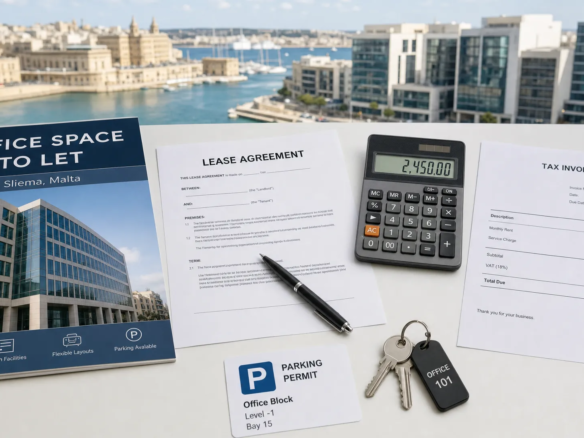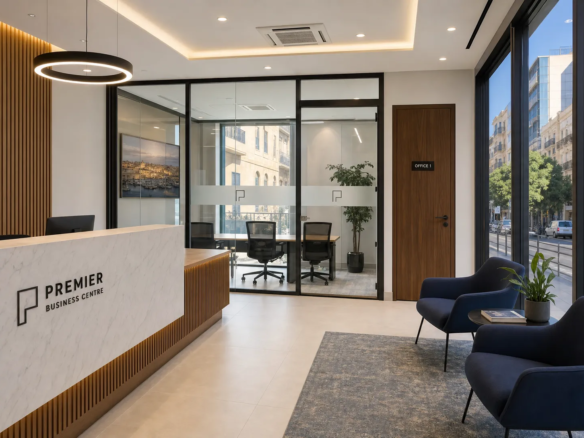
A polished listing can make almost any office look attractive. Smart tenants know the real decision starts after the photos, floor area and monthly rent. When you are reviewing for rent office space in Malta, you are not just choosing desks and meeting rooms. You are committing to a location, a cost base, a legal agreement and a working environment that will affect hiring, client meetings and daily productivity.
This matters even more in Malta because office demand is shaped by specific sectors, including iGaming, financial services, insurance, legal services, architecture, blockchain, crypto and international SMEs. The right office can support growth and credibility. The wrong one can create hidden costs, parking issues, compliance headaches and an expensive move within a year.
Below is a practical tenant checklist for business owners, CEOs, office managers and expansion teams comparing office space for rent in Malta.
Start with the type of office you actually need
Before you compare rent per square metre, define the office model that fits your business stage. A serviced office may be ideal if you need speed, flexibility and a professional address without managing fit-out. A traditional lease may suit a stable team that wants brand control, private meeting rooms and a longer-term base. A larger HQ-style office may be the right move for regulated or high-growth companies that need room for departments, security and client-facing areas.
The common mistake is to search for the biggest space you can afford, then adapt the company to it. A better approach is to start with how the space will be used day to day.
| Tenant question | Why it matters in Malta |
|---|---|
| How many people will use the office on a normal day? | Hybrid work can reduce desk count, but meeting rooms and quiet areas may still be essential. |
| Do clients or regulators visit the office? | Location, reception quality and meeting room privacy become more important. |
| Will headcount grow within 12 to 24 months? | A slightly larger or flexible layout can reduce the risk of moving again too soon. |
| Do you need a fast move-in? | Serviced or fully finished offices may be more practical than spaces needing works. |
| Is your operation regulated or security-sensitive? | Access control, data connectivity and private rooms may be non-negotiable. |
A team of 15 lawyers may need a very different layout from a 15-person software company. A licensed gaming operator may prioritise infrastructure and compliance, while an architecture studio may need open collaboration space, storage and excellent natural light.
Check the location for staff, clients and business credibility
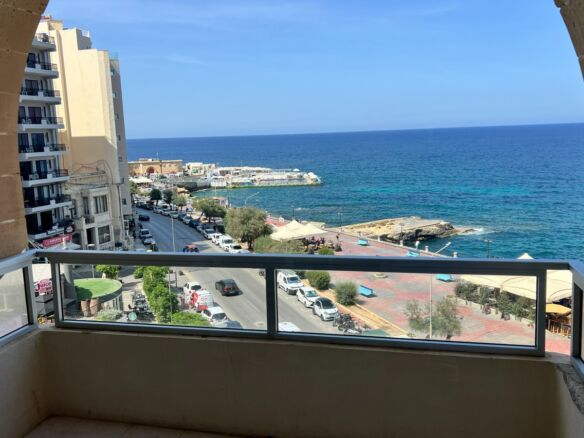
Location is not just a pin on a map. In Malta, a short distance can make a major difference to commuting, parking, client access and perceived prestige. Sliema, St Julian’s, Gzira, Valletta, Pieta, Mriehel, Birkirkara, Mosta and other business areas each suit different operational needs.
For example, a client-facing financial services firm may value a central or premium address with strong meeting facilities. A back-office team may prefer better parking, larger floorplates and more cost-effective rent outside the busiest coastal areas. A company hiring across Malta and Gozo may need a location that works for the widest possible staff base, not just the management team.
When comparing areas, look beyond the rent and ask practical questions. Can employees reach the office reliably during peak hours? Is parking available for directors, staff or visitors? Are lunch options, banks, hotels and gyms nearby? Does the building support the image your company wants to project?
If you are still narrowing down districts, OfficeSpace.Rent’s guide to Malta office locations is a useful starting point for understanding how different business areas compare.
Calculate the true monthly cost, not just the headline rent
Headline rent is only one part of the cost of occupying an office. Smart tenants build a full cost picture before committing, especially when comparing serviced offices with conventional leases.
A serviced office may look more expensive per desk, but it can include furniture, reception, utilities, cleaning, internet and shared meeting areas. A traditional lease may show a lower base rent, but the tenant may need to budget for fit-out, furniture, utilities, maintenance, insurance and ongoing management.
| Cost item | What to check before signing |
|---|---|
| Base rent | Confirm whether the quote is monthly or annual, and whether it is based on internal area, gross area or another measure. |
| VAT treatment | Ask whether VAT applies to rent, service charges or other costs, and confirm this with your accountant or adviser. |
| Service charges | Understand what is included, how charges are calculated and whether they can increase. |
| Utilities and internet | Check whether electricity, water, cooling, heating and connectivity are included or separately billed. |
| Fit-out and furniture | Clarify what is already in place and what you must pay for before moving in. |
| Parking | Ask whether spaces are included, optional or unavailable, and what visitor parking looks like. |
| Maintenance | Confirm responsibility for air-conditioning, lifts, common areas, plumbing and repairs. |
| Exit costs | Review reinstatement obligations, notice periods and any penalties for early exit. |
This is where comparisons can become misleading. A cheaper office that needs major works may be more expensive than a higher-rent office that is ready to occupy. Equally, a serviced office may be perfect for a new Malta entity, but less cost-effective once headcount grows and stabilises.
Inspect the building as a working environment
A viewing should feel less like a tour and more like an operational test. Walk through the space as if your team is already working there. The right building should support productivity, safety and reliability, not just look presentable for 20 minutes.
Pay close attention to air-conditioning, ventilation, lifts, stair access, toilets, lighting, acoustics and common areas. Ask about the age and maintenance of building systems. Check mobile signal and internet availability. If your business depends on uptime, ask about fibre options, backup connectivity and power resilience.
Noise is another underrated issue. A lively area may be good for staff amenities, but a constant traffic or construction noise can affect calls, meetings and concentration. Likewise, a beautiful office with poor natural light may feel impressive on day one and draining after six months.
Do not ignore accessibility. Can clients with mobility needs enter the building comfortably? Are stairs, lifts and entrances suitable for your staff? Is the office safe and practical outside standard working hours if your team works late, as many iGaming, finance and tech companies sometimes do?
Review lease terms before you become emotionally attached
Many tenants fall in love with a space, then treat the lease as a formality. That is risky. The commercial lease decides how flexible, costly and secure your occupation will be.
In Malta, lease terms are often negotiated, so do not assume every clause is standard. You may come across concepts such as the firm lease period and renewal or continuation arrangements. The exact wording matters, especially if your company may grow, restructure, relocate or change ownership during the lease.
| Lease point | What smart tenants check |
|---|---|
| Lease term | Is the commitment suitable for your business plan and funding horizon? |
| Break option | Can you exit early if the business changes, and what notice is required? |
| Rent increases | Are increases fixed, indexed or open to review? |
| Deposit | How much is required, where is it held and when is it returned? |
| Permitted use | Does the lease allow your actual business activity, including regulated activities if relevant? |
| Alterations | Can you install partitions, signage, cabling or security systems? |
| Repairs | Which repairs are the landlord’s responsibility and which are yours? |
| Subletting or assignment | Can you transfer or share the space if your structure changes? |
For a deeper clause-by-clause overview, see this guide to key clauses in a Malta office rental agreement. Even if you have negotiated leases in other countries, local wording and practice deserve proper review.
Confirm permits, use class and compliance fit
An office must be suitable legally as well as commercially. In Malta, tenants should check whether the property’s permitted use matches their intended business activity. The office use category commonly associated with professional and administrative activity is often referred to as Class 4A, but you should always verify the property’s actual planning status and obtain appropriate advice where needed.
This is especially important for companies in regulated or reputation-sensitive sectors. iGaming operators, financial services firms, insurance companies, crypto businesses and professional services firms may need to demonstrate that their premises support operational, security and governance requirements.
Ask practical compliance questions early. Can the registered address be used as required? Are private meeting rooms available for confidential discussions? Can access be controlled by department or seniority? Is there enough secure storage? Can IT equipment be installed safely? Are fire safety and building certificates available where relevant?
For lawyers, architects and consultants, client confidentiality and presentation may matter more than raw floor area. For gaming or fintech teams, infrastructure, resilience and security may be decisive. For SMEs, the priority may be a balanced package, credible address, manageable cost and flexibility.
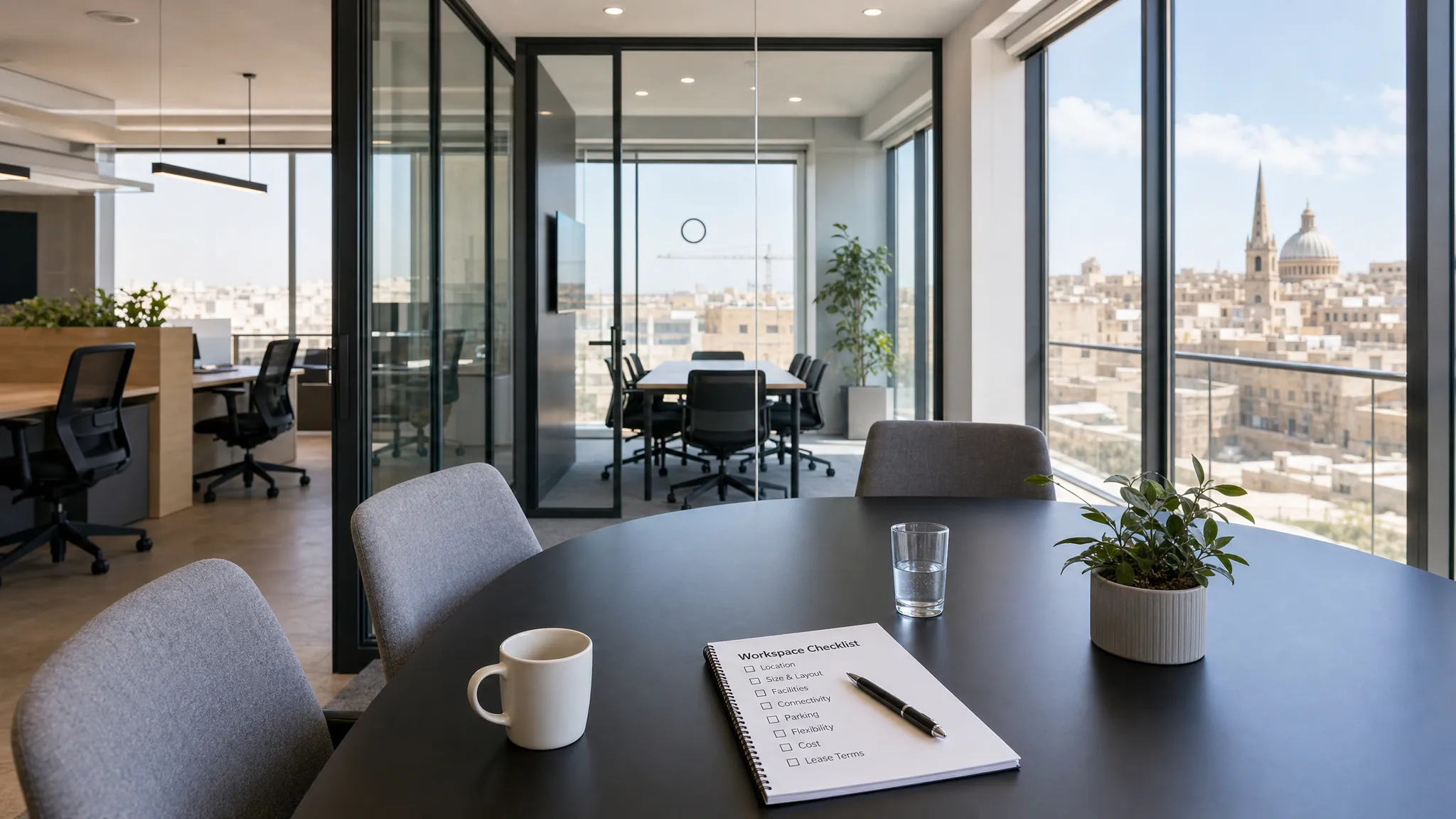
Compare offices with a structured shortlist
After three or four viewings, offices can start to blur together. One has better views, another has lower rent, another has parking and another is available immediately. A structured shortlist helps your team avoid emotional decisions.
Create a simple scoring table and agree the weighting before the final viewing. The goal is not to make the decision robotic. It is to make trade-offs visible.
| Criteria | Suggested scoring approach |
|---|---|
| Location | Score commute, client access, nearby amenities and business image. |
| Total cost | Compare full occupancy cost, not only base rent. |
| Layout efficiency | Check whether the space supports actual headcount and workflows. |
| Infrastructure | Score internet, power, air-conditioning, lifts and building condition. |
| Lease flexibility | Assess term, break options, renewals and expansion potential. |
| Move-in readiness | Consider fit-out, furniture, approvals and IT lead time. |
| Compliance fit | Confirm permitted use, security, confidentiality and operational needs. |
International companies often benchmark Malta against other business hubs before committing to a location. If your group is comparing property options across jurisdictions, platforms such as Best Property in Dubai show how detailed filters, updated listings and market context can support more disciplined real estate decisions. Apply the same logic locally: compare like with like, document assumptions and make sure every cost is visible.
Plan the move-in timeline before signing
Availability today does not always mean operational readiness tomorrow. Before signing, map the steps between agreement and first working day.
You may need landlord approval for alterations, internet installation, furniture delivery, insurance, access cards, signage, cleaning, internal IT setup and employee communication. If the office is unfurnished or requires fit-out, add time for quotes, design, works and snagging.
This is particularly important if your existing lease is ending. A two-week delay can create temporary workspace costs, staff disruption and client inconvenience. Ask the landlord or agent for a realistic handover date, not just the earliest possible date.
If you are relocating staff from abroad, the office timeline may also need to align with company registration, licensing steps, banking, HR onboarding and accommodation arrangements. Treat the office move as a project, not a single transaction.
Know when to involve advisers
Smart tenants do not outsource every decision, but they do get specialist help at the right moments. An experienced local agent can identify suitable listings, arrange viewings efficiently and help benchmark pricing. A lawyer can review lease wording. An accountant or tax adviser can help clarify VAT and cost implications. Technical advisers may be useful for larger fit-outs or infrastructure-heavy operations.
OfficeSpace.Rent helps businesses compare office listings across Malta, including serviced offices, traditional leases and larger commercial properties. It also supports location-based search, price and size filtering, viewings, negotiations and practical guidance around legal and VAT considerations.
The earlier you define your requirements, the better an adviser can help. A vague brief produces vague options. A clear brief can save weeks of searching and reduce the risk of committing to the wrong space.
Frequently Asked Questions
What should I check first when looking for office space for rent in Malta? Start with your business requirements: headcount, location, budget, lease flexibility, client access, parking and move-in timeline. Once those are clear, compare listings against total cost and operational fit.
Is a serviced office or traditional lease better in Malta? It depends on your stage and priorities. Serviced offices can suit fast-moving teams that need flexibility and quick setup. Traditional leases can suit established companies that want more control over layout, branding and long-term cost structure.
How important is location for Malta office tenants? Location is critical because it affects commuting, parking, hiring, client perception and daily convenience. The best area for a law firm, iGaming company, insurance firm or SME may be completely different.
Should I get legal advice before signing an office lease in Malta? Yes. Commercial lease wording can affect rent increases, deposits, repairs, break options, permitted use and exit costs. A legal review is especially important for longer leases or regulated businesses.
What hidden costs should I watch for? Common items include service charges, VAT where applicable, utilities, internet, parking, furniture, fit-out, maintenance and reinstatement costs. Always ask for a written breakdown before comparing offers.
Ready to compare offices with confidence?
The best office decision is rarely the cheapest listing or the most impressive viewing. It is the space that fits your people, budget, clients, compliance needs and growth plan.
If you are searching for office space in Malta, use OfficeSpace.Rent to browse current listings, compare locations and shortlist options that match your business requirements before arranging viewings.