Lower-cost office space in Malta can still be a serious workspace. For businesses looking for office spaces for rent cheap, there are great options that offer real value. For many companies, the smartest move is not to chase the most recognisable address, but to find a building that supports focus, hiring, client access and day-to-day operations at a sustainable cost.
That matters in a market where business owners, office managers and finance teams are under pressure to control fixed overheads without making the workplace feel like a downgrade. A cheaper office that is noisy, poorly connected or too small can quickly become expensive. A well chosen lower-cost office, on the other hand, can free budget for staff, equipment, marketing, compliance and growth.
The key is to separate low rent from low value. In Malta, good work can happen outside the most premium streets if the office has the right fundamentals: reliable access, appropriate layout, decent natural light, professional surroundings and lease terms that match your business plan.
What lower-cost should really mean
When companies search for office spaces for rent cheap, they often start with monthly rent. That is understandable, but rent is only one part of the cost. A lower headline price can hide fit out work, inefficient space, high utility bills or a commute that frustrates staff.
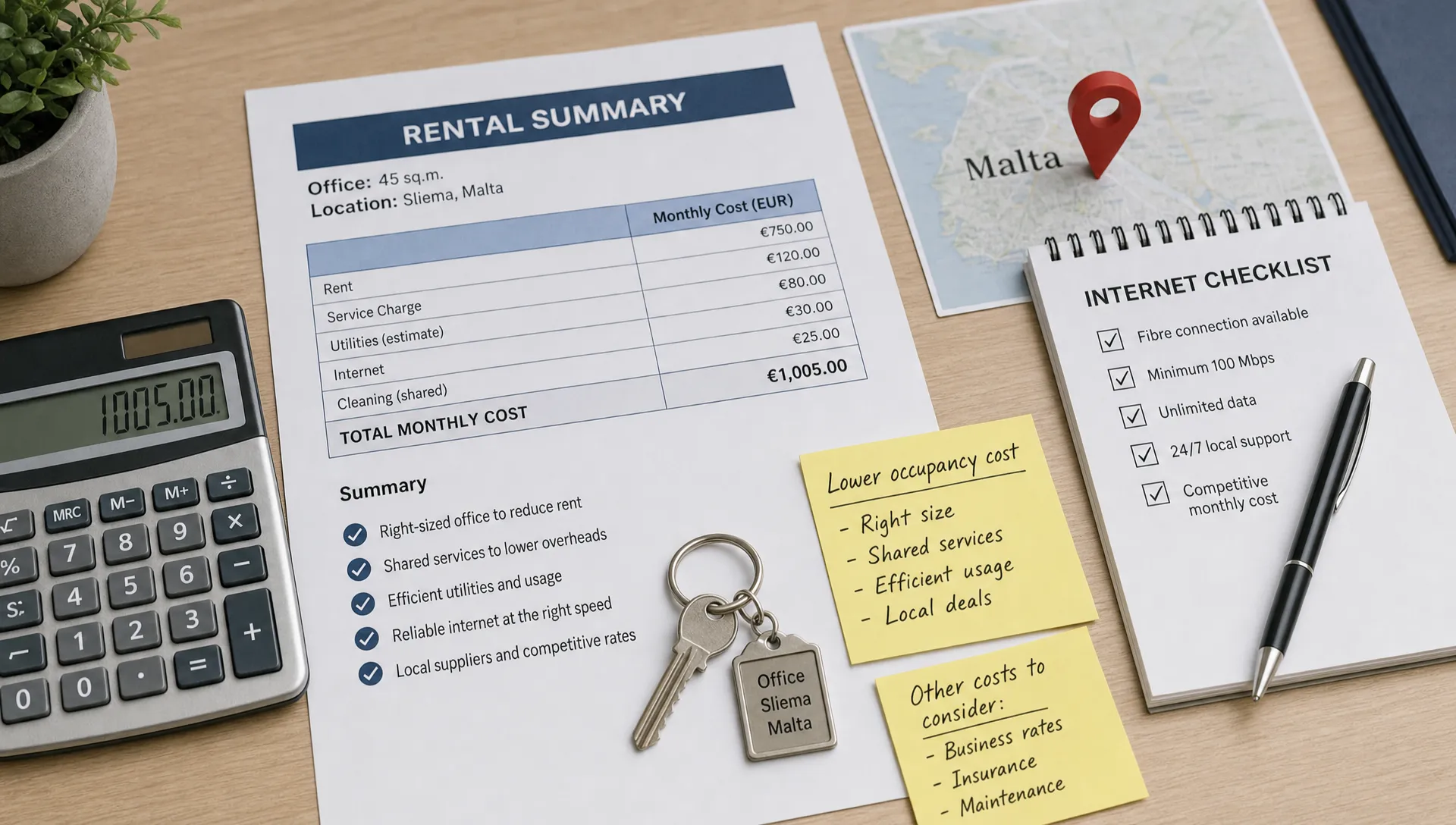
A better definition is simple: a lower-cost office should reduce total occupancy cost while still allowing your team to work well. Total occupancy cost includes rent, common area charges, utilities, internet, furniture, alterations, parking, maintenance, moving costs and the management time needed to make the space usable.
For example, a 120 sqm office with a slightly higher rent but strong layout efficiency may be cheaper in practice than a 160 sqm office with wasted corridors, poor meeting space and awkward desk planning. Similarly, a serviced office can look more expensive per desk, but may be useful for a short project team if it reduces setup time and avoids a long lease commitment.
Before comparing options, define what work needs to happen in the office. A law firm needs quiet client rooms and document storage. An iGaming operator may need open team areas, meeting rooms and strong connectivity. A financial services company may care more about professional reception, compliance-friendly privacy and access for overseas visitors. A design or architecture studio may prioritise light, large desks and storage for samples or drawings.
The Malta locations where value is often found
Malta’s most visible office demand is concentrated around established business and lifestyle hubs. Sliema, St Julian’s and parts of Valletta can be attractive for client access, prestige and amenities, but they are not the only viable places to run a strong office.
Lower-cost opportunities often appear in central or secondary commercial areas that remain practical for staff and clients. These locations can be especially suitable for SMEs, back office teams, professional services, operations teams, hybrid companies and growing firms that need more space for their budget.
Birkirkara, Msida and Swatar are worth watching because they sit close to major routes and established commercial activity. They may not carry the same image premium as a seafront address, but they can work well for teams that need central access without prime-area pricing. OfficeSpace.Rent has a dedicated selection of cheap office options in Birkirkara, Msida and Swatar for companies comparing cost-conscious spaces.
Other areas can also make sense depending on where your staff live and how clients reach you. San Gwann, Qormi, Mosta, Naxxar, Marsa and Paola can all be part of a value-led search, although each building should be judged on its own merits rather than by locality alone.
| Location type | Why it can support great work | Best suited to | What to check carefully |
|---|---|---|---|
| Central value areas such as Birkirkara, Msida and Swatar | Good access to other parts of Malta with more cost-conscious rents than prime coastal zones | SMEs, operations teams, professional services, hybrid teams | Parking, traffic at peak times, building quality and signage |
| Edge-of-prime locations | Close to premium districts without always paying full prime rates | Client-facing firms, sales teams, small HQ offices | Whether the saving is enough to justify any access tradeoff |
| Secondary commercial towns | More space for the same budget and often practical for staff living outside the main harbour area | Growing teams, back office functions, support departments | Nearby amenities, public transport and after-hours access |
| Serviced or flexible offices outside the main hotspots | Faster setup with less upfront fit out cost | New entrants, relocation teams, project teams | What is included in the price and how expansion works |
| Mixed-use business streets | Often convenient, visible and competitively priced | Small firms, consultants, architects, local service providers | Noise, loading access, lift quality and client arrival experience |
What makes a cheaper office productive
A productive office does not need marble finishes or a landmark address. It needs to remove friction from the working day. If the rent is lower but the team constantly struggles with calls, meetings, temperature, noise or access, the saving is unlikely to hold.
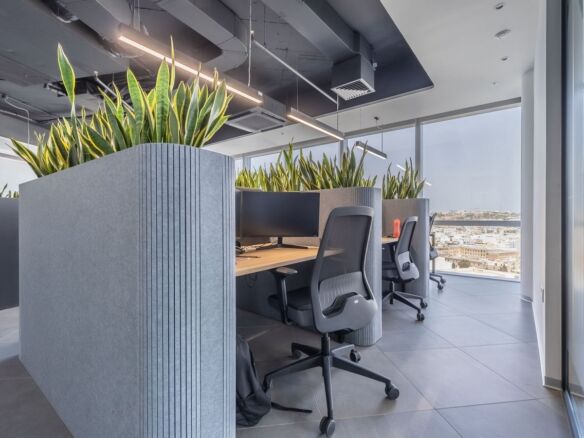
Start with the floor plan. The best lower-cost offices usually have efficient rectangular layouts, enough window line for natural light and a sensible balance between open work areas and enclosed rooms. Too many small rooms can make collaboration difficult. Too much open space can make confidential work uncomfortable.
Connectivity is another non-negotiable. For iGaming, fintech, blockchain, financial services and remote-first teams, internet resilience is part of business continuity. Ask what providers serve the building, whether fibre is available and how quickly a new connection can be installed. If your team relies on video calls, cloud systems or customer support tools, connectivity should be assessed before rent negotiations get serious.
The building’s mechanical and practical condition also matters. Air conditioning, ventilation, lifts, toilets, lighting and access control shape the daily experience more than many tenants expect. A cheaper rent rarely compensates for an office that overheats in summer or feels difficult for clients to find.
Staff commute patterns should be reviewed early. A lower-cost office on the wrong side of everyone’s journey can hurt retention and punctuality. Ask where employees live, how they travel and whether nearby parking, bus routes or bike access are realistic. For hybrid teams, two or three office days per week may make a slightly less central location acceptable, but only if those office days are productive.
The hidden costs that turn cheap into expensive
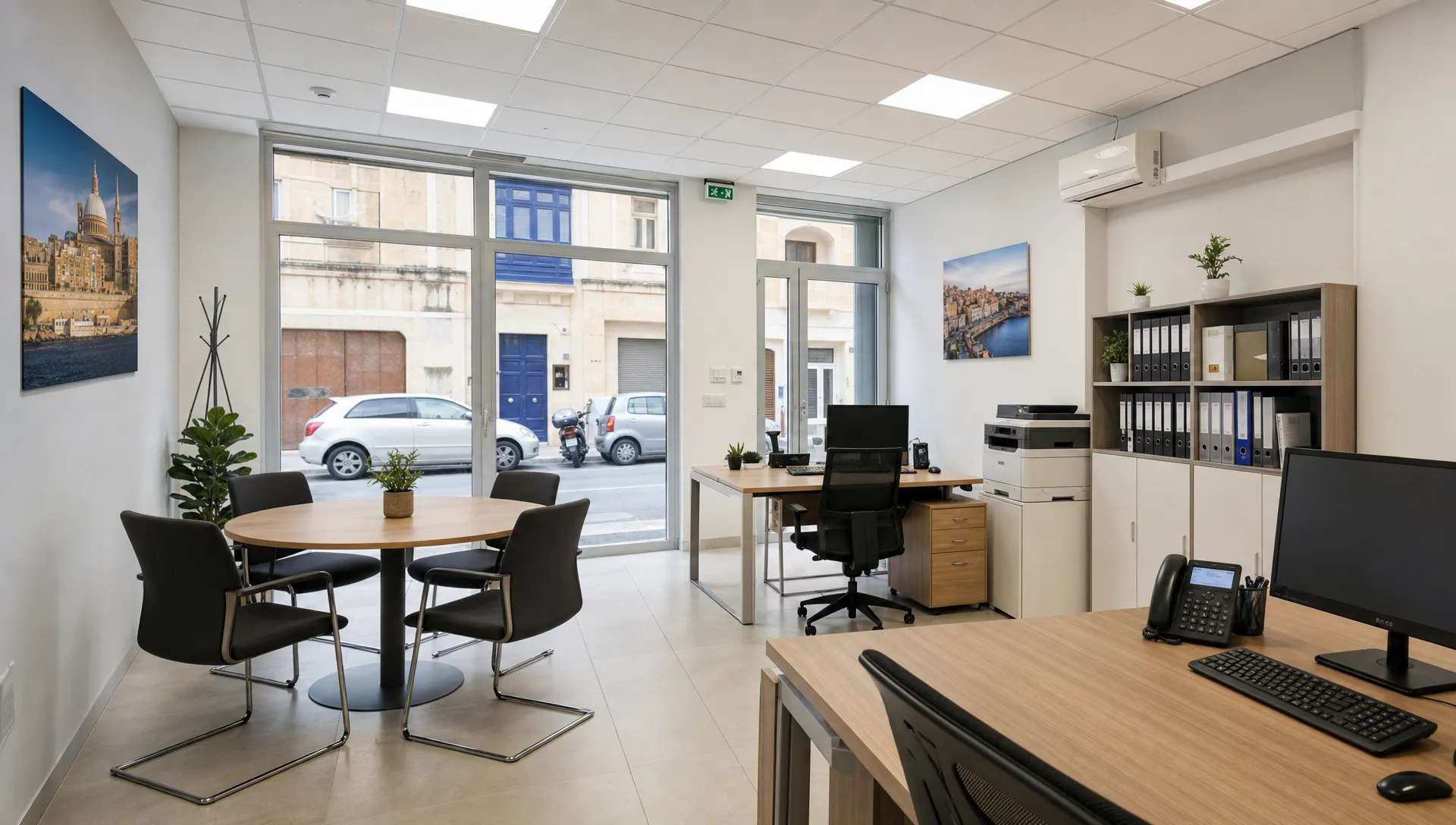
The cheapest monthly rent on a spreadsheet can become a poor decision if the space requires heavy investment. This is particularly relevant for businesses relocating to Malta or expanding into a larger office for the first time.
Fit out is the most obvious hidden cost. Flooring, partitioning, lighting, cabling, furniture, signage and minor works can add up quickly. If the lease is short, you may not have enough time to benefit from that investment. A ready-to-use office with a higher rent can sometimes be more economical over 12 to 24 months.
Common area charges and maintenance responsibilities should also be clear. Some offices include certain services in the rent, while others separate them. The same applies to utilities, cleaning, waste, building insurance contributions and repairs. If VAT treatment affects your cash flow or recoverability, get advice before signing.
A weak lease structure can be another hidden cost. Rent increases, break clauses, deposit requirements, reinstatement obligations and restrictions on alterations all affect value. This is one reason many companies use specialist support when comparing offices, especially if they are unfamiliar with Malta’s commercial leasing norms. For a broader overview, the complete guide to office rental in Malta explains the main terms tenants should understand before committing.
How different companies can use lower-cost offices well
A lower-cost office is not just a compromise for small companies. It can be a deliberate operating model for businesses that want more space, better cash control or a practical base away from the most expensive districts.
For SMEs in Malta, the priority is usually flexibility. A space that allows a team to add desks, host occasional clients and avoid excessive setup costs can be more valuable than a prestige address. If the office is used every day, comfort and layout should take priority over appearance in photos.
For iGaming, gambling and casino-related businesses, the best lower-cost setup depends on the function of the team. Leadership, client meetings and partner visits may justify a more central or polished space, while support, marketing, finance or operations teams may perform well in a larger value-led location. Splitting teams across unsuitable offices can create coordination problems, so the decision should follow how the business actually works.
For financial services, insurance, crypto and blockchain companies, trust and compliance remain important. A cheaper office should still feel professional to regulators, partners, investors and employees. Secure access, meeting privacy and reliable infrastructure are more important than decorative finishes.
For lawyers, architects and consultants, the office often doubles as a client environment and production space. The right lower-cost office may be one with fewer frills but excellent light, quiet rooms and a location that clients can reach without difficulty.
A practical checklist for viewing lower-cost Malta offices
Viewings should test the office against real working conditions, not just rental price. Visit at a relevant time of day, especially if traffic, parking or surrounding noise could affect your team.
Use this simple checklist before shortlisting a cheaper office:
- Does the layout support the number of desks, meeting rooms and storage you need without overcrowding?
- Are internet options, mobile signal and electrical capacity suitable for your systems?
- Is the office comfortable in terms of light, temperature, ventilation and noise?
- Can staff and clients reach the building without unnecessary friction?
- Are all monthly costs, charges and VAT implications clear enough to compare properly?
- Does the lease term match your growth plan, relocation risk and fit out budget?
- Would the building still feel professional to clients, regulators, partners or candidates?
This is also where listing quality matters. A strong listing should provide enough information to judge size, location, rent, condition, photos and likely suitability before you lose time on viewings. If you want a more detailed evaluation framework, the guide on how to spot the best office space listings in Malta is a useful companion when comparing options.
When paying more is the better value decision
Lower-cost offices are not always the right answer. If your business depends heavily on walk-in visibility, high-frequency client meetings or talent attraction in a specific district, paying more for location can be rational.
The same applies when the cheaper office needs major works, has poor infrastructure or creates management drag. Business owners often underestimate the cost of distraction. If a move consumes leadership time for months, disrupts operations or forces another relocation too soon, the apparent saving may disappear.
Paying more can also make sense if a serviced or fitted office lets you start quickly. For overseas companies establishing in Malta, speed and certainty may be more valuable than achieving the lowest possible rent in year one. The right question is not whether the office is cheap, but whether the total decision supports the business plan.
How to compare lower-cost offices without overcomplicating it
A simple scoring model can help decision makers avoid being pulled too strongly by rent alone. Give each office a score from 1 to 5 across cost, access, layout, infrastructure, lease flexibility, building condition and professional image. Then weight the categories according to your business.
For a client-facing law firm, professional image and meeting privacy may carry more weight. For an operational support team, layout and commute may matter more. For a newly arrived company in Malta, lease flexibility and setup speed may be decisive.
Do not compare too many offices at once. A shortlist of three to five serious options is usually enough if they are selected well. Ask for full cost details, clarify what is included, confirm availability and revisit your top options before negotiating. A second viewing often reveals issues that were missed the first time.
OfficeSpace.Rent helps companies compare office space in Malta across listings, locations, budgets and workspace types, including traditional leases and serviced options. The platform can also support viewings, shortlist matching, negotiations and guidance around legal or VAT considerations, which is particularly useful when the aim is to reduce cost without taking unnecessary risk.
Frequently Asked Questions
Can cheap office space in Malta still be suitable for client-facing businesses? Yes, if the building is professional, easy to access and has suitable meeting space. For client-facing firms, the office does not need to be in the most expensive location, but it should feel credible and be simple for clients to find.
Which Malta areas are good for lower-cost offices? Value can often be found in areas such as Birkirkara, Msida, Swatar and other secondary commercial locations, depending on availability and building quality. The right area depends on staff commute, client access, parking needs and the type of work your team does.
Is a serviced office cheaper than a traditional lease? Not always on a monthly per-desk basis, but it can reduce upfront costs and setup time. Serviced offices may be better for short-term projects, new market entry or teams that need flexibility before committing to a longer lease.
What should I check before renting a lower-cost office? Check total monthly cost, lease terms, fit out requirements, internet availability, air conditioning, building access, parking, natural light and the practical layout. A low rent only works if the office is ready to support daily operations.
How much space should my business take? The answer depends on your desk count, meeting room needs, storage, hybrid policy and expected growth. Avoid taking space based only on today’s headcount if you expect to hire soon, but do not overpay for unused rooms without a clear plan.
Find a lower-cost Malta office that still works hard
A lower-cost office should not feel like a step backwards. With the right location, layout and lease terms, it can give your company the space it needs while keeping overheads under control.
If you are comparing office spaces for rent cheap in Malta, start with verified options, filter by size and price, then look closely at the practical details that affect productivity. OfficeSpace.Rent can help you shortlist suitable offices, arrange viewings and compare the real value behind each listing before you commit.