A strong office listing in Malta should do more than show attractive photos. When browsing office space listings, it should help you understand whether the space is suitable for your team, compliant for your intended use, realistic for your budget, and worth viewing in person.
That matters because the Maltese office market is compact but varied. A serviced office in Sliema, a traditional lease in Mriehel, a character property in Valletta, and a larger HQ-style floorplate in Birkirkara can all look appealing online, yet serve very different business needs. For igaming, financial services, legal, architecture, insurance, crypto, and growing SME teams, the best office space listings are the ones that reduce uncertainty early.
This guide explains how to read listings with a sharper eye, compare options fairly, and spot the details that separate a promising office from a time-waster.
What makes an office space listing worth your attention?
A good listing is not simply the one with the lowest rent or the most polished photography. The best listings give you enough information to decide whether the office fits your practical, financial, and operational requirements.
At minimum, a quality Malta office listing should make the following clear:
- Where the office is located, at least at area or street level when possible
- How much usable or rentable space is available
- Whether the space is serviced, fitted, shell, or partly furnished
- The expected rent structure and any extra costs to confirm
- The lease term or level of flexibility available
- Availability date and viewing readiness
- Parking, lift access, accessibility, and nearby transport options
- Whether the office use is appropriate for your business activity
If several of these points are missing, the listing may still be valid, but you will need to ask more questions before committing time to a viewing.
Start with your business requirements, not the photos
The fastest way to waste time is to browse office space listings without a clear brief. Before comparing spaces, define what a good office means for your company.
A small law firm might prioritise client-facing meeting rooms, centrality, and a professional entrance. An igaming operator may need larger open-plan areas, strong connectivity, breakout spaces, and 24-hour access. A financial services company may care deeply about building reputation, visitor experience, privacy, and lease stability. A growing SME may need the ability to add desks without moving again within 12 months.
Use your requirements to judge every listing against the same criteria.
| Requirement | Strong listing signal | Reason it matters |
|---|---|---|
| Team size | Clear floor area and suggested capacity | Prevents overcrowding and unnecessary rent |
| Client visits | Reception, meeting rooms, lift access, and location details | Supports professional image and convenience |
| Growth plans | Flexible lease terms or expansion potential | Reduces the risk of another move too soon |
| Budget control | Rent, service charges, and fit-out condition explained | Helps compare true monthly cost |
| Business activity | Office use and building suitability confirmed | Avoids compliance or operational problems |
| Staff commute | Parking, buses, ferries, or central location mentioned | Improves hiring and retention |
For a broader overview of how the rental process works locally, including office types and lease considerations, use this guide to renting office space in Malta alongside your shortlist.
Read the location details carefully
In Malta, two offices only a few kilometres apart can deliver very different day-to-day experiences. Traffic, parking, client expectations, surrounding amenities, and employee commute patterns all affect the value of a space.
Sliema and St Julian’s are often attractive for client-facing businesses, international teams, and companies that want a central, recognisable address with nearby restaurants, hotels, and waterfront amenities. Valletta can suit legal, professional, cultural, and government-adjacent work where prestige and access to institutions matter. Mriehel, Birkirkara, and surrounding central business areas can work well for larger teams seeking bigger floorplates and more practical commuting options. Northern or more residential areas may offer value for companies whose staff live nearby or who do not need a prime client-facing location.
Do not judge an area only by reputation. Look for listings that explain practical location value, such as walking distance to transport, parking availability, nearby cafés, building visibility, and access routes at peak times. If Sliema is on your shortlist, reviewing current Sliema office options can help you compare what is available in one of Malta’s most competitive office submarkets.
Check whether the size is genuinely usable
Office size can be misleading if the listing does not explain how the area is measured. Some spaces include shared corridors, bathrooms, reception areas, or common parts in the quoted figure. Others focus more closely on internal usable area.
When you see an office described as suitable for a certain number of employees, treat it as a starting point, not a guarantee. The right capacity depends on desk density, meeting rooms, storage, kitchen facilities, private offices, server or IT areas, and whether staff work full time from the office or follow a hybrid model.
For many businesses, the question is not simply how many desks fit. It is whether people can work comfortably, take calls privately, meet clients, move around easily, and maintain productivity during busy periods. A listing with a floor plan, room breakdown, and recent photos is far more useful than one that only provides a square metre figure.
Compare the real cost, not only the headline rent
The most attractive monthly rent is not always the best deal. In Malta, as elsewhere, the true cost of an office depends on what is included, what is excluded, and what you must spend before moving in.
A serviced office may appear more expensive per square metre, but include furniture, internet, reception, cleaning, utilities, meeting rooms, and flexible terms. A traditional lease may offer better value for a larger team, but require fit-out, deposits, furniture, IT installation, maintenance, and a longer commitment.
| Cost item | What to confirm before shortlisting |
|---|---|
| Base rent | Whether the quoted price is monthly or annual, and whether it is negotiable |
| Service charges | Common area maintenance, building management, cleaning, security, and shared facilities |
| VAT treatment | Whether VAT applies and whether your business can recover it, subject to advice |
| Utilities | Electricity, water, air conditioning, and internet responsibility |
| Fit-out | Whether the office is furnished, partly fitted, or requires investment |
| Parking | Number of spaces, cost per space, and guest parking availability |
| Deposits and guarantees | Upfront cash requirements and lease security terms |
| Professional costs | Legal review, advisory support, and any transaction-related fees |
A high-quality listing will not always answer every cost question, but it should give enough context to start a realistic comparison. If the listing avoids cost details entirely, ask for clarification early.
Look for transparency around condition and fit-out
Photos can make an office look ready, but condition details determine how quickly and cheaply you can move in. A listing should make it clear whether the space is fully finished, furnished, newly refurbished, partly fitted, or still requiring works.
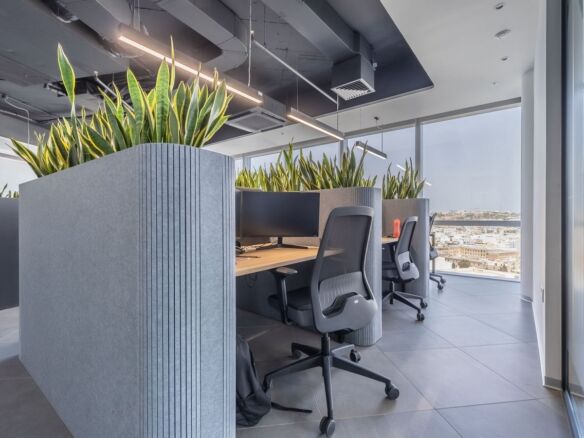
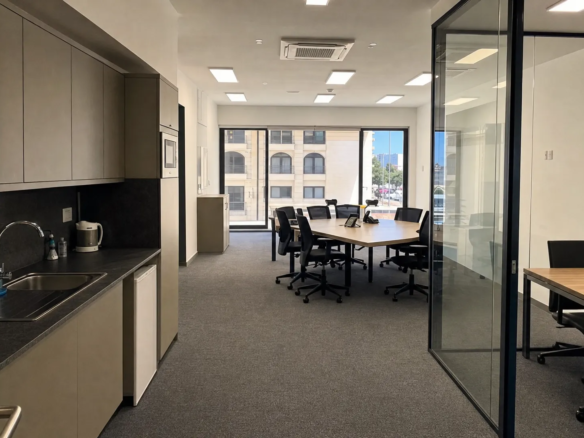
Pay attention to the following details in the description and images: flooring, lighting, air conditioning, cabling, kitchen or kitchenette facilities, bathrooms, meeting rooms, partitions, server space, storage, and natural light. If the photos show furniture, confirm whether it is included. If the listing uses renders, ask what has already been completed and what is still planned.
For businesses with a tight relocation timeline, fit-out condition is often as important as rent. A cheaper office that needs major work can become expensive quickly, especially if the move delays hiring, client onboarding, or team productivity.

Understand the difference between serviced, flexible, and traditional listings
Not all office listings are designed for the same type of tenant. The right choice depends on your stage of growth, budget structure, and need for control.
| Office type | Best suited for | Listing details to check |
|---|---|---|
| Serviced office | Startups, overseas teams, project teams, and companies testing Malta | Included services, meeting room access, desk capacity, contract flexibility |
| Flexible office | Growing SMEs and teams needing shorter commitments | Minimum term, scalability, shared facilities, notice periods |
| Traditional lease | Established companies, larger teams, and headquarters | Lease length, fit-out obligations, service charges, parking, permissions |
| Larger commercial property | Corporates, igaming operators, financial firms, and multi-department teams | Floorplate efficiency, branding rights, security, access, expansion options |
Serviced and flexible spaces can reduce setup friction, while traditional offices can offer more privacy, branding, and long-term value. The best listing will help you understand which category you are looking at immediately.
Watch for red flags in office space listings
Some weak listings are simply incomplete. Others may signal that the space will be difficult to evaluate, negotiate, or occupy. Be cautious if you notice several of these warning signs together:
- Vague location details with no explanation of the surrounding area
- No clear floor area, layout, or capacity guidance
- Rent described as attractive but with no mention of extra costs
- Photos that are old, overly edited, or inconsistent with the description
- Rendered images presented without a clear completion timeline
- No information about availability or lease term
- Claims such as ideal for any business without practical detail
- Pressure to view immediately before basic questions are answered
- Missing information about parking, lift access, or building facilities
- No clarity on whether the space is fitted, furnished, or shell condition
A single missing detail is not necessarily a problem. Many valid listings need a follow-up call. But when the core facts are absent, you should treat the listing as unverified until confirmed.
Use photos as evidence, not decoration
Good office photos should answer practical questions. They should show the entrance, work areas, meeting rooms, kitchen or breakout space, natural light, ceiling height, bathrooms where relevant, views, access points, and the general building condition.
Look for consistency. If the listing describes a bright open-plan office but the photos only show a reception desk and one meeting room, ask for more images. If the space is marketed as premium but the lighting, flooring, or common areas look dated, factor potential refurbishment into your comparison.
Photos are especially important for companies relocating to Malta from abroad. If decision-makers cannot attend every viewing, accurate images and floor plans reduce travel time and help local team members compare options more objectively.
Ask the right questions before booking a viewing
A viewing is valuable when the office already passes your initial criteria. Before arranging one, ask enough questions to confirm that the listing is realistic for your company.
| Question | Why it matters |
|---|---|
| What exactly is included in the quoted rent? | Separates headline price from total cost |
| Is the area quoted gross, net, or approximate? | Helps you compare space efficiency |
| What is the minimum lease term? | Confirms whether the commitment fits your plans |
| Is the office available immediately or from a future date? | Avoids relocation delays |
| Are furniture and fixtures included? | Clarifies setup cost and move-in speed |
| How many parking spaces are available? | Critical for staff and client access |
| Are there any restrictions on signage, access, or operating hours? | Important for branded or extended-hour businesses |
| Can the layout be altered? | Affects fit-out flexibility and future growth |
If the answers are clear, the viewing will be more productive. If the answers are vague, you may still view, but with caution.
Evaluate the building, not just the office unit
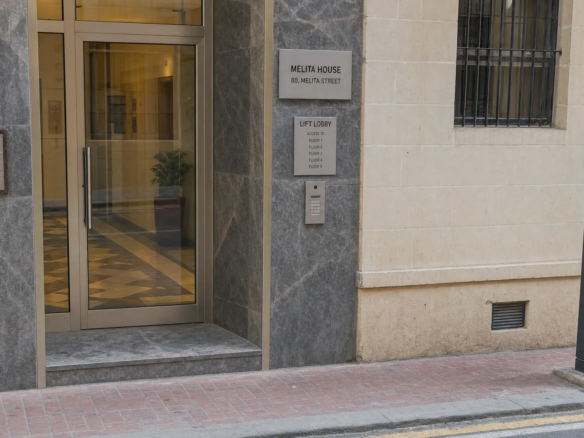
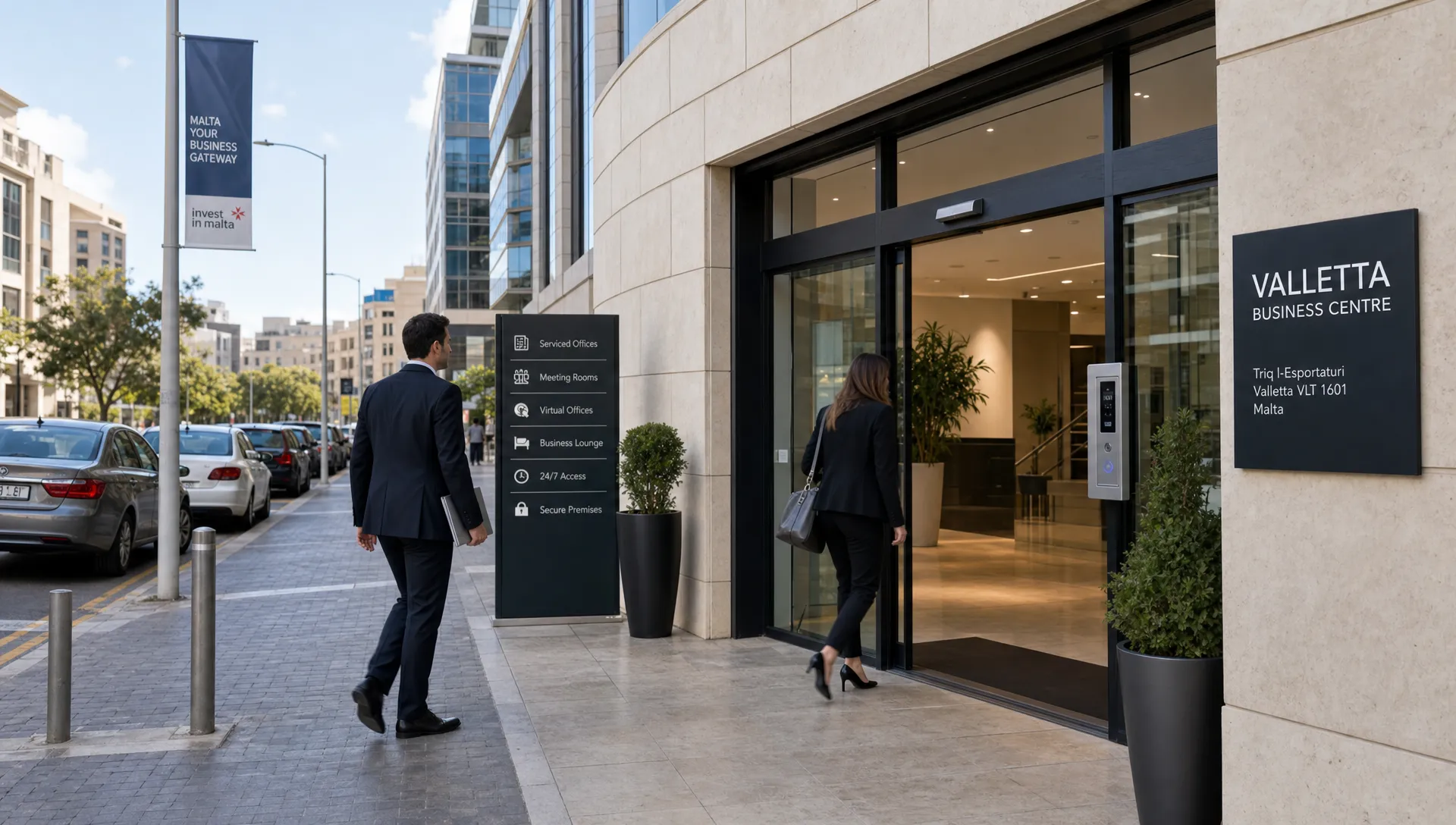
An office is part of a wider building experience. Your staff and clients will notice the entrance, lobby, lifts, corridors, shared bathrooms, security, parking, and maintenance standards before they reach your workspace.
For regulated, client-facing, or talent-driven businesses, the building can affect credibility. A modern suite in a poorly maintained building may not deliver the impression you want. On the other hand, a simple but well-managed building in the right location may be better value than a more expensive address with limited practical benefits.
During a viewing, arrive a little early. Check traffic, parking, surrounding noise, signage, nearby amenities, and how the building feels at the time your team would normally arrive. These details rarely appear fully in a listing, but they determine whether the space works in real life.
Compare listings side by side before negotiating
Once you have three to five suitable options, compare them using the same framework. Avoid choosing based only on rent, location, or one impressive feature.
A strong comparison should include monthly cost, estimated setup cost, lease flexibility, location quality, staff commute, client access, fit-out readiness, building quality, parking, expansion potential, and risk factors. This gives you a clearer view of value.
It also improves your negotiation position. If you understand comparable listings, you can discuss rent, lease term, fit-out contributions, parking, start dates, or included furniture with more confidence. For a wider market view, the ranking of top office locations in Malta with flexible terms can help you benchmark areas before final decisions.
When a listing deserves a viewing
A listing is usually worth viewing when it meets your core requirements, has enough transparent information, and raises questions that can only be answered in person. For example, you may need to test natural light, building condition, noise levels, commute practicality, or how the layout feels once inside.
A listing is usually not worth viewing if the office is clearly too small, too far from your target location, outside your budget after likely extra costs, unavailable within your timeline, or unsuitable for your business activity.
The best approach is disciplined but not rigid. Malta’s office market can move quickly, and good spaces may not stay available for long. However, a structured shortlist prevents you from chasing every attractive photo and helps you focus on offices that genuinely support your business.
Frequently Asked Questions
What should I look for first in Malta office space listings? Start with location, usable size, total cost, lease flexibility, availability, and fit-out condition. These factors determine whether a listing is worth deeper review before you spend time on a viewing.
Are serviced office listings better than traditional leases? Not always. Serviced offices can be ideal for speed, flexibility, and lower setup effort. Traditional leases often suit larger or more established companies that want control, privacy, branding, and long-term value.
How can I tell if an office listing is overpriced? Compare it with similar spaces in the same area, building type, condition, and lease structure. A higher rent may be justified if it includes furniture, services, parking, or flexible terms, so always compare total occupancy cost.
Should I view an office if the listing has limited information? Only if the location and basic terms appear promising. Before booking, ask for the floor area, rent structure, availability, lease term, fit-out condition, and any extra charges.
Why do office listings in Malta vary so much by location? Malta’s business districts differ in prestige, traffic, parking, amenities, and access to clients or staff. A central address may support brand image, while a less central area may offer better value or larger floorplates.
Find stronger office listings with less guesswork
The best office space listings help you make decisions quickly, but they still need careful comparison. Before committing to a viewing, check the location, size, true cost, lease terms, fit-out, building quality, and practical fit for your team.
OfficeSpace.Rent helps businesses find and compare offices across Malta, including serviced offices, traditional leases, and larger commercial properties. You can browse by location, size, price, and office type, then get support with shortlists, viewings, negotiations, and key legal or VAT questions when needed.
If you are relocating, expanding, or searching for a better workspace in Malta, start with verified listings and compare the options that match your business goals.