Finding office space for rent in Malta is usually a location decision first, a cost decision second, and a lease-structure decision third. The island is compact, but the difference between a waterfront office in Sliema, a corporate floor in Mriehel, a heritage building in Valletta and a value-led office in Qormi can be significant for staff commute, client perception, parking, fit-out, and total monthly cost.
The right choice depends on what your business needs to achieve. An iGaming operator may prioritise recruitment, nightlife and proximity to other gaming firms. A financial services company may look for a more formal setting, high-quality meeting rooms and strong compliance with building standards. A law firm or architecture studio may value accessibility, character and client-facing presence. An SME may simply need a practical office with predictable costs and room to grow.
This guide compares the main Malta office areas, typical cost drivers and workspace options so you can shortlist offices more confidently before arranging viewings.
Quick comparison: where should you start your search?
| Business priority | Areas to consider | Office type that often fits | Main watchout |
|---|---|---|---|
| Client-facing prestige | Sliema, St Julian’s, Valletta, Ta’ Xbiex | Finished private office, serviced office, HQ space | Premium rents and limited parking |
| iGaming, fintech or tech hiring | St Julian’s, Sliema, Gzira, Mriehel | Scalable private office, serviced office, full floor | Expansion flexibility and connectivity |
| Finance, insurance and regulated services | Valletta, Sliema, Ta’ Xbiex, Mriehel | Grade A or high-spec managed office | Building standards, security and meeting rooms |
| Law, architecture and professional services | Valletta, Sliema, Floriana, central towns | Boutique office, traditional lease, small private office | Accessibility and client parking |
| Cost control for SMEs | Birkirkara, Qormi, Marsa, Mosta, Luqa | Traditional lease, fitted office outside premium zones | Fit-out quality and commute impact |
| Fast market entry | Sliema, St Julian’s, Gzira, Valletta, Mriehel | Serviced office or coworking | Higher cost per desk over time |
For a wider primer on lease structures, planning considerations and the search process, OfficeSpace.Rent also has a detailed guide to renting office space in Malta.
The main office areas in Malta
Sliema and Gzira
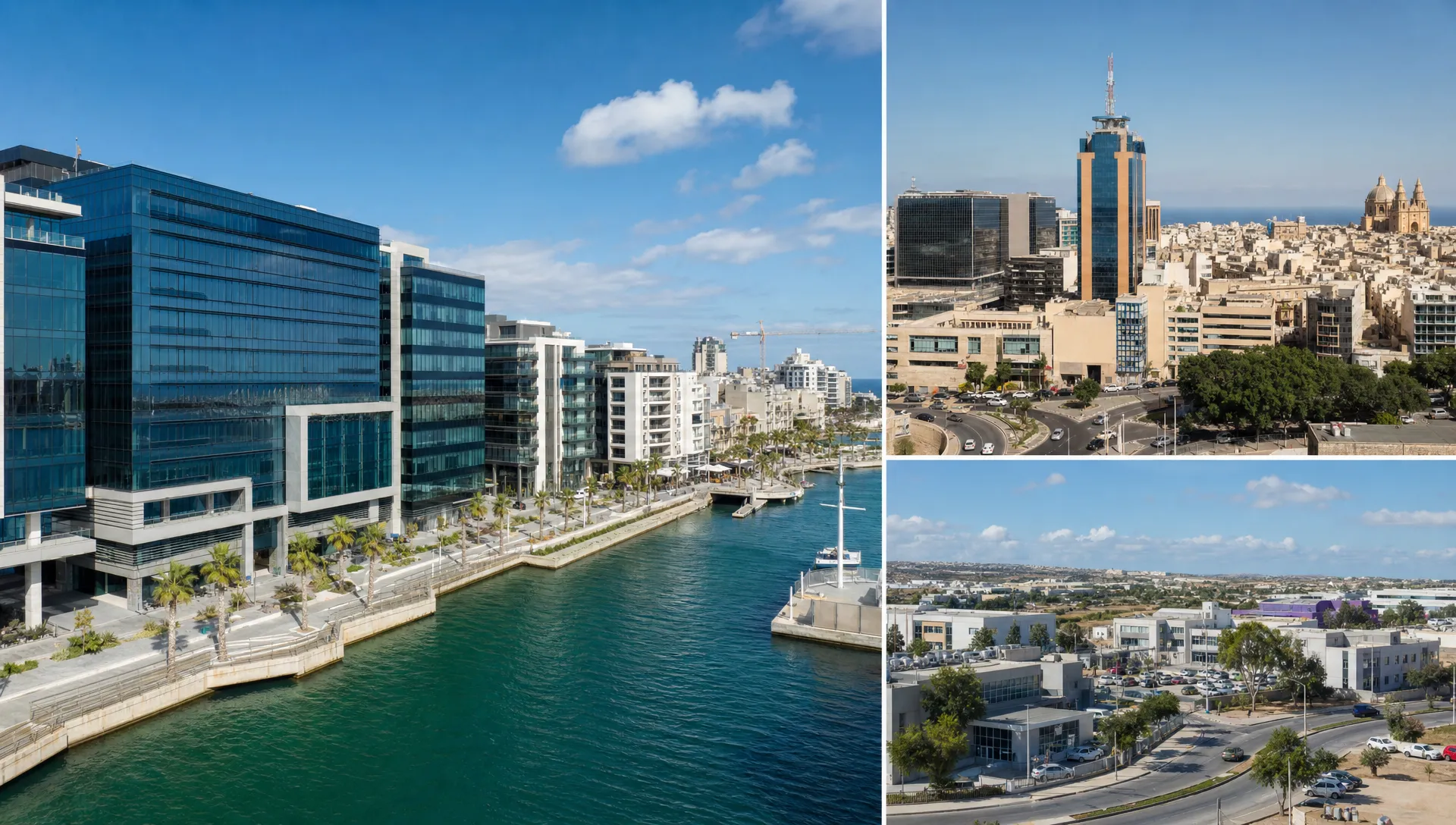
Sliema remains one of Malta’s most recognisable business locations. It appeals to companies that want a central, active, client-friendly address with restaurants, hotels, retail and seafront amenities nearby. Tigne, Qui-Si-Sana and the Sliema waterfront tend to attract premium occupiers, while nearby Gzira can offer a more balanced mix of centrality and value.
The area works well for iGaming teams, finance firms, agencies, consultants and international companies that host visitors regularly. The trade-off is cost. Prime offices in Sliema are usually among the more expensive in Malta, and parking can be a deciding factor, particularly for teams commuting from outside the harbour region.
If Sliema is high on your shortlist, it is worth reviewing current availability through the dedicated page for office space for rent in Sliema Malta, then comparing those options against nearby Gzira and Ta’ Xbiex.
St Julian’s and Paceville
St Julian’s is closely associated with Malta’s iGaming, hospitality, fintech and digital business ecosystem. It offers strong lifestyle appeal, access to hotels and restaurants, and a familiar location for international talent. For companies competing for staff, this can be a major advantage.
Paceville and surrounding areas can be very convenient for teams that value energy and after-work amenities, but the same energy can also mean congestion, noise and parking pressure. Businesses with frequent client meetings should assess building access carefully, especially during peak hours or tourist seasons.
Valletta and Floriana
Valletta offers prestige, history and proximity to government institutions, courts, embassies and cultural venues. It can be an excellent fit for law firms, advisory firms, architects, foundations, boutique finance businesses and organisations that value a distinguished address.
The challenge is that many buildings are older or heritage-sensitive, which may affect lift access, floorplates, natural light, air conditioning, cabling and fit-out flexibility. Floriana can provide a practical alternative, offering proximity to Valletta with potentially easier access and different building formats.
Ta’ Xbiex, Msida and Pieta
These harbour-adjacent areas are popular with corporate and professional services firms. Ta’ Xbiex has a strong business reputation and is often associated with finance, embassies and advisory firms. Msida and Pieta can offer practical access between Valletta, Sliema and the central business districts.
This corridor is useful for businesses that want to stay close to the harbour region without necessarily paying the highest Sliema or St Julian’s rents. It can also suit companies that need a polished address but are open to a slightly wider range of buildings.
Mriehel and Birkirkara
Mriehel has become a major corporate office district, particularly for larger occupiers needing modern floorplates, parking options and stronger expansion potential. It is often considered by iGaming firms, corporate headquarters, financial services groups, insurance companies and larger SMEs.
Birkirkara and nearby central localities can be more practical for teams commuting from different parts of the island. They may not offer the same waterfront prestige as Sliema or St Julian’s, but they can provide a better balance between rent, accessibility and usable space.
Qormi, Marsa, Luqa and the south
These areas are often considered by companies that prioritise value, logistics, airport access, storage-adjacent operations or back-office functions. They may suit SMEs, service businesses, distributors, technical teams and companies that do not need a premium client-facing address every day.
The main questions are building quality, staff commute and the surrounding environment. A lower rent is only attractive if the space supports productivity, recruitment and operational needs.
Mosta, Naxxar, Mellieha and Gozo
Northern localities and Gozo can work for smaller companies, local service providers, remote-first teams and founders who want a lower-cost base. Availability is more limited than in the main commercial districts, and the market may have fewer large modern offices, but the lifestyle and cost advantages can be meaningful for the right business.
What does office space cost in Malta?
Office rents in Malta vary by location, building quality, specification, parking, floor size, lease length and whether the office is furnished or serviced. The figures below are indicative planning ranges for 2026 and should not be treated as formal quotes. Always compare live listings and confirm what is included in the asking rent.
| Area | Indicative annual rent per sqm | Typical occupier profile | Cost note |
|---|---|---|---|
| Sliema, Tigne and prime Gzira | €250-€550+ | iGaming, finance, international firms, agencies | Premium location, high demand, parking adds cost |
| St Julian’s and Paceville | €300-€600+ | iGaming, tech, hospitality-linked businesses | Strong talent appeal, congestion can affect access |
| Valletta and Floriana | €200-€450 | Legal, advisory, government-facing, boutique firms | Building condition can vary significantly |
| Ta’ Xbiex, Msida and Pieta | €220-€380 | Finance, insurance, professional services | Good balance between centrality and corporate feel |
| Mriehel and Birkirkara | €160-€320 | Larger SMEs, HQ offices, back-office teams | Often better for floorplates and parking |
| Qormi, Marsa, Luqa and south | €90-€220 | SMEs, logistics-adjacent, operations teams | Value-led, check specification carefully |
| Mosta, Naxxar, north and Gozo | €120-€200 | Local firms, satellite offices, remote-first teams | Lower supply, fewer premium buildings |
A simple way to estimate base rent is to multiply the office size by the annual rate, then divide by 12. For example, a 150 sqm office at €280 per sqm per year would have a base rent of about €42,000 per year, or €3,500 per month, before VAT, service charges, utilities, furniture, parking and other costs.
Serviced offices are usually priced differently, often per desk, office suite or monthly package. They may look more expensive on a per-square-metre basis, but the rent can include furniture, reception, internet, cleaning, meeting room access or utilities. That makes them easier to budget for in the short term, especially for a company entering Malta for the first time.
The costs beyond the rent
The headline rent is only one part of the total occupancy cost. A cheaper office can become expensive if it needs major works, has inefficient utilities or requires separate contracts for every service. A premium serviced office can appear costly but may be efficient for a small team that does not want to manage fit-out, furniture, cleaning or internet installation.
Common cost items include VAT where applicable, common area maintenance, utilities, internet, cleaning, repairs, insurance, furniture, fit-out, signage, parking, deposits, legal review and reinstatement obligations at the end of the lease. Businesses in regulated sectors should also consider security, data connectivity, access control, meeting-room privacy and any sector-specific operational requirements. For example, firms licensed or supervised by bodies such as the Malta Financial Services Authority or the Malta Gaming Authority should confirm their workspace requirements with professional advisers.
If you are comparing two offices, look beyond monthly rent and calculate the full first-year cost. OfficeSpace.Rent’s article on hidden office space costs is useful when you want to avoid underestimating fit-out, utilities and operational extras.
Office options: serviced, traditional, managed or HQ space?
The Maltese market offers several routes, and the best one depends on your headcount, timeline, cash flow and need for control.
| Option | Best for | Advantages | Limitations |
|---|---|---|---|
| Coworking | Freelancers, founders, satellite staff | Fast setup, low commitment, shared amenities | Limited privacy and branding |
| Serviced office | Teams entering Malta, project teams, small regulated firms | Furnished, flexible, often bundled services | Higher cost per desk for long-term teams |
| Managed office | Growing teams that want simplicity with more control | Can include operations support and customised space | Availability and pricing vary by provider |
| Traditional lease | SMEs and established companies | More control over layout, branding and long-term cost | Fit-out, furniture and maintenance may sit with tenant |
| Full-floor or HQ office | Larger firms, iGaming operators, finance groups | Scale, identity, expansion potential | Longer search, higher fit-out and negotiation complexity |
| Office for sale | Owner-occupiers and investors | Long-term control, asset ownership | Higher capital requirement and reduced flexibility |
When a serviced office makes sense
A serviced office is often the right starting point if you need to operate quickly, test the Malta market or house a small team before committing to a larger lease. It can also work well while a larger office is being fitted out. For founders and relocating companies, the convenience can outweigh the higher desk rate.
The key is to check what is included. Meeting rooms, printing, call handling, mail services, after-hours access and parking may be bundled or charged separately. A serviced office is easiest to compare when you convert every option into a total monthly cost per employee.
When a traditional lease makes sense
A traditional lease may be better if your team is stable, your brand presence matters, or you need specific rooms, compliance features or technical infrastructure. It gives you more control over the workplace experience, but it also transfers more responsibility to you.
Before signing, clarify handover condition, maintenance responsibilities, rent review mechanisms, break options, service charges, landlord works, permitted use and reinstatement obligations. In Malta, it is also important to confirm that the property is suitable for office use and that your intended operation fits the building and location.
When to look for HQ or full-floor space
HQ space is a different search from a small private office. Larger companies need to think about lift capacity, floorplate efficiency, power, redundancy, meeting rooms, reception, parking, branding, staff amenities and future expansion. Viewings should include technical stakeholders, not only the CEO or office manager.
For iGaming, finance, insurance and blockchain businesses, the office is often part of the employer brand and risk-control environment. A slightly higher rent may be justified if the space helps attract talent, impress clients and reduce operational friction.
How much space do you need per employee?
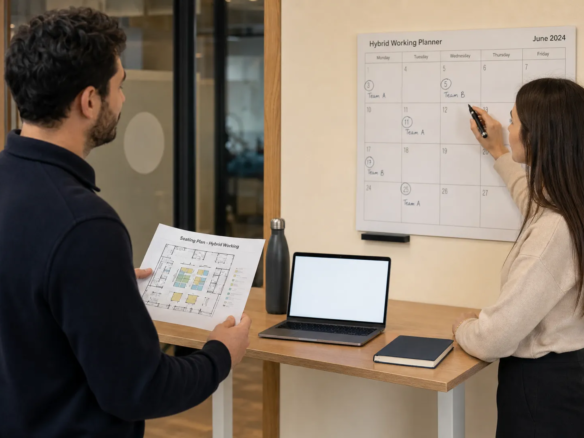
A common mistake is to rent based only on current headcount. In practice, you need to consider hiring plans, hybrid work, meeting-room requirements, private offices, storage, breakout areas, reception and compliance-related rooms.
| Workplace style | Planning range per person | Suitable for |
|---|---|---|
| Dense layout | 8-10 sqm | Short-term teams, cost-sensitive operations, high hybrid usage |
| Balanced office | 10-15 sqm | Most SMEs, professional services, mixed open-plan and meeting rooms |
| Spacious corporate layout | 15-20 sqm | Finance, insurance, legal, executive teams, client-heavy businesses |
| Specialist or high-compliance layout | 20 sqm+ | Firms needing boardrooms, secure rooms, training areas or extra storage |
If you expect to grow from 25 to 40 employees in the next 18 months, it may be better to negotiate expansion rights, take a slightly larger office, or choose a serviced office while monitoring hiring. Overcommitting to space is expensive, but outgrowing an office too quickly can be disruptive and costly.
A practical shortlisting process
Start by defining your non-negotiables before you browse too widely. Malta has many attractive offices, but comparing them without a framework can waste time and make negotiations harder.
Use these criteria before booking viewings:
- Target location and acceptable commute zones for key staff.
- Current headcount, 18-month growth plan and preferred layout.
- Maximum total monthly cost, not just base rent.
- Required parking, meeting rooms, reception and accessibility.
- Preferred lease length and need for flexibility.
- Sector requirements, including privacy, security, connectivity and client access.
- Fit-out expectations, furniture needs and move-in deadline.
Once you have a shortlist, view offices in clusters by area. For example, compare Sliema and Gzira on the same day, then review Mriehel and Birkirkara together. This makes differences in access, parking, building quality and surrounding amenities easier to judge.
During negotiations, ask for a clear breakdown of rent, VAT treatment, service charges, deposits, parking, utilities, fit-out obligations and any annual increases. If the office is not move-in ready, agree who pays for works, who manages contractors and what happens if the handover date slips.
Which option is best for your business?
For a relocating company, the safest route is often a serviced office or short-term managed space while leadership learns the market. After six to twelve months, the business can move into a more permanent office with better knowledge of staff commute patterns and client needs.
For an established Malta SME, a traditional lease in a central but not prime area may offer the best value. Birkirkara, Mriehel, Qormi, Msida and Pieta can be strong alternatives if you want usable space without paying for the highest-profile addresses.
For a client-facing firm, the address may be worth paying for. Valletta, Sliema, Ta’ Xbiex and St Julian’s can support brand perception, recruitment and client convenience. The decision should be based on total return, not simply the lowest rent.
For larger iGaming, finance, insurance or crypto-related companies, the office should be treated as infrastructure. Connectivity, compliance, staff experience, meeting facilities and expansion options may matter as much as rent per square metre.
Frequently Asked Questions
How much does office space for rent in Malta cost? As a planning guide, traditional office rents can range from under €100 per sqm per year in some value-led areas to €500+ per sqm per year in prime Sliema or St Julian’s buildings. Serviced offices are usually priced per desk or suite, so compare total monthly cost rather than only square metres.
Which Malta area is best for iGaming companies? St Julian’s, Sliema, Gzira and Mriehel are common starting points because they combine talent access, business visibility and office supply. The best area depends on headcount, parking needs, budget and whether the office is mainly for staff, clients or senior leadership.
Is a serviced office cheaper than a traditional lease? For small teams or short commitments, a serviced office can be cheaper because furniture, internet and shared amenities may be included. For larger long-term teams, a traditional lease may offer better value, but only if fit-out and operating costs are properly budgeted.
How much office space do I need per employee in Malta? Many companies plan around 8-15 sqm per employee for a balanced layout, but dense hybrid teams may use less and client-heavy or regulated businesses may need more. Meeting rooms, private offices, storage and future growth should be included in the calculation.
Do I need legal or VAT advice before renting an office in Malta? Yes. Commercial leases can involve VAT treatment, deposits, service charges, permitted use, repair obligations and rent review clauses. Always obtain professional advice before signing, especially if your business is regulated or relocating from overseas.
What should I check during an office viewing? Check natural light, air conditioning, lift access, cabling, internet options, parking, toilets, common areas, noise, building management, security, fire safety, signage, handover condition and nearby amenities. Also ask what is included in the rent and what is billed separately.
Find and compare office space in Malta
The best office is not always the cheapest or the most prestigious. It is the space that fits your team, supports your clients, keeps total costs under control and gives your business room to grow.
OfficeSpace.Rent helps companies compare office listings across Malta, filter by location, size and price, review serviced and traditional options, and get support with viewings, negotiations, VAT guidance and shortlisting. If you are relocating, expanding or simply reassessing your workspace, start with a structured comparison before you commit.