Last updated: February 2026
2026 Strategic Office Planning
Achieving Success: Your Strategic Office Relocation to Malta Guide
Strategic Office Relocation to Malta, the traditional commercial lease no longer suits modern business needs. Unpredictable hybrid models create huge pressure. Furthermore, operational costs continue to rise sharply. Companies need to de-risk their real estate footprint immediately. This guide explains the essential steps. We detail why smart multinational firms target **Strategic Office Relocation to Malta**. Malta offers more than just the famous 5% effective corporate tax rate. It provides an ideal platform for flexible leasing strategies. This strategy helps you future-proof all European operations.
Pillar I: De-risking Your Lease for Strategic Office Relocation to Malta
Commitment to fixed capacity creates the main risk in commercial real estate (CRE). Therefore, companies must adopt agile lease structures. Malta’s mature CRE market offers perfect options. You can choose between robust traditional leases or flexible serviced solutions. For general European trends, consult the latest European Office Market Overview.1. Use Break Clauses to Control Risk
A standard Malta lease typically lasts 3 to 5 years. However, you must negotiate a strong break clause. We see 2+3 structures often. This means two years firm, then a three-year renewal option. Alternatively, secure a 2-year break clause after the first year. This move provides essential flexibility. A break clause might raise the initial rental rate slightly. Nevertheless, this cost is minimal. It offsets the massive liability of paying for empty space. Importantly, define all negotiation points clearly. This prevents future disputes.- Notification periods must be clear (typically 3 to 6 months).
- Establish fixed penalty mechanisms early (e.g., three months’ rent).
- Clarify fit-out obligations upon exit.
2. Scale Effectively with Serviced Office Solutions
Consider serviced offices for market entry or project work. Malta offers a vibrant supply, especially in Sliema and St. Julians. These leases represent the ultimate flexible solution. They minimize capital expenditure (CapEx) immediately. This converts CapEx into predictable operational expenditure (OpEx). Your cost-benefit analysis will change entirely. Serviced offices have a higher per-square-metre rate. However, the Total Cost of Occupancy (TCO) is often lower initially. This happens because the TCO includes utilities, maintenance, and internet. This is a crucial factor. FinTech and iGaming startups need immediate operational readiness.Pillar II: The Financial Engine of Malta Relocation (Tax Synergy)
Financial leverage drives successful strategic office relocation. You must address the tax environment immediately. Malta’s full imputation tax system offers strong incentives. Furthermore, the real estate market has adapted to maximize this financial benefit. Pay close attention to VAT rules.3. Unlock the 5% Effective Corporate Tax Rate
Malta’s statutory corporate tax rate is 35%. However, this rate is refundable. Non-resident shareholders receive a tax refund upon dividend distribution. This results in an effective tax rate of just 5%. This major financial advantage frees up capital. You can reinvest this capital into deposits or fit-out budgets. For context on EU tax directives, review the European Commission’s official corporate tax overview.4. Mastering VAT Rules for Commercial Leasing
Leasing commercial property in Malta is generally VAT-exempt. However, landlords often choose to charge VAT (18%). This allows them to reclaim input VAT on construction costs. Crucially, this benefits the tenant as well. Any VAT paid on rent is usually recoverable. The tenant must be a VAT-registered business. They must also conduct taxable activities. This reclaim process is essential. It means the cash flow impact is often neutralized. Plan for this process early. It ensures accurate financial forecasting. This is a key step in a successful strategic office relocation to Malta. Read Our Full Guide on Malta VAT and Tax for BusinessPillar III: Defining Your Optimal Malta Office Footprint
Location reflects your corporate brand. It must also support operational needs. Malta is a small island. Therefore, no location is truly remote. Yet, Prime and Secondary locations differ significantly. They impact both rent and talent access.5. Prime Districts: Visibility for Your Strategic Relocation Brand
Sliema, St Julians, and Ta’ Xbiex form the main CBD. They command the island’s highest rental rates. Rents can reach €400/sqm per year. These areas are perfect for specific industries.- Finance and Legal: These sectors need proximity to institutions.
- High-Profile HQs: These businesses prioritize seafront views and branding.
- Client-Facing Operations: These require superior amenities and access.
6. Secondary Hubs: Cost-Efficiency for Malta Office Relocation
The secondary market provides huge cost savings. Mriehel and Qormi are key areas. Business parks here offer Grade A offices. Rents typically range from €215-€270/sqm per year. This represents a significant reduction. These hubs are optimal for specific operational needs.- Back-Office Functions: These must prioritize cost-efficiency.
- IT/Tech Development: These teams need expansive, adaptable floor plates.
- eCommerce and Logistics: These benefit from easier road access.
Pillar IV: Future-Proofing for Resilience After Strategic Office Relocation
The modern office must maximize collaboration and experience. It is not about desk density anymore. Therefore, your lease and location must support this shift. Strategic Office Relocation to Malta and one of crucial factors is most of all having a space which pulls your employees back to the office.7. Design Offices for Collaboration and Focus
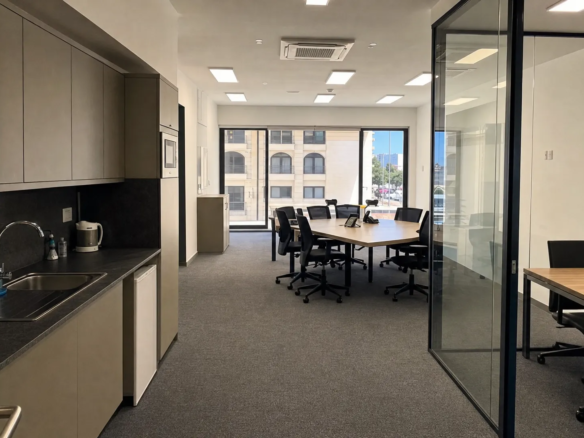
Hybrid work means fewer individual workstations. It necessitates more communal areas. When evaluating Malta office stock, look for easy reconfiguration.- Include acoustically treated quiet zones for deep work.
- Ensure meeting rooms are large and tech-enabled.
- Add hospitality zones to encourage office attendance.
8. Connectivity De-risks Operational Failure
Strategic Office Relocation to Malta and Internet speed is vital in the digital economy. Redundancy is equally critical. Malta offers robust fiber connectivity. However, tenants must always confirm key infrastructure points.- Verify connection to the national fibre optic network (FTTO).
- Check for reliable backup generators.
- Confirm access to underground parking for staff convenience.
Calculate Your Strategic Office Relocation Costs Today
Use our proprietary Office Space Calculator now. It filters locations by budget and size requirements quickly. Alternatively, speak directly to our specialists. We offer a tailored, complimentary market appraisal. We secure your optimal office space in Malta, every time.