Choosing an office to let in Malta is rarely just about square metres or headline rent. The right location can influence hiring, client confidence, regulatory access, parking, commute times, fit-out costs and how easily your team can scale.
For a law firm, a Valletta address may matter more than open-plan floorplate efficiency. For an iGaming company, Sliema or St Julian’s may help with talent attraction and industry visibility. For a growing back-office operation, Mriehel, Birkirkara or Qormi may offer a better balance of space, access and value.
This guide helps you shortlist the best areas in Malta by business type before you compare individual listings, book viewings or negotiate lease terms. If you also need a broader location and rent overview, OfficeSpace.Rent has a separate guide to the best areas for offices in Malta with pricing insights.
Quick area match: where to start your search
| Business type | Start with these areas | Also consider | Why it works |
|---|---|---|---|
| iGaming, betting and casino operators | St Julian’s, Sliema, Gzira | Mriehel | Talent access, international profile, lifestyle amenities and larger HQ options |
| Financial services, funds and fintech | Valletta, Sliema, Ta’ Xbiex | Mriehel | Prestige, client access, professional services ecosystem and strong office stock |
| Insurance companies | Ta’ Xbiex, Sliema, Mriehel | Valletta | Client-facing credibility, operational efficiency and room for teams |
| Law firms and corporate advisory | Valletta, Sliema | Birkirkara, Mosta | Proximity to institutions, clients and professional networks |
| Architects, design studios and consultancies | Sliema, Gzira, Birkirkara | Mosta, San Gwann | Central access, client visibility and practical studio layouts |
| Blockchain and crypto companies | St Julian’s, Sliema, Gzira | Valletta, Mriehel | International image, access to advisers and flexible growth options |
| SMEs and local service businesses | Birkirkara, Mosta, San Gwann | Qormi | Centrality, value, parking potential and access to Malta’s wider workforce |
| Back-office, support and shared services | Mriehel, Birkirkara, Qormi | Marsa, Luqa | Larger floorplates, cost control and easier operational logistics |
First, decide what your office location must achieve
The best office location depends on what the office is meant to do. A client-facing firm needs a different location strategy from a software support team, a regulated finance business or a construction-related company with site teams.
Before choosing a district, define your priority. Is the office primarily a brand statement, a recruitment tool, a client meeting hub, a compliance base, an operations centre or a long-term HQ? Once that is clear, the area search becomes much more focused.
For example, a premium harbour address can be worth paying for if it helps win clients, impress investors or recruit international specialists. The same rent premium may be harder to justify for an admin team that rarely receives visitors and needs parking, storage and efficient commuting more than a prestigious postcode.
Regulated businesses should also think about adviser access and practical governance. The Malta Financial Services Authority supervises financial services in Malta, while the Malta Gaming Authority is central to the gaming sector. Being close to specialist lawyers, auditors, compliance advisers and board-level meeting facilities can make day-to-day operations easier.
Best areas for iGaming, casino and online gambling companies
For iGaming, sports betting, casino, affiliate and gambling-related companies, the strongest starting points are usually St Julian’s, Sliema and Gzira. These areas offer a familiar business environment for international teams, strong hospitality infrastructure, a good mix of restaurants and amenities, and the lifestyle appeal many overseas employees expect when relocating to Malta.
St Julian’s and nearby Paceville are particularly attractive for companies that want a high-energy, international feel. The area suits firms that host partners, suppliers, affiliate teams and overseas executives. The trade-off is that traffic, parking and high demand for quality office stock can make early shortlisting important.
Sliema offers a slightly broader mix of corporate, retail, hospitality and residential appeal. For iGaming companies competing for multilingual talent, the area’s connectivity, seafront setting and after-work amenities can strengthen employer branding.
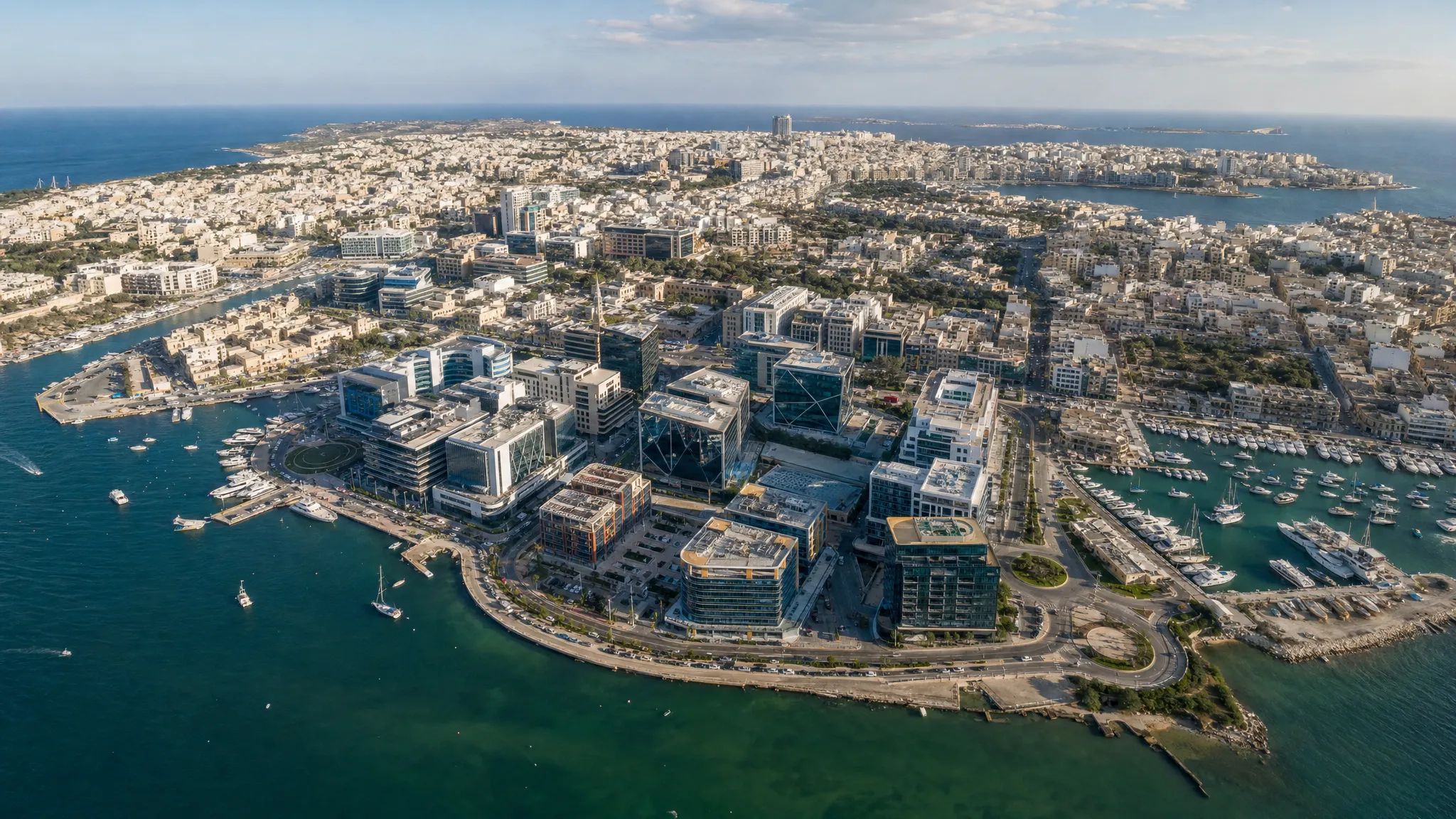
Gzira can be a pragmatic alternative for companies that want to stay close to Sliema and Ta’ Xbiex without always competing directly for the most premium addresses. For larger gaming teams, Mriehel and the Central Business District often become more relevant because they can offer larger floorplates, more structured office buildings and better potential for parking.
Best areas for financial services, funds and fintech
Financial services firms tend to balance three priorities: trust, access and operational control. For this reason, Valletta, Sliema, Ta’ Xbiex and Mriehel are often the most logical areas to compare.
Valletta is a strong choice for firms that value institutional credibility. It works well for boutique investment firms, corporate finance advisers, fund-related service providers and companies that regularly meet public institutions, embassies, law firms or senior clients. The city offers prestige, but not every building will suit modern open-plan layouts, lift requirements or parking needs.
Sliema and Ta’ Xbiex are strong for client-facing financial services, insurance, fintech and advisory firms. Ta’ Xbiex in particular offers a professional harbour-side setting and proximity to corporate service providers, embassies and marine-related business activity.
Mriehel is often more suitable when the company needs a larger, more efficient office footprint. For a financial services business with compliance, operations, client support and management teams under one roof, the Central Business District can be a practical HQ option.
Best areas for insurance companies
Insurance businesses often need both credibility and operational efficiency. A pure front-office insurance broker may prioritise a visible, accessible client location, while a larger insurer may need call-centre space, administration teams, meeting rooms and long-term growth options.
Ta’ Xbiex and Sliema work well for client-facing insurance firms that want a professional image and easy access to corporate clients. Mriehel becomes attractive when the requirement shifts towards larger teams, structured buildings, parking and a more headquarters-style environment.
Valletta can also suit specialist insurers, underwriters or firms that work closely with legal and financial institutions. However, companies with high daily staff movement should compare access, building efficiency and parking before committing to a historic city location.
Best areas for law firms, architects and professional services
For law firms and corporate advisory practices, Valletta remains one of Malta’s strongest locations. Its proximity to courts, government buildings, public institutions and long-established professional networks gives it a level of credibility that is difficult to replicate elsewhere.
That said, not every legal or advisory firm needs to be in Valletta. Corporate, tax, immigration, gaming, fintech and commercial advisory firms often find Sliema or St Julian’s more convenient for international clients and private-sector meetings.
Architects, design studios, engineering consultants and planning-related firms usually need a slightly different mix. They benefit from client accessibility, parking, meeting space and sometimes room for samples, drawings or collaborative studio layouts. Birkirkara, Mosta, San Gwann and Gzira can all work well, depending on whether the firm prioritises central access, value, visibility or proximity to client projects.
Best areas for blockchain, crypto and emerging technology companies
Blockchain, crypto, Web3 and emerging technology companies often want an office that communicates legitimacy while still appealing to international technical talent. For early-stage teams, a flexible office in Sliema, St Julian’s or Gzira can offer a strong combination of networking, lifestyle and access to advisers.
For more mature companies, the location decision usually becomes more strategic. Valletta can support credibility for board meetings, investor visits and regulatory conversations. Mriehel can provide a more scalable HQ environment if the company is building larger compliance, support or development teams.
The key is to avoid choosing only on image. Technology companies should also test internet resilience, meeting-room capacity, lease flexibility, security, acoustic privacy and expansion options. A location that feels impressive for ten employees may not be practical for sixty.
Best areas for SMEs and local service businesses
For many SMEs in Malta, the best office location is the one that keeps the team productive without tying up too much cash in rent. If your clients do not expect a premium seafront address, areas such as Birkirkara, Mosta, San Gwann and Qormi can make strong commercial sense.
Birkirkara is central and well connected, which makes it practical for companies hiring from different parts of Malta. Mosta can suit firms that want good access to the north and centre of the island. San Gwann works well for businesses that want to stay close to Sliema and St Julian’s while considering more practical office options. Qormi can be attractive for firms that combine office work with light operations, trade, distribution or site visits.
For a data-led view of how Malta’s main office districts compare, you can also review this guide to Malta office locations, which looks at the island’s key commercial areas in more detail.
Best areas for back-office, shared services and support teams
Back-office operations usually need efficiency more than prestige. The ideal office has enough space for teams, reliable infrastructure, practical commuting, meeting rooms, staff facilities and predictable occupancy costs.
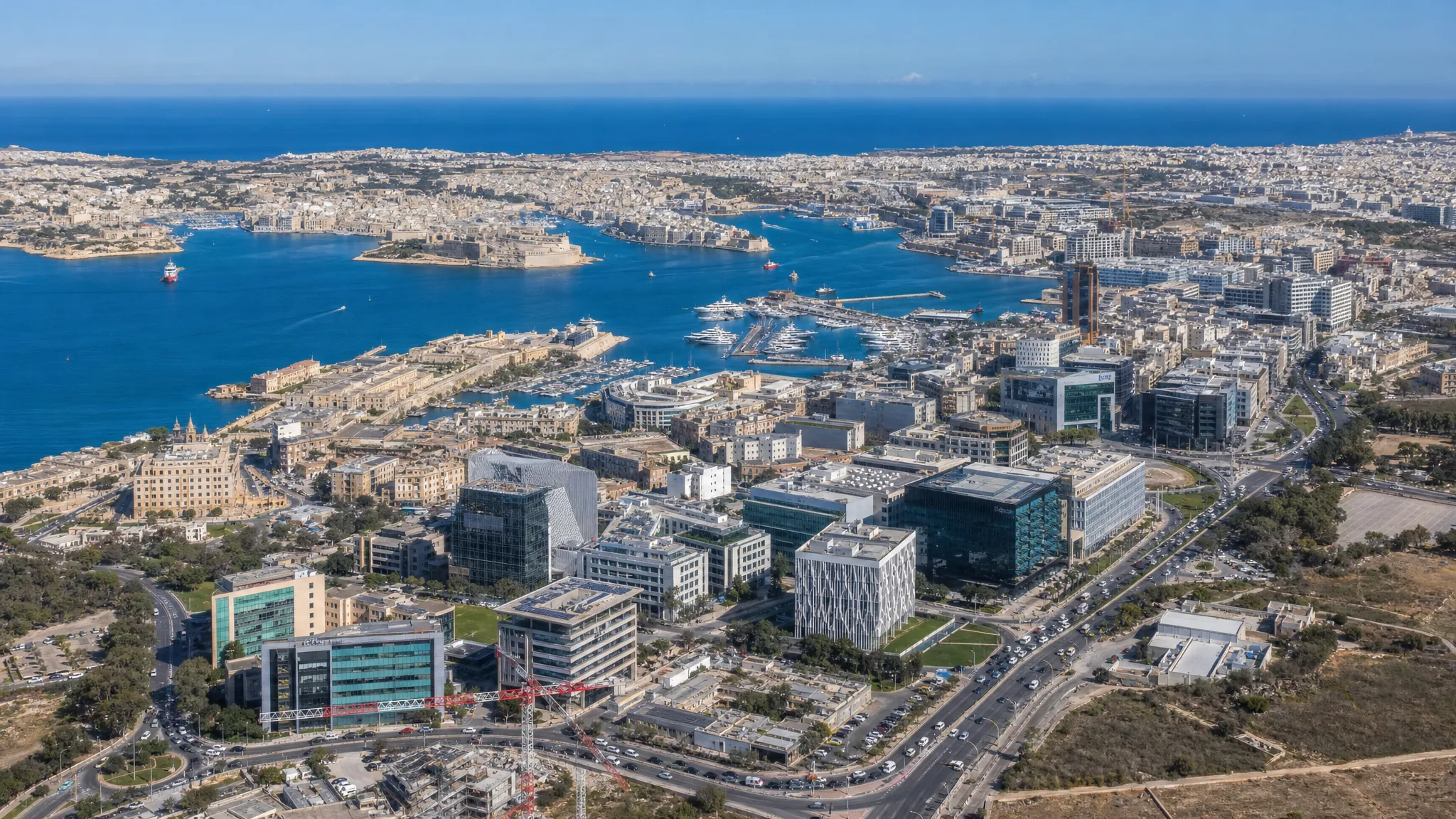
For these requirements, Mriehel, Birkirkara and Qormi are often strong starting points. They provide central or near-central access and can be more practical for larger staff numbers than the most premium waterfront areas. Mriehel is particularly relevant for companies seeking modern business district infrastructure and larger office layouts.
If the team has operational links to warehousing, freight, technical services or industrial activity, Marsa, Luqa and parts of Qormi may deserve attention. These areas are less about prestige and more about access to ports, airport routes, industrial estates and logistics corridors.
For temporary yard offices, project sites or international fit-out inspiration, some operational businesses also evaluate modular workspace concepts such as premium shipping containers for commercial use. In Malta, any similar approach should be checked carefully against local planning rules, site conditions and business licensing needs.
Comparing Malta’s main office zones
| Area | Strongest fit | Main advantage | Main watch-out |
|---|---|---|---|
| Sliema | iGaming, finance, fintech, advisory, client-facing SMEs | International profile, amenities and strong talent appeal | High demand, parking pressure and premium rents in prime buildings |
| St Julian’s | iGaming, crypto, tech, investor-facing companies | Lifestyle, hospitality, networking and brand visibility | Traffic, noise in some pockets and intense competition for quality stock |
| Gzira | Tech, gaming, SMEs, professional services | Central harbour access and proximity to Sliema | Quality and building style can vary significantly |
| Ta’ Xbiex | Finance, insurance, maritime, corporate services | Professional harbour setting and corporate feel | Limited supply for larger requirements in some buildings |
| Valletta | Law, advisory, finance, government-facing firms | Prestige, institutions and heritage value | Older buildings may require careful checks on access and fit-out |
| Mriehel and CBD | HQ offices, back-office, finance, insurance, larger teams | Larger floorplates, business district feel and parking potential | Less waterfront lifestyle appeal than Sliema or St Julian’s |
| Birkirkara | SMEs, consultants, local services, support teams | Central access and practical value | Less premium image for international client hosting |
| Mosta | SMEs, architects, local firms, northern access | Central-north connectivity and practical office options | Not ideal if most clients expect a harbour-side location |
| Qormi, Marsa and Luqa | Logistics-linked offices, operations, trading, support teams | Access to industrial, airport and distribution corridors | Usually less suitable for premium client-facing headquarters |
Serviced office or traditional lease by area
The right area also depends on the type of office agreement you need. A relocating company testing Malta for the first time may prefer a serviced office in Sliema, St Julian’s, Valletta or another central location. This can reduce set-up friction and make it easier to expand, downsize or move once the team understands its long-term needs.
A traditional lease is usually more relevant when the business wants control over branding, layout, meeting rooms, IT infrastructure and long-term cost planning. This can be especially important for regulated financial firms, insurance companies, larger iGaming operators and established professional services firms.
A common strategy is to start with flexible space while recruiting the first team, then move into a dedicated office once headcount, departmental structure and location preferences are clearer. If you are still comparing formats, this guide to the types of office spaces available in Malta can help clarify the difference between serviced offices, coworking, traditional offices and larger commercial properties.
A practical shortlisting method
Use a structured shortlist before committing to viewings. It saves time, prevents emotional decisions and makes it easier to compare very different buildings.
- Define the business purpose of the office: Decide whether the office is mainly for clients, staff, compliance, operations, leadership, recruitment or brand presence.
- Map where employees will commute from: A prestigious area can become a retention problem if daily commuting is difficult for most of the team.
- Separate front-office and back-office needs: Some companies benefit from a premium client suite in one area and a larger operational office elsewhere.
- Compare total occupancy cost, not only rent: Include service charges, fit-out, furniture, parking, utilities, VAT treatment, maintenance and potential reinstatement obligations.
- Check growth options early: Ask whether additional space may become available in the same building or nearby if your team expands.
- View competing districts on the same day: Comparing Sliema, Mriehel and Birkirkara back-to-back often makes the trade-offs much clearer.
For lease terms, common cost items and negotiation points, the complete guide to office rental in Malta is a useful next step before signing.
Frequently asked questions
What is the best area for an iGaming office to let in Malta? St Julian’s, Sliema and Gzira are usually the strongest starting points for iGaming companies because they offer talent appeal, international visibility and access to industry networks. Larger operators should also compare Mriehel for HQ-style offices and bigger floorplates.
Which Malta office area is best for financial services? Valletta, Sliema, Ta’ Xbiex and Mriehel are all strong options. Valletta offers prestige and institutional access, Sliema and Ta’ Xbiex suit client-facing teams, and Mriehel can work well for larger operational or headquarters requirements.
Where should SMEs look for office space in Malta? SMEs often get better value by comparing Birkirkara, Mosta, San Gwann and Qormi before committing to a premium harbour location. These areas can offer central access, practical layouts and more cost-effective space.
Is Valletta still a good location for an office? Yes, especially for law firms, advisory practices, finance companies and businesses that value institutional proximity. However, building condition, lift access, parking and fit-out constraints should be checked carefully before signing.
Should a relocating company choose a serviced office first? Often, yes. A serviced office can be a practical soft landing while you hire staff, test commute patterns and understand which district fits your operating model. Once the team stabilises, you can compare longer-term office leases.
How early should I start looking for an office in Malta? For a small serviced office, a shorter timeline may be workable. For a traditional lease, larger HQ, regulated business or custom fit-out, it is sensible to start several months ahead so you have time for viewings, negotiation, legal checks and planning.
Find the right Malta office area for your business
The best office to let in Malta is not the same for every company. A gaming operator, law firm, insurance company, architect, fintech startup and back-office team may all need different locations, even if their budgets are similar.
Use your business type to narrow the search, then compare buildings by access, fit-out, lease terms, staff experience and total occupancy cost. OfficeSpace.Rent helps companies compare Malta office listings by location, size, price and office type, with support for shortlists, viewings, negotiations, legal considerations and VAT guidance.
Start by browsing current office listings in Malta and build a shortlist around the areas that fit your business model best.