A European office comparison is only useful when the proposals describe the same workplace. A serviced suite in Sliema, a conventional floor in Mrieħel and a city-centre office overseas can all seat twenty people. The figures beside those offers may cover three different sets of costs.
Who needs a prime address?
A firm whose partners see several clients a day can put a value on proximity. Look at a month of actual meetings and identify which journeys a central address would shorten. For a service centre whose customers rarely visit, use a different test: staff travel, shift access, recruitment catchment and the ability to take calls privately.
For an overseas company opening its first Malta office, compare a ready-to-use suite with an equivalent overseas package. Comparing a serviced office in Malta with an empty floor abroad makes the Malta figure carry the cost of furniture and reception on only one side of the table. Add those items to the second offer before drawing conclusions.
Give every market the same assignment
Specify peak headcount, meeting rooms, target opening date and the period you expect to occupy the premises. Include any essential access hours, parking or visitor arrangements. Ask each representative for both a central address and a practical alternative outside the prime district, where available.
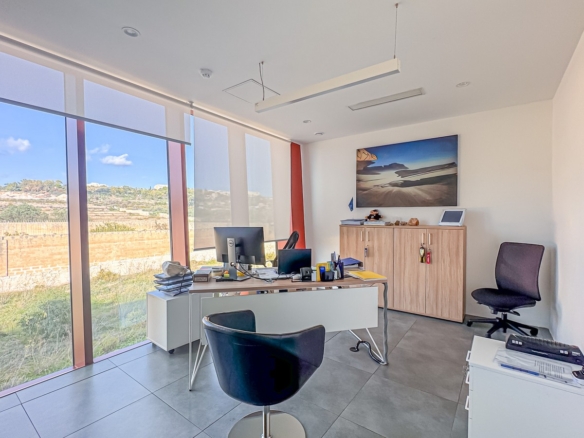
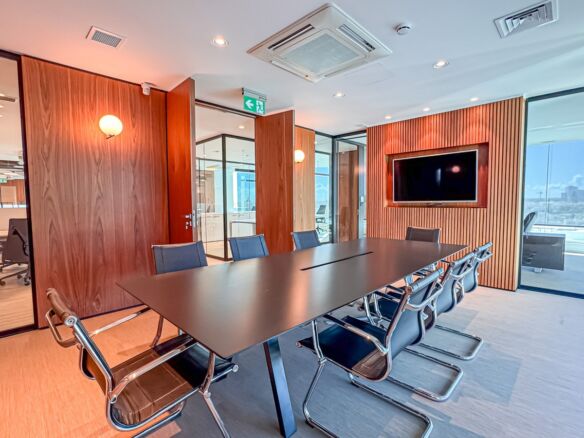
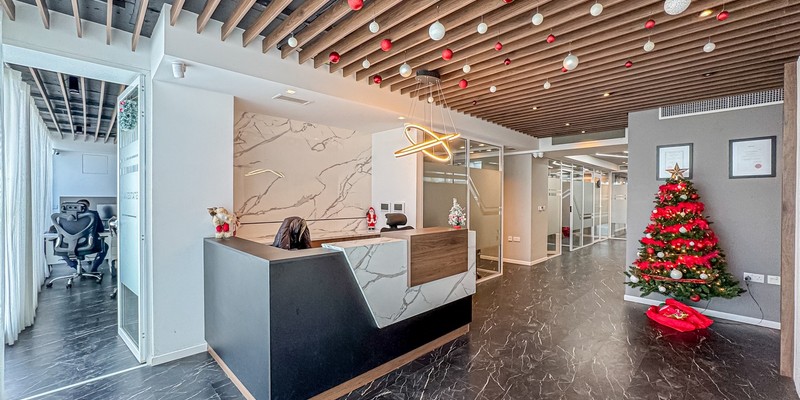
Define what you mean by prime. A waterfront reception may matter to a client-facing team. A support operation might value evening access and reliable cooling more. A district label says little about the condition of an individual suite. Require photographs, a measured plan and a dated offer before comparing buildings.
Put each quote on the same basis
For a conventional lease, record the currency, annual base rent and area used to set the price. Where an offer uses gross area, ask how much the team can occupy exclusively. Separate terraces and parking from internal workspace. Convert currencies on one stated date and keep the original figures beside the conversion. The Central Bank of Malta’s euro reference rates provide a dated conversion benchmark.
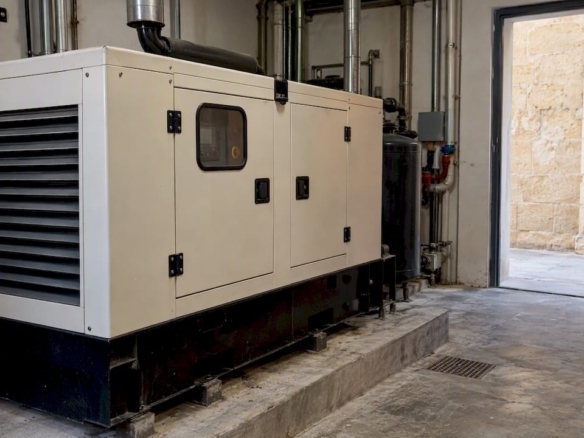
List recurring costs for shared upkeep, utilities, cleaning, internet and parking. Record what the landlord includes and what requires a supplier quote. A serviced fee may already include several of these items. Adding them twice can make an otherwise suitable option look expensive. The Malta Office Market Guide explains the local rental benchmarks. Market asking figures and signed proposals belong in separate columns. Use the Malta office cost calculator to model the local option.
Calculate the cost per occupied desk
Imagine two proposals for twenty occupied desks. One costs €54,000 a year including its quoted recurring services. The other costs €48,000 plus €12,000 in recurring services. The respective annual totals are €54,000 and €60,000, or €225 and €250 per occupied desk per month. These are illustrative figures, not market averages.
Then add opening costs separately. If the first option needs €18,000 of additional fit-out and the second needs none, the recurring saving of €6,000 a year takes three occupied years to recover the difference. A shorter lease or a delayed opening could change the choice. Ask the finance team to model the actual commitment and applicable taxes for each jurisdiction.
How to deal with different area measurements
Ask for a floor plan with the proposed suite outlined. Highlight the working space inside the tenant’s control and the areas used with other occupiers. An offer may charge for a share of corridors or shared facilities. Record the landlord’s quoted area and your own comparable measure in separate columns so readers can trace both numbers.
Suppose two offices each quote €60,000 a year. The first offers 240 m² and the second 200 m² of exclusive internal space. Their annual costs on that basis are €250/m²/year and €300/m²/year. If the second also includes furnished meeting rooms or a staffed reception, list those benefits beside the figures before deciding what you would otherwise have to buy.
What belongs in the decision paper?
Give the person approving the move three numbers for each site: cash needed before opening, expected cost in the first occupied year and cost over the committed period. Place refundable deposits in the first number and mark them clearly. Record fit-out contributions and rent-free periods in the months when they actually apply.
Include a scenario in which headcount changes. A serviced agreement may charge for another room as soon as one extra person joins. A traditional floor may accommodate four more colleagues but require a second meeting room to support them. Quote for the real change. Dividing by additional desks gives a misleading saving if those desks cannot be used in practice.
Finally, show the assumptions most likely to move the answer. These might be currency, opening date, parking demand or the price of local fit-out. Give every quote a date and, where known, an expiry. If a landlord promises revised terms, leave the current offer visible until you have the replacement in writing.
Allow for costs that fall outside the rent invoice
Consider a European company deciding whether to put a small customer team in Malta or on a larger floor at its existing overseas office. The Malta offer may have a separate local management charge. The overseas floor may share reception, technology and meeting facilities with another department. Ask whether the internal recharge reflects an actual additional cost or an allocation the business will pay whichever option it chooses.
For each location, show the cost that changes if the company signs. A new connection or a fitted meeting room is easy to identify. Less visible items include temporary accommodation for a trainer, travel between offices or an extra month of overlap while equipment is installed. Give each an owner and a dated estimate. Keep commercially important items that cannot yet be priced under an explicit heading for unresolved costs.
Now look at the first year and the steady year separately. A furnished suite may produce a lower first-year cash requirement while a conventional lease costs less to occupy once the fit-out is complete. Both statements can be true. Showing both periods lets the decision-maker choose a commitment that fits the business’s expected stay.
Run the comparison again using a delay that the operations team considers plausible. If the preferred option changes as soon as opening moves by one month, settle that date before recommending a site. If the result holds under several sensible assumptions, concentrate negotiations on the terms that matter most to the team.
Compare what the team can actually use
Check opening and closing journeys, including parking, bus connections and the final walk. If a location relies on a particular ferry or late bus, test the timetable against the shifts. For overseas visitors, compare a typical trip from their hotel to the meeting room. Distance on a map rarely tells the whole story.
For an operation handling customer calls, ask who restores access or internet after hours. For a team running workshops, check whether peak attendance leaves enough private rooms. Give the decision-maker a floor plan, the quoted occupancy cost, one-off works and unresolved questions for each location. That makes a cross-border decision easier to explain without speculative city rankings or assumed tax savings.
Frequently asked questions
Is Malta cheaper for office space than other European markets?
It depends on the specific districts, buildings and inclusions. Compare written offers for the same headcount and type of office. Record annual base rent, recurring charges and opening costs before comparing totals.
How do I convert monthly rent into €/m²/year?
Multiply the monthly base rent by twelve and divide by the quoted area. For example, €4,000 a month for 200 m² equals €240/m²/year. State which area measure you used.
What is the difference between asking rent and effective rent?
Asking rent is the advertised amount. For a proposal, you can estimate effective base rent by spreading the agreed rent after rent concessions across the chosen lease period. State the period, concessions and whether fit-out contributions are included.
Should taxes go in a European office comparison?
Show quoted amounts and tax treatment separately. Ask local advisers to assess the actual company and transaction, including recoverability where relevant. Keep a dated record of the assumptions used for each jurisdiction.
What figure should I give head office for a hybrid team?
Report total annual occupancy cost and cost per desk available on the busiest day. If management also wants cost per employee, label it separately and show the headcount used.